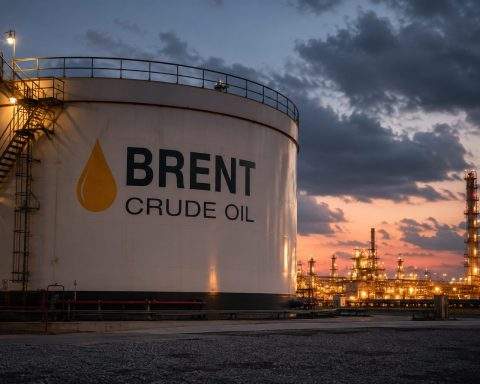

Energy stocks head into Christmas week pulled in opposite directions: bearish supply math is pressing crude toward multi‑year lows, while geopolitical headlines—especially around Venezuela and Russia—can still jolt oil prices in thin holiday trading.
On the macro side, the market has been testing the downside after crude slid to levels last seen in early 2021, with Brent settling at $58.92 and WTI at $55.27 earlier in the week amid oversupply concerns and shifting expectations tied to Russia‑Ukraine diplomacy. Reuters But by Friday, prices bounced as traders reacted to escalating U.S. enforcement actions near Venezuela, with Brent at $60.47 and WTI at $56.66 on settlement.
For equity investors, the setup is clear: when crude is this close to the marginal cost line for higher‑cost producers, “headline risk” matters more than usual—and the coming week has both headline risk and a major twist: several of the most market‑moving U.S. energy data releases are delayed until after the holiday week. EIA+2EIA+2
Below is what matters most for energy stocks in the week ahead (as of Sunday, Dec. 21, 2025).
The core driver for energy stocks: oversupply is no longer theoretical
The most important “week ahead” backdrop is that multiple major forecasters are now effectively describing a market that needs lower prices to clear.
- IEA (Oil Market Report, Dec. 2025) sees global demand rising by ~830 kb/d in 2025 and ~860 kb/d in 2026, while supply growth is much larger—~3.0 mb/d in 2025 and ~2.4 mb/d in 2026. The IEA also flagged global observed inventories at four‑year highs (October) and described a sizable implied surplus into late 2025 and 2026.
- EIA (Dec. 2025 STEO) projects Brent sliding into the mid‑$50s, with Brent averaging about $55/bbl in 1Q26 and remaining near that level, while also forecasting U.S. crude production around 13.6 mb/d in 2025 and 13.5 mb/d in 2026.
- Goldman Sachs told clients it expects Brent and WTI to average $56 and $52 in 2026, explicitly saying lower prices may be required to rebalance the market absent major disruptions or OPEC cuts.
In other words: the “base case” across large institutions is no longer $70–$80 oil—it’s a structurally softer tape unless supply breaks or policy changes. For energy stocks, that shifts investor attention toward (1) balance‑sheet strength, (2) dividend/buyback durability, and (3) which subsectors can earn money even if crude stays in the $50s.
Why oil can still whip around: “oil on water” and the Venezuela/Russia headline channel
Even in a glut narrative, crude can jump when physical flows are threatened—especially during a holiday‑thinned week.
1) Venezuela: enforcement is escalating, and the market is watching barrels get “stuck”
Over the weekend, Reuters reported the U.S. intercepted an oil tanker off Venezuela, days after President Donald Trump announced a “blockade” of sanctioned tankers. Reuters also reported the intercepted vessel was believed to be carrying about 1.8 million barrels of Venezuelan crude bound for China, and that Venezuelan crude exports fell sharply after an earlier seizure. Reuters+1
Why it matters for energy stocks:
- Upstream (E&Ps) tend to trade most directly off WTI/Brent—any sustained supply interruption narrative can spark a relief rally.
- Refiners can react differently: a crude spike can compress margins if product prices don’t keep up; a short, news‑driven pop can also fade quickly in a surplus market.
Importantly, a Reuters energy column argued that while Venezuela and Russia headlines move prices, the bigger driver into 2026 could be far more mundane: swelling global supply and crude “on water.” It cited Kpler estimates of ~1.3 billion barrels of “oil on water” and a rise in crude kept at sea for extended periods. Reuters
2) Russia‑Ukraine: the “peace premium” cuts both ways for energy equities
Earlier in the week, oil sank on the idea that progress toward a Russia‑Ukraine deal could eventually ease some supply constraints, pushing Brent/WTI to their lowest settlements since early 2021.
The equity takeaway is subtle but crucial:
- If diplomacy reduces the risk premium, energy stocks can struggle even if fundamentals are “fine.”
- If diplomacy stalls and sanctions/frictions tighten, crude can rebound—but forecasters still see oversupply unless disruption is large and persistent.
LNG and natural gas: Energy Transfer hits pause, and “glut” language is spreading
One of the most actionable single‑stock headlines into this week: Energy Transfer suspended development of its Lake Charles LNG export project, citing rising costs and focusing capital on pipeline projects with better risk/return profiles. The project was expected to have 16.45 mtpa of liquefaction capacity; Reuters also noted Chevron had contracted volumes tied to the project, and that contracting across LNG facilities has slowed.
Why this matters beyond one ticker:
- It reinforces a broader market theme: the next wave of LNG capacity is colliding with more cautious contracting, amplifying “global oversupply” fears. Reuters
- If investors conclude the LNG buildout is ahead of demand, LNG‑exposed developers and some midstream names can see multiple compression, even if near‑term cash flows are steady.
Add to that the demand side: Reuters reported Asia’s imports of U.S. energy (crude, LNG, coal) are down in 2025, driven largely by a sharp drop in China’s U.S. crude buying and weaker U.S. LNG flows into Asia.
For U.S. gas‑linked equities, the next major catalyst is often storage and weather—but this week has an unusual twist.
The week-ahead calendar: holiday trading hours + delayed energy data
This is a headline‑driven week partly because key official reports slip to the following Monday.
Market hours to know (U.S.)
- Wed., Dec. 24 (Christmas Eve): U.S. stock markets close early at 1:00 p.m. ET.
- Thu., Dec. 25 (Christmas Day): markets closed.
- Fri., Dec. 26: full session; major exchanges said they will remain open despite federal office closures tied to a presidential directive.
Energy data that’s delayed (key for oil, gas, and energy stocks)
- EIA Weekly Petroleum Status Report: next release listed as Dec. 29, 2025 (not during the holiday week).
- EIA Weekly Natural Gas Storage Report: next release listed as Dec. 29, 2025; EIA’s schedule shows an updated holiday release time of 12:00 p.m. for that date.
- Baker Hughes rig count: Baker Hughes’ site notes Christmas week is published Tuesday, Dec. 23, 2025, instead of Friday.
What this means in practice:
- With no mid‑week EIA petroleum data, the market leans harder on price action, geopolitics, and private estimates.
- Rig count on Tuesday becomes a bigger‑than‑usual talking point for U.S. production expectations, especially after Reuters flagged the Permian rig count at its lowest since 2021 in a recent oil market report.
Energy stocks: what to watch by subsector this week
Integrated oil majors (Exxon, Chevron, Shell, BP, TotalEnergies)
The majors usually handle low‑$60/$50s crude better than smaller producers thanks to diversified earnings and scale. But the near‑term driver is still crude direction—and crude direction is tied to the Venezuela/Russia headline stream plus the broader oversupply narrative described by the IEA/EIA and bank forecasts.
What can move the group this week:
- Any sign the Venezuela enforcement campaign meaningfully constrains exports for longer than a few days.
- Fresh Russia‑Ukraine developments that shift expectations on sanctions and flows.
U.S. E&Ps (shale producers)
With WTI in the mid‑$50s on recent settlements, the market tends to separate “durable cash return stories” from higher beta names. Reuters+1
This week’s special focus: the Tuesday rig count and what it implies about 2026 production restraint (or lack thereof).
Refiners (Valero, Marathon Petroleum, Phillips 66)
Refiners can benefit from cheaper crude—until product cracks weaken. Reuters noted U.S. gasoline futures recently hit a four‑year low and that gasoline crack spreads fell to their lowest since February, a potential headwind for gasoline‑heavy margins.
At the same time, the IEA has been highlighting unusual dynamics where crude looks ample while parts of product markets can still tighten at times—so the near‑term refiners trade can be choppy and product‑specific.
Midstream and pipelines (Kinder Morgan, Williams, Energy Transfer, etc.)
Midstream typically cares more about volumes and contracts than day‑to‑day commodity price moves, which can make it a relative shelter during crude weakness.
But LNG‑linked capex and contracting are in focus after Energy Transfer paused Lake Charles LNG and emphasized pipeline projects instead—alongside a major cost/capacity update for its Transwestern expansion plans.
Week-ahead lens:
- Watch how investors reprice LNG optionality versus “boring” pipeline cash flows after the Lake Charles decision. Reuters
LNG exporters and the global gas trade
Even without new project announcements, the theme investors are debating is whether U.S. LNG export margins and demand are heading into a tougher patch—especially with Asia’s U.S. energy imports down in 2025 and ongoing trade friction.
Coal
Reuters reported global thermal coal exports posted a rare decline in 2025 tied to cuts in China and shifts in Asian power generation, which can matter for coal‑exposed equities and related logistics.
The “wild cards” most likely to swing energy stocks this week
- Venezuela enforcement path: Markets will test whether tanker interceptions translate into a sustained export shortfall—or just a short‑lived disruption with rerouted flows.
- Russia‑Ukraine negotiation headlines: Any perceived “progress” can weigh on crude by reducing risk premium, even if physical flows don’t change immediately. Reuters+1
- Holiday liquidity: With early closes and thinner participation, moves can be sharper and reversals faster.
- Data vacuum: With EIA petroleum and gas storage data delayed to Dec. 29, markets may trade more on estimates and positioning than on confirmed fundamentals during the week itself.
Bottom line for the week ahead
Energy stocks go into Christmas week facing a tough “macro tape” for oil: large forecasters see surplus conditions that may require lower prices to rebalance. IEA+1
But the week is not purely about spreadsheets and forecasts. With official energy reports largely pushed to the following Monday, the sector may trade off Venezuela/Russia headlines, Tuesday’s rig count, and holiday‑thin liquidity—a recipe for outsized moves that can matter even to long‑term investors looking for entry points or risk control.
Related articles: Energy Markets