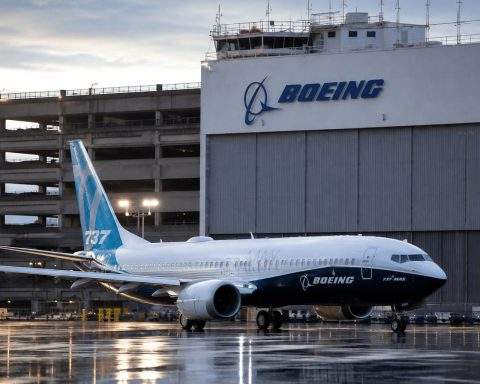

Boeing stock NYSE:BA heads into the next U.S. trading session with investors focused on a familiar set of swing factors: FAA oversight and certification timelines, production-rate progress on the 737 and 787, and whether 2026 can truly mark a return to sustained positive free cash flow.
BA last closed at $214.08, up 2.79% on the session—momentum that matters in a holiday week where thinner liquidity can exaggerate moves, for better or worse.
Below is what to know before the U.S. market opens on Monday, December 22, 2025 (the next regular trading day for U.S. equities).
1) Why this week can feel “faster” for BA: holiday hours and headline risk
This is a holiday-shortened setup with unusual timing dynamics:
- Regular trading Monday (Dec. 22) and Tuesday (Dec. 23)
- Early close Wednesday (Dec. 24) at 1:00 p.m. ET (NYSE equities)
- Markets closed Thursday (Dec. 25) for Christmas
- Regular session Friday (Dec. 26)
NYSE and Nasdaq said they are not altering their Dec. 24 and Dec. 26 trading schedules (despite federal-government related noise), which is helpful clarity for traders planning around liquidity and settlement.
For Boeing specifically, the “holiday effect” matters because BA is often headline-sensitive: FAA actions, supplier updates, defense awards, and analyst notes can drive premarket gaps that are harder to fade (or chase) when volumes are light.
2) The single biggest near-term catalyst: FAA certification and oversight signals
MAX 10 (and MAX 7): the timeline is still the story
The FAA is reviewing Boeing’s redesigned cockpit alerting system for the 737 MAX 10, a key step in the long certification process. Boeing has faced delays tied to technical issues (including an engine de-icing issue) and heightened scrutiny.
Regulatory language published in the Federal Register underscores the current reality: the 737-10 is still not FAA type certificated (i.e., still a proposed design in certification terms), and details around the flight crew alerting approach remain central.
Airline customers continue to manage around uncertainty. For example, Southwest leadership has pointed publicly to a summer 2026 expectation for MAX 7 certification (a proxy for how operators are planning fleets and capacity).
Why this matters for the stock
For BA holders, MAX 7/MAX 10 certification is not just a “good news headline.” It’s tied to:
- delivery timing (and therefore cash receipts),
- production planning across the narrowbody line,
- and confidence that FAA/Boeing execution is stabilizing rather than slipping.
If you’re assessing Boeing stock for the next 3–6 months, MAX 7/MAX 10 schedule credibility is one of the highest-leverage variables.
3) Production ramp progress: where investors think 2026 can be “different”
737 MAX: rate restoration is the engine of the turnaround narrative
Boeing’s financial recovery case still runs through the 737 MAX. Regulators have gradually eased some constraints over time, but oversight remains intense given past quality findings and ongoing monitoring.
On the market’s “optimistic” days, BA trades like a production-rate call option: any incremental signal that Boeing can safely raise output and convert inventory into deliveries tends to support the equity.
787 Dreamliner: a concrete capacity lever for 2026
Boeing has started work on an expansion in North Charleston aimed at enabling a 787 production increase to 10 per month in 2026, up from roughly seven at the time of reporting.
That matters because widebody deliveries can be meaningfully accretive to cash generation when execution is stable—and because 787 output is one of the cleaner “visible” levers investors can model into 2026.
Monthly deliveries/orders still move the tape
Boeing’s most recent reported monthly data also remains a sentiment driver. In its November snapshot, Boeing reported delivery and order activity including notable 777X ordering and continued Airbus comparisons that investors watch closely.
4) Cash flow is the market’s scoreboard—and Boeing just raised the stakes for 2026
At a December investor conference, Boeing’s CFO Jay Malave said the company expects positive free cash flow in 2026, after an expected ~$2 billion cash outflow in 2025—a pivot investors have been waiting for.
Wall Street’s reaction has been straightforward:
- Bulls see the setup for operational progress finally translating into cash, not just headlines.
- Bears argue Boeing has “promised the turn” before, and that certification/quality/defense risks can still eat the cash flow.
A separate analyst view highlighted by TD Cowen models free cash flow ramping across 2026–2028, reinforcing why the market is so sensitive to production-rate confidence.
5) The 777X overhang—and why freighters suddenly matter again
777X: delays and charges are still fresh
Boeing’s 777X program remains a material overhang. Boeing pushed first delivery to 2027 and took a ~$5 billion charge in the latest major update—exactly the kind of event that can reset cash-flow expectations and investor patience.
777F: the emissions waiver request is a live headline catalyst
On December 19, 2025, Reuters reported Boeing is seeking an FAA waiver that would allow it to sell 35 additional 777F freighters ahead of new U.S. aircraft emissions rules taking effect in 2028. Boeing argues that delays to the 777-8 Freighter (with first delivery projected around 2029) make the waiver important to meet customer demand in the interim.
Why equity investors care:
- Freighters can be a meaningful cash contributor in the widebody portfolio.
- This is also a reminder that regulatory frameworks (not just engineering) can affect Boeing’s delivery runway and revenue conversion timing.
6) Defense and government programs: supportive awards, but execution risk persists
Boeing’s defense segment can provide stability—and headlines—particularly when large Pentagon awards drop.
- Reuters reported the Pentagon awarded Boeing over $7 billion in military contracts (including an Army contract for Apache-related work and an Air Force contract).
- Separately, Boeing landed a ~$931 million U.S. Navy contract tied to extending the service life of F/A-18 E/F Super Hornets (reported via Dow Jones/Morningstar coverage).
- The U.S. Air Force also announced it will buy two Boeing 747-8s for $400 million to support the future presidential airlift fleet transition (distinct from the delayed VC-25B Air Force One replacements).
The nuance for BA stock:
- New awards can support backlog confidence and factory utilization.
- But investors also remember that fixed-price defense programs and troubled development efforts can create charge risk and margin volatility (a theme Boeing has faced repeatedly in recent years).
7) Spirit AeroSystems integration: a supply-chain fix—and a labor variable
One of the most structural Boeing stories heading into 2026 is its attempt to regain supply-chain control.
Boeing closed its Spirit AeroSystems purchase on December 8, 2025, a major supply-chain realignment designed to address persistent quality and production problems—especially those impacting the 737 program.
But integrations also create execution and labor complexity. Reuters reported Boeing and the SPEEA union paused contract talks until January 5, 2026 for former Spirit white-collar workers in Wichita, with a contract expiration looming at the end of January.
For Boeing stock, the takeaway is balanced:
- Potential upside: tighter quality control, fewer supplier surprises, better rate predictability.
- Near-term risk: integration friction, labor relations, and transition costs.
8) What Wall Street forecasts are pricing in right now
Analyst targets skew positive—but the range is wide
Boeing’s Street consensus remains generally constructive. MarketWatch data shows an average target price around the high-$240s with an “overweight”-type consensus framing. MarketWatch
Other widely followed consensus trackers show:
- average targets in the low-to-mid $240s,
- with high targets reaching the high $270s/low $280s, and low targets down around $140—a spread that reflects how much disagreement still exists about execution and balance-sheet risk.
The latest notable call: JPMorgan
JPMorgan raised its Boeing price target to $245 and named Boeing a top pick into 2026, citing production improvement and a more constructive setup for next year.
9) The next major date risk: Q4 earnings timing is approaching
Boeing’s next earnings release date is not always formally confirmed far in advance, but major market calendars are clustering around late January 2026 (commonly Jan. 27–28, 2026 estimates).
That matters because the next report is likely to be the market’s first deep “proof point” on:
- 2026 delivery trajectory,
- the Spirit integration costs/benefits,
- certification progress disclosures,
- and whether management reiterates (or hedges) the “positive free cash flow in 2026” message.
10) A practical checklist: what to watch before Monday’s open
If you’re tracking Boeing stock into the Dec. 22 open, these are the items most likely to matter immediately:
- Any FAA-related update on MAX 7/MAX 10 certification steps or manufacturing oversight tone (these headlines can move BA premarket quickly).
- Follow-through analyst activity after JPMorgan’s target hike—upgrades/downgrades can have outsized impact in a holiday week.
- Further detail on the 777F emissions waiver process and timing (it’s both a regulatory and revenue runway story).
- Any Spirit integration / labor developments as contract talks resume in early January.
- Defense contract flow and program commentary—supportive for backlog, but investors will listen for margin/charge signals.
Bottom line for BA stock into Dec. 22, 2025
Boeing stock is ending 2025 with a more constructive narrative than it started: production is gradually stabilizing, 787 capacity is being positioned for a 2026 ramp, and management is explicitly telling investors that 2026 should flip back to positive free cash flow.
But BA remains a “show-me” story. Certification timelines (MAX 7/MAX 10), ongoing FAA scrutiny, and widebody program risk (777X) are still capable of shifting the market’s confidence quickly—especially in a holiday week when liquidity can be thin. Reuters+2Reuters+2
Related articles: NYSE:BA