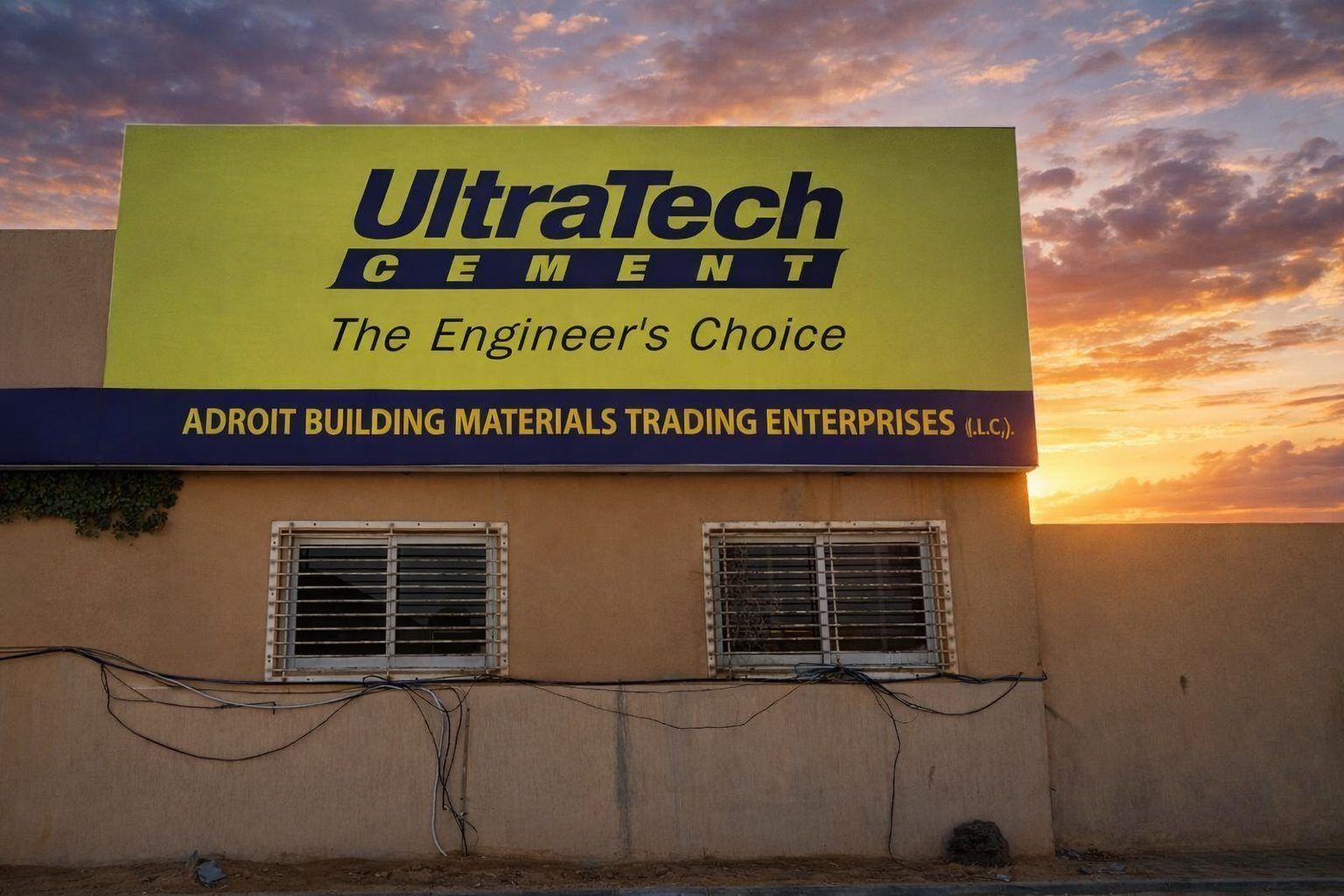
New Delhi / Mumbai | December 22, 2025 — UltraTech Cement, India’s largest cement maker, is back in the spotlight on Monday after disclosing a Goods and Services Tax (GST) demand notice of ₹782.2 crore, a development that adds near-term regulatory noise to a sector already juggling a new cycle of cost cuts, capacity commissioning and regional consolidation.
While tax disputes can create headline risk for any large corporate, the broader market narrative around UltraTech—and its closest rival group in terms of scale, Adani Cement (Ambuja Cements and ACC plus acquired assets)—has remained anchored to the same playbook: scale up faster than the industry, push structural cost advantages, and tighten control of logistics and energy as India’s infrastructure and housing demand keep the long-term cement story intact.
Below is a round-up of what’s driving cement stocks on December 22, 2025, and what investors and industry watchers are tracking next.
UltraTech Cement’s ₹782.2 crore GST demand notice: what happened and what the company said
UltraTech Cement said it has received a GST demand notice totaling ₹782.2 crore, linked to issues including alleged short payment of GST and improper utilisation of Input Tax Credit (ITC) for the period FY2018-19 to FY2022-23.
The company indicated it is reviewing the order, considering legal options, and intends to contest the demand in the appropriate forum. It also said the order was passed without due consideration of its submissions.
Why this matters now:
- Magnitude: At ₹782.2 crore, the demand is large enough to draw immediate attention, even if contested.
- Market timing: The update lands as the cement industry prepares for a year where execution and cost discipline are expected to matter as much as (or more than) acquisitions.
- Sector signal: UltraTech is not alone in facing scrutiny; the broader market has seen multiple GST-related disputes surface across large listed firms recently—keeping “regulatory overhang” on the checklist for headline-driven volatility. ETCFO.com+1
UltraTech Cement share price context: where the stock has been trading and what recent data shows
UltraTech’s stock has been trading around the ₹11,500 zone in recent sessions, according to live market updates published by The Economic Times for December 17, 2025.
Key points from that session’s live updates:
- The stock was quoted around ₹11,540 during the day, showing a marginal move on the session.
- The same live tracker flagged a decline of ~9.21% over the prior three months (as of that date), indicating the stock had already seen a cooling phase heading into late December.
- Longer-term performance remained strong in the same data set, with five-year returns cited at about 122.63%.
For investors, the practical takeaway is that today’s GST headline arrives on top of an already mixed near-term tape—but not one that necessarily breaks the longer-term thesis if the dispute remains manageable and operations remain steady.
Brokerages and “Buy” calls: why analysts remain constructive on UltraTech Cement
Even as near-term newsflow turns choppy, market commentary over the last week has continued to feature bullish targets on UltraTech.
Choice Equity Broking’s target: ₹15,210 (about 32% upside from the cited reference price)
In The Economic Times live coverage dated December 17, 2025, the stock received a new target from Choice Equity Broking:
- Target price: ₹15,210
- Potential upside: ~32.12% (as described in the update)
ICICI Securities’ target: ₹14,500 (buy range and upside framing)
Separately, ETMarkets’ coverage of ICICI Securities’ top picks includes UltraTech Cement with:
- Target price: ₹14,500
- A suggested accumulation band around ₹11,200–₹11,700 and an upside framing of roughly 26% over a year (as presented in the ETMarkets item).
Street consensus snapshot
Data aggregators tracking analyst reports (as of late December) indicate a consensus target for UltraTech Cement above the prevailing market price range, reinforcing the idea that the market still prices in meaningful upside if sector fundamentals improve.
What’s behind the continued optimism? In short: scale + cost curve + capacity strategy—the same themes that also underpin Adani Cement’s growth push.
Why UltraTech Cement and Adani Cement are outpacing the pack
The cement sector is famously cyclical and intensely regional (freight costs quickly erase national pricing power). Yet UltraTech and Adani Cement have increasingly been viewed as “structural winners” for a few reasons:
1) Cost advantage is becoming the main battlefield
A sector analysis highlights that power and fuel are roughly a third of cement production costs, which makes energy strategy a decisive edge—especially when pricing power is limited.
The same analysis emphasizes:
- A push toward captive power, renewable energy, and waste heat recovery to structurally lower the cost base.
2) Bigger capacity, faster ramp-ups—and acquisitions as a shortcut
The industry is entering a phase where leaders are pushing capacity hard:
- UltraTech is expected to push capacity to about 240 MTPA by the end of FY28, according to comments cited by The Core.
- Ambuja-ACC has raised its FY28 capacity target to 155 MTPA, also cited in The Core’s reporting.
The strategic implication: bigger players can spread fixed costs, squeeze logistics, and defend margins even when pricing remains competitive.
3) Geography still matters—because cement is local
With cement being expensive to transport, leaders that can optimize:
- clinker production near limestone and
- grinding units closer to demand hubs
can protect margins and react faster to regional demand swings.
Cement sector outlook for 2026: cost cuts, heavy commissioning, and limited pricing power
If 2023–2025 were defined by deal-making and capacity announcements, 2026 is increasingly being framed as the year of operational grind—sweating assets, capturing synergies, and navigating a large wave of commissioning.
A recent sector review outlines three key realities:
Cost-cutting targets are getting explicit
Ambuja Cements, for example, is aiming to reduce production cost per tonne to ₹4,000 by March (a reduction of about 5% from September 2025 levels, as cited).
This is consistent with a broader view that the next few quarters will emphasize:
- logistics optimisation
- fuel mix shifts
- scale benefits
Capacity additions may temporarily pressure utilisation
The same review points to a commissioning pipeline that could be “lumpy,” with about 70–75 million tonnes potentially commissioned in FY26 alone, which could weigh on utilisation in the near term before normalising. The Core
Pricing may stay restrained
The report also flags a cautious view on pricing power:
- sustained price hikes typically need utilisation in the 70–75% zone, which may be difficult at a pan-India level in FY26 given the large capacity wave.
- expectations beyond FY26 remain moderate, with a view that the best price gains may come later—if utilisation tightens.
For UltraTech and Adani Cement, this environment arguably reinforces the same advantage: if pricing is capped, the lowest-cost operators tend to win.
Other cement-sector news on December 22, 2025: India Cements hits a record high
Beyond UltraTech’s GST headline, India Cements drew attention on December 22 after hitting an all-time high of ₹451.35 intraday, according to MarketsMojo’s report.
While this development is company-specific, it fits the broader pattern in the sector:
- sharp investor interest in cement names amid consolidation narratives, and
- selective momentum in stocks tied to regional strength or strategic value (including limestone access and distribution).
What to watch next: the checklist for UltraTech Cement and the cement sector
With today’s newsflow in mind, here are the near-term markers likely to shape headlines and investor positioning:
- Next disclosures on the GST dispute
Any clarification on the legal path, timelines, or potential provisioning language could influence sentiment quickly. - Capacity commissioning milestones and integration execution
The market is increasingly focused on whether new capacity (and acquired assets) can be ramped without margin leakage. - Cost curve performance: power, fuel, and freight
If pricing remains competitive, cost leadership becomes the primary driver of EBITDA resilience. - Demand signals from housing and infrastructure
Sector expectations cited by CareEdge point to mid-to-high single-digit demand growth in FY26, but regional imbalances can still shape realised pricing.
UltraTech Cement’s ₹782.2 crore GST demand notice is the most immediate headline on December 22, 2025, but it arrives in a sector where the bigger story is still being written by scale, cost, and execution. For now, brokerages that have issued “Buy” calls appear to be treating the tax dispute as a contested event risk, not a thesis-breaker—while keeping their focus trained on the next two years of commissioning, consolidation, and cost discipline that will define the cement industry’s winners. The Economic Times+2The Economic Times+2