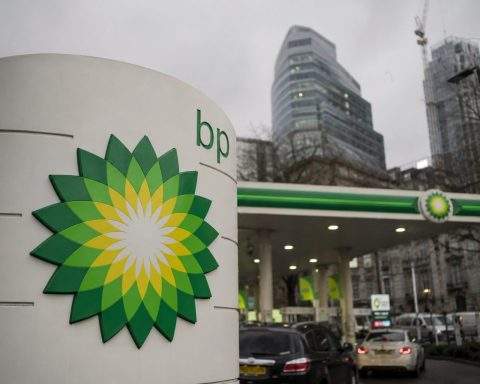

BP PLC stock is ending 2025 in a rare, high-stakes “reset moment” for a supermajor: a sudden CEO exit, an outsider successor lined up for April, active share buybacks, and a macro backdrop where oil prices have stayed stubbornly range-bound even through geopolitical shocks.
As of December 22, 2025, BP shares were trading around 424.5p in London (LSE listing) and $33.94 for the BP ADR in New York NYSE:BP, according to Investing.com market data.
Below is a detailed, investor-focused roundup of the most material BP stock news, forecasts, and market analysis in circulation as of 22.12.2025—and what it could mean for BP PLC shares heading into 2026.
BP Stock Today: Where BP Shares Stand on December 22, 2025
BP’s London-listed shares were indicated around 424.52p with a previous close of 424.85p and a reported 52-week range of 329.25p to 476.20p.
For U.S. investors, the BP ADR NYSE:BP was shown at $33.94, with a reported 52-week range of $25.22 to $37.64.
While the day-to-day tape can be noisy, BP stock’s bigger driver into year-end has been clear: leadership and strategy credibility—and whether BP can deliver a cleaner equity story than the market has historically given it credit for.
The Big BP Stock Catalyst: CEO Shake-Up and a Board-Led Strategy Push
What happened
BP has confirmed a leadership transition that surprised markets: Meg O’Neill, currently the CEO of Australia’s Woodside Energy and a former ExxonMobil executive, is set to become BP’s next CEO on April 1, 2026, after the abrupt departure of CEO Murray Auchincloss. BP executive Carol Howle is serving as interim CEO until O’Neill begins.
Reuters framed the move as a strong signal that BP’s new chair, Albert Manifold, is pushing for “transformative changes” and tighter execution—particularly around portfolio and cost discipline. Reuters+1
Why the CEO change matters for BP stock
From a BP share price perspective, the CEO change is not just “new leadership.” It’s a credibility test on three linked investor concerns repeatedly raised in analyst commentary:
- Can BP improve returns and narrow the valuation gap vs. peers? Reuters notes BP has lagged rivals such as Exxon in market perception, and the company is trying to improve profitability and share performance.
- Can BP execute disposals and debt reduction without shrinking the quality of future cash flows? BP has pledged $20 billion in asset divestments by 2027, including the long-watched Castrol process, while also cutting costs and debt.
- Does the board want BP to “build, buy, or be bought”? Reuters’ analysis explicitly lays out those strategic paths—and suggests improved performance can paradoxically intensify takeover attention. Reuters+1
“Build, Buy, or Be Bought”: Why BP Takeover Talk Returned (Again)
Shell–BP speculation and the December 26 date
One reason the market keeps circling BP’s takeover narrative is structural: Shell publicly ruled out bidding for BP in June 2025, and under UK takeover rules that “no-intention-to-bid” stance can restrict bidding for a period—meaning the calendar matters.
Reuters reported that Shell’s mergers and acquisitions chief Greg Gut departed after leadership blocked an internal proposal to acquire BP, and noted the restriction would end December 26, 2025.
The Financial Times separately reported that Shell’s CEO and CFO vetoed the proposed BP bid, prioritizing shareholder returns and warning that a megadeal could derail strategy.
What Reuters says about BP’s “merger gravity”
Reuters’ December 18 analysis argues that consolidation is more attractive when major oil companies believe oil and gas demand will remain robust for decades, and that BP’s upstream portfolio can look appealing to would-be acquirers—especially if BP’s performance improves.
For BP stock, this matters in two ways:
- Optionality premium: takeover speculation can sometimes put a “floor” under sentiment.
- Execution pressure: a takeover narrative can also sharpen investor impatience: if BP stays independent, it must deliver a clearer path to returns.
BP Buybacks and Capital Returns: What the Company Has Been Doing With Shares
A concrete datapoint: BP bought back 1.63 million shares (Dec. 18)
BP’s Transaction in Own Shares filing shows that on December 18, 2025, the company repurchased 1,634,942 ordinary shares across the LSE and Cboe UK venues as part of the buyback program announced on November 4, 2025.
The filing also discloses the volume-weighted average prices (around 424p) and the post-transaction count of treasury shares and shares in issue—details equity analysts often use to track the pace and persistence of capital returns.
The bigger context: Q3 profits, buyback pace, and the Castrol “watch item”
In its November 4, 2025 results coverage, Reuters reported BP posted $2.21 billion in underlying replacement cost profit versus a company-compiled analyst estimate of about $2.02 billion, with refining strength helping offset lower crude prices.
Reuters also reported BP kept its quarterly share buyback pace at $750 million through the third quarter, while noting there was no update at that time on the Castrol sale process—often seen as the centerpiece of the broader divestment plan.
And importantly for BP stock expectations, Reuters quoted an RBC analyst raising the question of whether BP might defer the Castrol sale and whether it should cut the buyback to zero to strengthen the balance sheet further—underscoring that the buyback narrative is still debated even among major banks.
Energy Transition Reality Check: Solar in Brazil, Hydrogen in Teesside, and a New Kind of Competition
BP’s strategy story has increasingly become: “optimize the legacy engine while selectively monetizing parts of the transition portfolio.”
Two December developments illustrate that tension.
Petrobras deal: Lightsource bp goes into a Brazil joint venture
On December 16, 2025, Reuters reported that Brazil’s state-run Petrobras agreed to acquire 49.99% of Lightsource bp’s subsidiaries in Brazil, structured as a joint venture—marking Petrobras’ entry into the solar segment.
Reuters also noted Lightsource bp (BP’s renewables unit) has a Brazil pipeline of 1–1.5 gigawatts in advanced development, plus earlier-stage projects.
From an investor lens, this reads as: keep exposure, bring in partner capital, reduce funding burden, and potentially unlock valuation in a capital-hungry part of the business.
Teesside hydrogen: BP drops a flagship plan as AI data centers muscle onto the land
Earlier in December, the Financial Times reported BP abandoned its H2Teesside hydrogen and carbon capture scheme—paving the way for a large AI data centre project on the same site, reflecting shifting government priorities and weakening hydrogen demand economics in that region.
S&P Global (Platts) reported BP cited “material and significant changes in circumstances,” including land-use conflict and demand uncertainty, while the UK government said it remained committed to low‑carbon hydrogen even after BP’s withdrawal. S&P Global
For BP PLC stock analysis, the takeaway is not simply “BP exits hydrogen.” It’s that capital allocation has become brutally competitive, sometimes even within decarbonization narratives—where AI and power demand can beat out hydrogen on speed, certainty, and political momentum.
Macro Driver for BP Shares: Oil Prices Stayed Calm Even When 2025 Was Not
Integrated oil and gas stocks like BP are still tethered to crude and product margins—no matter how many strategy slides mention “transition.”
A Reuters commentary on December 22, 2025 argues that oil’s traditional “geopolitical premium” largely vanished in 2025, even amid major shocks. Reuters notes Brent rose during the Israel–Iran conflict in June but quickly returned to pre-war levels, and describes 2025 oil futures trading in a relatively narrow band (roughly $60 to $81 on daily closes). Reuters
That matters for BP stock forecasts into 2026 because:
- Less fear premium can mean lower upside spikes in oil prices during crises.
- A tighter oil range places more weight on cost cuts, balance sheet discipline, refining/trading performance, and portfolio optimization—exactly the areas BP’s board is now emphasizing.
BP Stock Forecasts and Analyst Price Targets: What Wall Street and City Analysts Are Saying
Analyst outlooks for BP PLC stock are mixed—but the pattern is consistent: strategy execution and oil price assumptions are doing most of the work.
Price targets: London listing and U.S. ADR
- Investing.com’s snapshot for the London listing showed an average BP price target around 475.9p, with estimates ranging from roughly 373.7p to 589.9p (as displayed on Dec. 22).
- MarketBeat’s consensus view for the U.S. ADR showed an average 12‑month price target around $43.23, with a wide high‑low range (as displayed by the site).
Recent “call-outs” in analyst commentary
- Wolfe Research raised its BP ADR price target to $51 and maintained an Outperform rating after the CEO change, arguing the move increases the board’s control and could accelerate a portfolio/cost review.
- Bank of America Securities (as summarized by TipRanks) downgraded BP to Sell with a 375p target, citing a lower Brent oil price forecast and concerns about cash flow quality through the disposal program. (This is one firm’s view, not a consensus.)
- A MarketScreener compilation shows multiple banks reiterating views around the CEO news flow (including neutral reiterations and some buys), highlighting that the Street is still split between “turnaround opportunity” and “structural discount.” MarketScreener
The simplest way to read the analyst divide
- The bull case on BP shares: a board-driven overhaul delivers faster cost cuts, clearer portfolio focus, better capital discipline, and sustained shareholder returns (dividends + buybacks), allowing BP’s valuation discount to shrink.
- The bear case on BP stock: softer oil price expectations + asset sales reduce future cash flow quality, and BP has to choose between buybacks and balance sheet repair—while still proving it can outperform peers operationally.
What to Watch Next for BP PLC Stock: Key Dates and Catalysts Into Early 2026
A few near-term catalysts stand out for BP shares as of Dec. 22:
- December 26, 2025: the date referenced in reporting around the end of Shell’s UK “no-bid” restriction window—one reason takeover chatter may persist into late December and early January. Reuters+1
- February 10, 2026: the next earnings date shown on Investing.com for BP (both the London listing page and the ADR page).
- Castrol and divestments: Reuters has repeatedly highlighted Castrol as central to BP’s divestment plan, and the market continues to react to whether BP provides clarity or delays decisions.
- Buyback pacing: BP’s buyback activity is observable via RNS filings; investors will watch whether repurchases remain steady through leadership transition and oil price uncertainty.
- Oil price regime: if Reuters is right that the geopolitical premium is structurally smaller, BP’s 2026 narrative leans harder on controllables (costs, portfolio, execution).
Bottom Line: BP Stock Enters 2026 With a Clearer Direction—and Higher Standards
BP PLC stock is not short on storylines, but investors are increasingly demanding measurable delivery:
- New CEO, new chair, and a clearer tilt back to oil and gas are intended to boost returns.
- Buybacks and dividends remain central to BP’s equity appeal, but the trade-offs with debt reduction and disposals are still debated.
- Energy transition exposure hasn’t disappeared—it’s being reshaped through partnerships (Brazil solar) and exits (Teesside hydrogen), reflecting more selective capital allocation.
- The macro wildcard is the same old beast in a new costume: oil prices may stay lower and calmer than past crises would have implied, raising the bar on operational performance.
Related articles: LSE:BP