
Planet Labs PBC NYSE:PL is starting December 22, 2025 near record territory after a month of headline catalysts that blended three powerful themes investors can’t resist: defense demand, AI-enabled data, and improving financial momentum. In premarket trading, PL was quoted around $19.79 early Monday, after a $19.18 prior close—levels that keep the stock close to recent highs and firmly on traders’ radar.
Today’s conversation around Planet Labs stock is less about “What does the company do?” and more about “How far can this rerating go—and what fundamentals need to show up next to justify it?”
Why Planet Labs stock is in the spotlight on Dec. 22, 2025
Two of the most-circulated angles in today’s coverage are:
- Valuation after a sharp run-up. A December 22 analysis piece framed PL’s move as a “turnaround” for shareholders, noting the stock is up roughly 72% over the past month and nearly 59% over the past three months, raising the inevitable question: is the market getting ahead of itself? Simply Wall St
- A broader “defense-growth” narrative. A Bloomberg markets newsletter dated December 22 grouped Planet Labs with a set of defense- and security-adjacent names that investors are increasingly treating like growth stocks rather than old-school contractors. Bloomberg
That macro framing matters because Planet is increasingly discussed as geospatial intelligence infrastructure—a category that sits at the intersection of national security, supply chains, climate monitoring, and AI.
What Planet Labs actually does (and why it matters for PL stock)
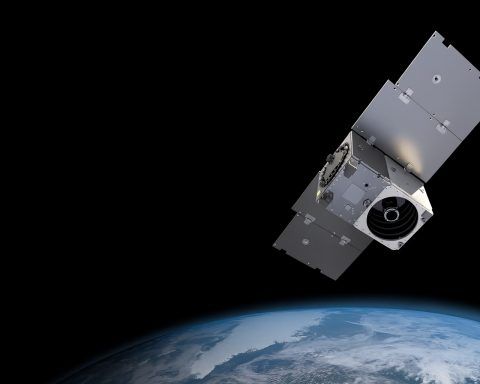
Planet Labs provides near-daily Earth imagery and geospatial solutions, operating what it describes as a fleet of approximately 200 Earth imaging satellites. The business sells data subscriptions and analytics that help customers spot change on Earth—fast—across sectors like government, agriculture, forestry, mapping, and more.
For stock investors, that translates into a simple investment debate:
- If Planet becomes a default layer of “reality data” for governments and enterprises, recurring revenue can scale like software.
- If the market commoditizes imagery or budgets tighten, the company risks becoming a capital-intensive data supplier with limited pricing power.
December’s newsflow pushed the market toward the more optimistic interpretation.
The earnings catalyst: Planet’s Q3 FY2026 results and raised outlook
The core driver behind PL’s December momentum was the company’s third-quarter fiscal year 2026 earnings release (quarter ended Oct. 31, 2025, reported Dec. 10, 2025). Planet reported:
- Revenue of $81.3 million, up 33% year over year (record quarterly revenue) Business Wire+1
- Recurring annual contract value (ACV) at 97% for the quarter Business Wire
- Gross margin of 57% (non-GAAP gross margin 60%) Business Wire
- Adjusted EBITDA of $5.6 million profit, versus a small loss in the year-ago quarter Business Wire+1
- A third consecutive quarter of positive free cash flow, with year-to-date free cash flow of $55.2 million Business Wire
Balance sheet commentary also stood out. Planet said it raised $460 million of convertible debt and ended the quarter with approximately $677.3 million in cash, cash equivalents, and short-term investments.
Management’s forecast: Q4 FY2026 and full-year FY2026 guidance
The company’s own forward outlook (the most important “forecast” for many long-term investors) includes:
Q4 FY2026 (ending Jan. 31, 2026):
- Revenue expected $76 million to $80 million
- Non-GAAP gross margin ~50% to 52%
- Adjusted EBITDA loss ~($7) million to ($5) million
- Capex ~$22 million to $26 million Business Wire+1
Full fiscal year FY2026:
- Revenue expected $297 million to $301 million
- Non-GAAP gross margin ~57% to 58%
- Adjusted EBITDA profit ~$6 million to $8 million
- Capex ~$81 million to $85 million Business Wire+1
One nuance investors are chewing on: the company is forecasting full-year adjusted EBITDA profitability, but expects a Q4 adjusted EBITDA loss—a reminder that the path to “software-like” earnings can still be lumpy for a satellite business.
The backlog signal: contracted future revenue is growing
Planet also disclosed expanding contracted coverage through:
- Remaining performance obligations (RPO) of $672.470 million (as of Oct. 31, 2025)
- Backlog of $734.471 million (as of Oct. 31, 2025) Business Wire
The company indicated it expects to recognize about 33% of RPO within 12 months and 59% within 24 months (with the remainder later).
For PL stock bulls, this supports the narrative that Planet is landing more multi-year, repeatable work—particularly on the government and defense side.
The technology catalyst: Pelican satellites and “AI at the edge”
On the product side, Planet’s recent updates centered on its next-generation Pelican constellation.
In a December 9 release, Planet published “first light” imagery from Pelican‑6, with key details including:
- The image was taken Dec. 4, 2025, from an altitude of ~519 km
- Pelican‑5 and Pelican‑6 launched on Nov. 28, 2025 on SpaceX’s Falcon 9 Transporter‑15 mission, alongside 36 SuperDoves Business Wire
- The satellites include NVIDIA Jetson AI chips for on-orbit edge computing
- Current Pelican generation supports Planet’s 50 cm products, while next-generation Pelicans are designed for 30 cm-class imagery Business Wire
This matters for the stock because higher resolution + faster tasking + on-orbit compute can improve the value of Planet’s data for defense and time-sensitive monitoring, potentially supporting higher contract sizes and stickier renewals.
Defense and intelligence demand is becoming the PL stock storyline
Planet’s December rally didn’t happen in a vacuum. The company has been stacking contract-related announcements that reinforce a shift toward defense and intelligence as a major growth lane.
Examples from recent releases and coverage include:
- An “8‑figure” contract renewal with a longstanding international defense and intelligence customer for high-resolution imagery, including access to Pelican and SkySat assured tasking capabilities. Business Wire
- A $12.8 million award from the U.S. National Geospatial‑Intelligence Agency (NGA) under the Luno B IDIQ program for AI-enabled maritime domain awareness solutions.
- Reuters previously reported Planet’s $230 million agreement to build high-resolution Pelican satellites for an Asia-Pacific commercial partner over seven years, with delivery slated for 2026—highlighting demand for “sovereign” or priority-access capabilities. Reuters
Put together, these moves help explain why Planet is increasingly mentioned in the same breath as “defense-tech” growth names in market commentary. Bloomberg
Analyst forecasts: where Wall Street price targets sit now
After the earnings beat and guidance raise, multiple firms and market trackers reported upward revisions to Planet Labs stock price targets.
A few notable datapoints circulating in December:
- Needham raised its PL price target to $22 from $16, maintaining a Buy rating (as reported by Investing.com).
- A MarketBeat roundup noted Morgan Stanley raising its target to $20 and Citigroup initiating at $19 with a “buy,” while also describing a “Moderate Buy” consensus (MarketBeat aggregates analyst data and notes). MarketBeat+1
- Fintel’s analyst summary (as of Dec. 21) showed an average one-year price target of $17.78, with targets spanning roughly $11.11 to $23.10—a wide range that underscores disagreement about how durable Planet’s new growth narrative will be.
Why price targets are messy right now
When a stock moves this quickly, consensus targets often lag reality in two ways:
- Older targets stay in the data (dragging averages down), even as a few firms rush to update upward.
- Analysts differ on what Planet “should” be valued like—a data subscription platform (higher multiples) or an aerospace/imagery provider (lower multiples).
That valuation identity crisis is one of the biggest near-term drivers of volatility.
Valuation debate on Dec. 22: the market is paying for a new story
The most prominent “today” angle is valuation: after a steep climb, how much optimism is already priced in?
A December 22 valuation-focused writeup framed PL as having delivered a dramatic shareholder turnaround, flagging the speed of the move as the key issue for new buyers.
Meanwhile, Trefis analysis attributed much of PL’s last-12-month surge to multiple expansion, not just revenue growth. In its decomposition from Dec. 21, 2024 to Dec. 21, 2025, Trefis estimated:
- Stock price rose from $4.04 to $19.18 (+374.75%)
- Revenue rose from roughly $241.65M to $282.46M (LTM basis)
- The P/S multiple increased from ~4.90 to ~21.00 Trefis
Multiple expansion is not inherently “bad”—it’s what happens when markets decide a business has improved quality, visibility, or growth prospects. But it does raise the bar: to keep the stock supported at a higher valuation, investors will want to see continued execution on guidance, contract wins, and sustainable cash generation.
A volatility factor investors should not ignore: short interest
Planet Labs stock has also been associated with higher short interest, which can amplify both rallies and pullbacks.
MarketBeat data cited short interest around 29.89 million shares, about 11.77% of the float (as of a late-November reporting date), with a short interest ratio near 2.61 days.
High short interest doesn’t automatically mean a “squeeze,” but it can make price action sharper—especially around earnings, major contract announcements, or large intraday moves.
What to watch next for Planet Labs stock
With the quarter ending January 31, 2026, the next major fundamental checkpoint will be Planet’s Q4 and full-year FY2026 results—specifically whether the company can deliver on:
- Revenue growth within the guided $76M–$80M Q4 range and $297M–$301M full-year range Business Wire
- Maintaining healthy non-GAAP gross margins, even with the guided Q4 step-down (50%–52%) Business Wire
- Continuing the streak of free cash flow discipline, which has become central to the bull case Business Wire
- Additional evidence that Pelican’s higher-resolution roadmap and on-orbit compute can translate into premium contracts and durable renewals Business Wire+1
Bottom line for Dec. 22, 2025: PL stock is priced for execution
As of December 22, Planet Labs sits in a rare market niche: space infrastructure that behaves like an information business, with real traction in defense and intelligence spending cycles. The company’s latest results show faster revenue growth, improved adjusted EBITDA performance, expanding contracted coverage, and a balance sheet reinforced by convertible financing.
But the same thing powering PL stock—an aggressive rerating—also increases the risk of sharp pullbacks if growth slows, margins disappoint, or the contract narrative cools. For investors, the next chapter is less about whether Planet can build satellites (it can) and more about whether it can keep converting orbital capability into repeatable, high-margin, cash-generating demand—at a pace fast enough to justify today’s valuation.
Related articles: NYSE:PL