Dec. 22, 2025 — Hecla Mining Company (NYSE: HL) is starting the holiday-shortened week with two powerful tailwinds that tend to make mining stocks behave like they’ve had three espressos: index inclusion and surging metal prices.
Today is the effective date for Hecla’s addition to the S&P MidCap 400, a move that can trigger mechanical buying from index-linked funds and often pushes trading volume sharply higher. Business Wire+1 At the same time, silver and gold are printing new record highs, strengthening the macro backdrop for precious-metals miners broadly—and silver-focused names in particular.
In premarket trading, Hecla was among the notable gainers, rising at least 4% in early Monday action, according to market coverage that highlighted metals-linked stocks.
Below is what’s driving HL today, what the company most recently reported, and where forecasts and analyst views sit as the stock heads into 2026.
Why HL stock is moving today: S&P MidCap 400 inclusion meets a metals melt-up
1) Hecla officially joins the S&P MidCap 400 before the open
Hecla announced earlier this month that it would be added to the S&P MidCap 400 Index, effective prior to the open of trading on December 22, 2025.
From a market-structure perspective, this matters because the MidCap 400 is widely followed by passive index funds and institutional strategies that track (or benchmark against) the index—creating a built-in reason for incremental demand around the effective date.
Hecla’s CEO Rob Krcmarov also emphasized the signaling value of the addition, noting that Hecla is the only precious-metals producer in the index and that inclusion could help broaden the institutional investor base and liquidity.
2) Gold and silver hit record highs on rate-cut expectations and safe-haven demand
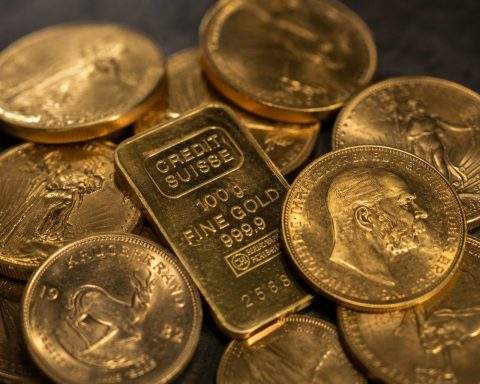
On the macro side, spot gold crossed $4,400 per ounce for the first time, while spot silver reached a record high of $69.44 per ounce on Monday, according to Reuters.
Reuters attributed the surge to a familiar mix for late-cycle markets: expectations of U.S. rate cuts, safe-haven buying, a softer dollar, and strong demand dynamics. Reuters Those forces are especially relevant for miners because higher realized prices can expand margins—sometimes dramatically—when costs don’t rise at the same speed.
Silver’s 2025 run has been particularly intense. Reuters reported silver is up roughly 139% year-to-date, driven by supply deficit dynamics, industrial demand, and investment flows.
The fundamentals backdrop: Hecla’s latest quarter was a “records everywhere” kind of print
Hecla’s most recent reported quarter (Q3 2025) provided the kind of operating and balance-sheet narrative that tends to attract both momentum traders and longer-term institutional investors:
- Revenue: about $409.5 million (record)
- Net income: about $101.4 million (record)
- Adjusted EBITDA: about $196.1 million (record)
The company also reported:
- Cash and cash equivalents: about $133.9 million
- Operating cash flow: about $186.9 million
- Free cash flow: about $90.1 million
- Net leverage ratio: about 0.3x, alongside commentary that the credit facility was fully repaid
Those numbers matter in today’s context because the market is often willing to pay up for miners that can show two things at once:
- leverage to metals prices, and
- a balance sheet that doesn’t look like it’s held together with duct tape.
Production, realized prices, and costs: where Hecla’s leverage to silver shows up
For Q3 2025, Hecla reported consolidated production of approximately:
- Silver:4.4 million ounces
- Gold:49,735 ounces
Hecla’s reported realized prices in the quarter were notably strong:
- Silver realized price: about $42.58/oz
- Gold realized price: about $3,509/oz
On costs, the company reported silver cash costs that were negative (i.e., below zero) in Q3 2025, reflecting the impact of byproduct credits (like lead, zinc, and gold) on a per-ounce-silver basis. It also reported consolidated AISC (all-in sustaining cost) for silver around $11.01/oz in the quarter.
That combination—high realized prices plus low (or even negative) cash costs—helps explain why HL can react so sharply when the metals tape turns bullish.
Company outlook: 2025 guidance and what it implies heading into 2026
Hecla’s updated 2025 production guidance (as presented in its Q3 materials) called for approximately:
- Silver:16.2–17.0 million ounces
- Gold:145,000–150,000 ounces
By operation, Hecla’s 2025 outlook included:
- Greens Creek: 9.7–10.0 Moz silver; 50–55 koz gold
- Lucky Friday: 4.1–4.3 Moz silver
- Keno Hill: 2.4–2.7 Moz silver
- Casa Berardi: 79–82 koz gold
On cost guidance (silver side), Hecla guided to consolidated:
- Silver cash cost:($1.75) to ($0.75) per ounce (negative)
- Silver AISC:$11 to $13 per ounce
Hecla also provided 2025 capital investment guidance of roughly $222 million to $242 million.
One important “nerdy but real” detail: Hecla’s cost guidance uses specific price assumptions for byproduct credits and other calculations. Those assumptions were well below today’s spot prices (e.g., byproduct credit assumptions include gold and silver far under current record levels), which means if prices stay elevated, actual byproduct-credit dynamics could differ materially from the planning case. Q4 Communications+1
Operational catalysts to watch into 2026
Index inclusion and metal prices can move stocks fast. Operations move them for longer. Here are the company-specific items currently shaping the forward story:
Lucky Friday: infrastructure upgrade aimed at improving long-term performance
Hecla said Lucky Friday production remained consistent with prior performance while the company continued construction of a surface cooling project, described as key infrastructure for increasing cooling capacity over the mine’s reserve life. The project was 66% complete and targeted for completion in the first half of 2026.
Greens Creek: permitting and tailings-related expansion work
Hecla noted Greens Creek received authorization related to wetland impacts tied to future expansion activities for dry stack tailings, with construction scheduled to begin and a broader build expected to extend into 2026.
Exploration and pipeline: Nevada and Yukon headlines
In recent exploration-focused news releases, Hecla highlighted multiple potential growth levers:
- Midas (Nevada): Hecla reported exploration results including a new high-grade discovery on the “Pogo Trend,” citing visible gold and an intercept described as 0.95 oz/ton gold over 2.2 feet (estimated true width). The company emphasized existing permitted infrastructure, including a 1,200 tpd mill and tailings capacity, framing Midas as a potentially lower-capital-intensity restart opportunity if resources expand. Business Wire
- Aurora / Polaris (Nevada): Hecla separately announced it received a Finding of No Significant Impact (FONSI) and Decision Notice from the U.S. Forest Service for the Polaris Exploration Project, clearing the way for exploration activities to begin in 2026.
- Keno Hill (Yukon): In the same exploration update, Hecla discussed identification of a potential new ore shoot and additional high-grade mineralization indicators at the Bermingham Deposit area.
This matters for HL stock because the market is currently pricing in more than “just” a silver price rally—there’s a narrative premium for companies that can extend mine life, add high-grade zones, and grow production without blowing up capex.
Forecasts: where gold, silver, and HL expectations are pointing into 2026
Commodities outlook (the “gravity” that pulls miners around)
Reuters reporting on silver’s rally cited strategist commentary suggesting silver could move toward $75/oz by the end of 2026, while also stressing silver’s historical tendency toward sharper corrections because it’s a smaller, less liquid market than gold.
On gold, Reuters also quoted an outlook pointing to a potential $4,500/oz target next year, with rate expectations and macro uncertainty still supportive.
For HL stock, these commodity forecasts matter less as “prophecy” and more as a map of what sentiment is currently willing to believe. Miners often trade on the second derivative: not just high prices, but whether the market thinks those prices can stay high.
Analyst price targets and ratings: a wide gap versus today’s trading range
Analyst targets for HL vary widely and, importantly, many published targets appear anchored to earlier price regimes—before the stock’s late-2025 surge.
A Nasdaq-hosted Fintel summary in November cited an average one-year price target revised to $14.69, with a range roughly $10.10 to $17.32 at that time.
TipRanks data (as displayed on its forecast page) showed a more recent-looking band with an average around $15.42, a high forecast of $19.00, and a low forecast of $12.00.
Meanwhile, at least one notable bearish call earlier in the cycle came from Roth/MKM, which (per Investing.com coverage) downgraded HL to Sell while raising its price target to $8.75, citing concerns including potential production declines at Casa Berardi and risks around Keno Hill.
The practical takeaway: HL is trading as if the metals boom is real, durable, and directly monetizable—while many published analyst targets still reflect either caution, lagging updates, or more conservative commodity assumptions.
What HL investors are watching next
Into year-end and early 2026, HL’s “watch list” is pretty clear:
- Index-flow aftershocks: S&P MidCap 400 additions can bring forced buying—followed by volatility once the rebalance is digested.
- Silver volatility risk: even bullish analysts caution silver can correct hard and fast.
- Execution on 2025 guidance and costs: production delivery (by asset) and cost control remain core.
- Project milestones: Lucky Friday’s cooling project timeline into 1H 2026, and Greens Creek expansion-related permitting and construction progress.
- Exploration conversion: whether Midas/Aurora/Keno Hill exploration headlines translate into resources, mine plans, and ultimately cash flow.
Bottom line: HL is getting a rare “double boost,” but the stock now has to keep earning the hype
On Dec. 22, Hecla isn’t just catching a commodity wave—it’s also stepping into a major index on the same day silver prints all-time highs. Business Wire+1 That’s the kind of coincidence markets love, because it compresses multiple bullish narratives into a single ticker symbol.
The flip side is that narratives come with expiration dates unless operations keep delivering. Hecla’s most recent quarter showed record financial performance and strong cash generation, which helps justify attention. Q4 Communications+1 The next leg from here will likely depend on a three-part test: metal prices, execution vs. guidance, and tangible progress on growth projects.