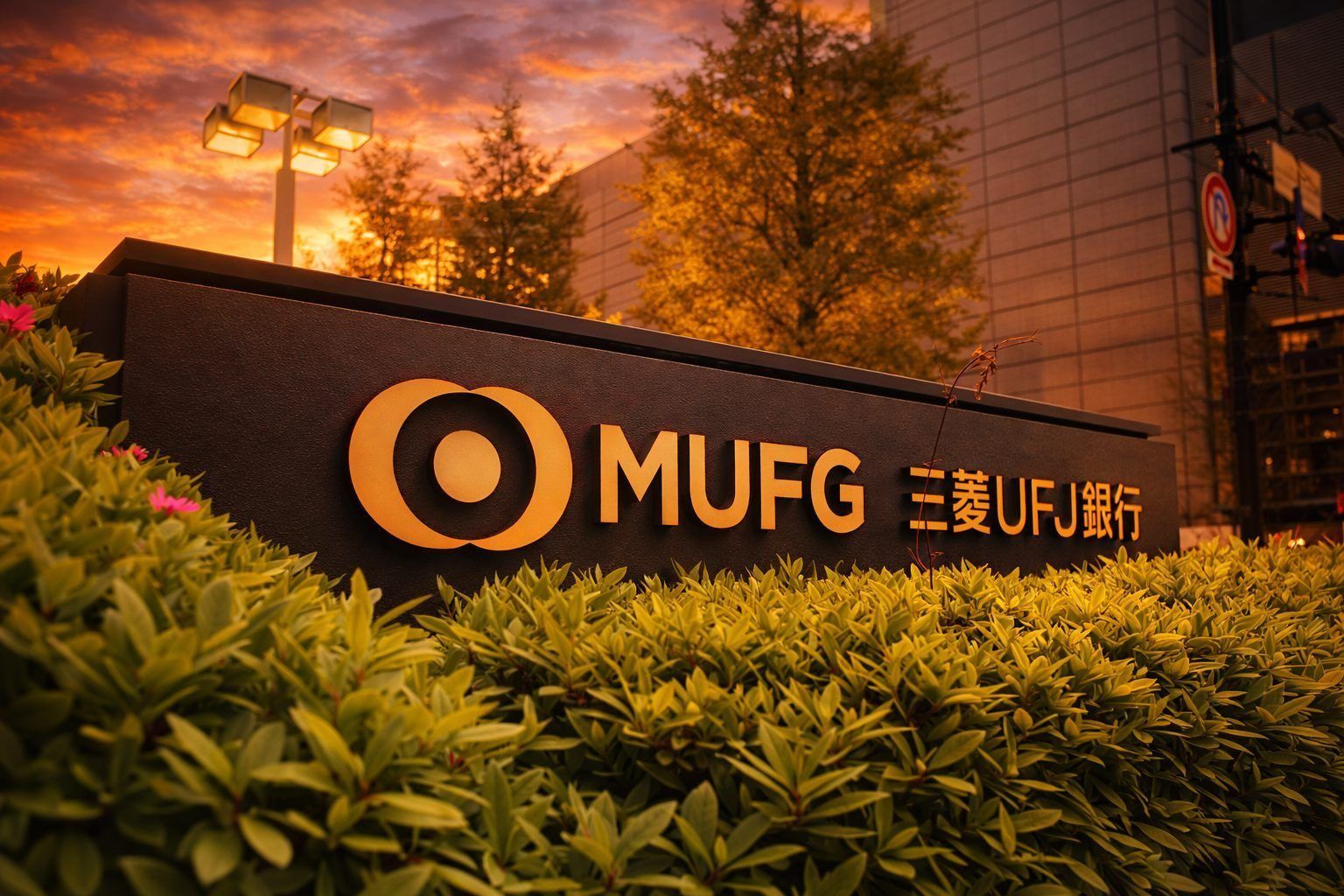

New Delhi — December 24, 2025: Japan’s MUFG Bank is set to buy a 20% stake (fully diluted) in Shriram Finance through a preferential allotment worth about ₹39,618 crore (≈$4.4 billion), in what multiple reports describe as one of the largest foreign investments in India’s financial services space in 2025.
The announcement has quickly moved beyond a “big-ticket FDI” headline. Investors, rating-watchers and rival lenders are now focused on the mechanics: how the deal is structured, why MUFG is choosing an NBFC rather than a bank, what Shriram intends to do with the capital, and whether this partnership can tangibly lower Shriram’s cost of funds—one of the most important levers in retail lending. Finshots+2Telegraph India+2
Below is a detailed breakdown of the deal and the key developments being discussed as of 24.12.2025.
The headline numbers: stake, price, shares, and the vote ahead
The transaction is designed as a preferential issue of equity shares to MUFG Bank.
- Stake: ~20% on a fully diluted basis MUFG+1
- Total consideration:₹39,617.98 crore (company filings), broadly reported as ₹39,618 crore Moneycontrol Images+2Telegraph India+2
- Issue price:₹840.93 per share Moneycontrol Images+2Business Standard+2
- Shares to be issued to MUFG:47,11,21,055 fully paid-up equity shares Moneycontrol Images+2Business Standard+2
A key near-term milestone is the shareholder process. The company’s notice and exchange documents indicate an Extraordinary General Meeting (EGM) scheduled for January 14, 2026 to seek approvals linked to the preferential issue and related matters.
What Shriram Finance says it will do with the ₹39,618 crore
One of the most consequential disclosures in the EGM documentation is the intended use of proceeds, which frames how quickly the investment could translate into growth and balance-sheet outcomes.
Shriram Finance’s EGM materials outline three broad “objects” for the preferential issue:
- Onward lending: Up to ₹20,000 crore (up to 50.49%)
- Retirement of borrowings (including interest): Up to ₹15,000 crore (up to 37.86%)
- General corporate purposes: Up to ₹4,617.98 crore (up to 11.65%)
The company also indicates a timeline of within 12 months from receipt of funds for utilisation (with procedural flexibility and monitoring).
For markets, this split matters:
- The onward lending bucket supports faster AUM growth (the “growth engine” part of the story).
- The borrowing retirement bucket supports better leverage metrics and, potentially, stronger ratings and lower marginal funding costs over time.
- The general corporate allocation is capped and explicitly disclosed as a minority of the total plan.
Why MUFG picked an NBFC as its India growth gateway
An important theme in explainers and interviews this week: MUFG isn’t walking into India through the long, regulator-heavy path of acquiring or building a full retail bank from scratch. Instead, it’s buying into a scaled NBFC that already sits deep in last-mile credit.
Finshots’ explainer captures the logic bluntly: NBFCs in India can provide faster strategic entry (ownership and board representation) than banks, which face tighter promoter rules and longer regulatory runways for transformational transactions.
MUFG’s own release says the investment is meant to help it build a “business foundation” in India’s MSME and retail markets and capture domestic demand—leveraging Shriram’s distribution and customer relationships. MUFG
Why Shriram, specifically?
MUFG points to Shriram Finance’s operating scale and reach:
- About 3,200 branches across India (with strength in rural and semi-urban markets) MUFG+1
- Roughly 9.7 million customers (as of end-September 2025, per MUFG) MUFG
- A business mix heavily linked to the real economy—commercial vehicles, passenger vehicles, MSME credit—and a strong position in used vehicle loans MUFG+1
Put simply: MUFG gets exposure to India’s consumption-and-transport credit cycle without waiting years to organically build the same footprint.
Governance and strategic partnership: board seats, rights, and what “minority” really means
MUFG has described the transaction as more than a passive financial investment. Its press release states MUFG plans to appoint two directors and has signed an MoU for a strategic partnership to accelerate Shriram Finance’s growth through collaboration.
Reuters also reports the deal includes minority protection rights (including board representation and pre-emptive rights), and that these rights lapse if MUFG’s stake falls below 10% on a fully diluted basis.
From Shriram’s side, leadership commentary published this week consistently frames MUFG as a significant minority shareholder, with Shriram continuing to run the company’s strategy and operations.
The $200 million non-compete fee: why it’s there and why it’s controversial
One element that has drawn immediate attention is the one-time $200 million non-compete and non-solicit fee.
- Reuters reported MUFG will pay $200 million to Shriram Ownership Trust (subject to shareholder approval).
- Shriram Finance’s exchange filing spells it out: MUFG pays the fee to Shriram Ownership Trust as consideration for non-compete and non-solicit obligations tied to the company’s lending and credit business, also subject to shareholder approvals and related-party governance requirements.
In practical terms, these clauses are meant to reduce “parallel competing business” risk—especially important when a global strategic investor is paying a premium for long-term partnership certainty. But because the recipient is linked to major shareholders, the structure naturally attracts scrutiny and demands clear shareholder sign-off. Moneycontrol Images+1
Capital adequacy: the big immediate “before vs after”
The most cited near-term financial impact is the jump in capital buffers.
The Telegraph reports Shriram Finance said the transaction could lift its capital adequacy ratio to ~31%, up from 20.68% at end-September 2025.
That gap matters because it can change how rating agencies and wholesale lenders price risk—especially for an NBFC that funds itself via market borrowings rather than low-cost deposits.
Ratings and cost of funds: how quickly can the deal lower borrowing costs?
This is the core market question, and the answer is “not overnight”—but potentially meaningful.
The Telegraph report notes management’s view that a possible move from AA+ toward AAA could eventually reduce cost of funds by about 50–75 basis points, with benefits showing up as liabilities mature and fresh borrowings come at lower rates—over a multi-year horizon.
This aligns with the broader thesis laid out by multiple market commentaries: MUFG’s entry can strengthen perception of balance-sheet durability, potentially supporting better ratings and cheaper long-duration funding.
“No bank foray”: Shriram reiterates it will remain an NBFC
Speculation around a banking licence inevitably followed such a large investment—especially with a global bank buying a stake.
But Shriram Finance’s leadership has been explicit in public comments:
- The Telegraph reports executives said there’s no plan to enter banking “at the moment,” arguing the NBFC model allows specialisation and customisation—and that the runway for growth in current businesses remains large. Telegraph India
- Times of India similarly quotes management saying there is no move at present to convert into a bank, and that vehicle finance remains a key focus.
- Mint’s report also notes the company ruled out applying for a banking licence after the MUFG investment and expects no structural change in how the business is managed.
This messaging matters for two reasons:
- It reassures regulators and investors that the transaction is not a backdoor banking pivot.
- It keeps attention on what MUFG can realistically improve within the NBFC structure: funding mix, risk systems, governance, and growth execution.
Growth plan signals: branches, jobs, and a sharper push in core lending
Shriram Finance is publicly linking the capital infusion to physical expansion and employment.
The Telegraph reports the company plans to open 100 new branches per year for the next two years, and convert some rural satellite offices into full branches—an expansion that it says could create 3,000 to 5,000 jobs.
Separately, Times of India reports management expects to grow its vehicle finance portfolio at about 20% CAGR over the next four-to-five years, underscoring that the deal is being positioned as growth capital rather than rescue capital.
What’s new specifically on 24.12.2025: timeline and approvals in focus
The newest actionable update circulating today is around the closing timeline.
In an Economic Times BFSI video update dated December 24, 2025, Shriram Finance’s Umesh Revankar says the transaction is expected to close in three to four months, subject to shareholder approval and approvals from regulators including the RBI and CCI.
That places the likely completion window into early-to-mid 2026, consistent with the broader sequencing implied by the EGM schedule and the required clearances.
Why this deal is bigger than one company: 2025’s rush of foreign money into Indian finance
This transaction is landing amid a broader surge of cross-border interest in Indian financial assets.
Reuters frames the MUFG-Shriram deal as a record-setting investment and says financial-sector deals in India totaled nearly $15 billion in 2025, more than double $6.5 billion in 2024—with other large transactions also reshaping the landscape.
Finshots’ explainer similarly points to 2025 as a breakout year for foreign capital in Indian finance, citing multiple major deals before MUFG’s entry into Shriram Finance.
The strategic subtext: global banks and long-duration investors want exposure to India’s expanding credit penetration—particularly outside top-tier cities—at a time when mature markets offer slower growth and tighter margins.
The key risks and watchpoints investors are tracking now
Even with the optimism, the path forward has clear execution and governance hurdles:
- Regulatory approvals and timelines: RBI/CCI approvals and shareholder votes will dictate the closing schedule.
- Dilution vs growth: A large equity issuance can dilute near-term metrics, and the market will judge whether the deployed capital generates enough incremental earnings power to offset it.
- Cost-of-funds improvement is gradual: Management commentary suggests funding-cost benefits accrue as liabilities mature and refinancing happens—measured in years, not quarters.
- Asset quality discipline: Shriram’s core markets (commercial vehicles, MSME lending) are cyclical; growth acceleration must be paired with underwriting discipline.
- Non-compete fee scrutiny: The $200 million payment requires careful shareholder governance and transparency, given where it is directed and why.
What to expect next: the 2026 calendar that matters
If you’re tracking the deal’s progress, the next key milestones are now fairly clear:
- January 14, 2026: Scheduled EGM for shareholder approvals related to the preferential issue and connected resolutions.
- Regulatory clearances: RBI and CCI approvals cited by management as necessary steps before closing.
- Post-close execution: deploying capital into lending growth, selective deleveraging/borrowing retirement, and operational collaboration under the MUFG partnership framework.
As of 24 December 2025, the MUFG–Shriram Finance partnership is increasingly being read as a template transaction: a global bank buying meaningful exposure to India’s retail and MSME credit engine through an NBFC—while leaving day-to-day control with local management, and aiming to create value through funding access, governance confidence, and long-term capital.



![UK Stock Market Today 28/08/2026 [UPDATE: 08:45 BST] [3i and Miners Lift FTSE Ahead of Warsh Speech]](https://ts2.tech/wp-content/uploads/2026/08/UK-market-dashboard-2026-08-28-0842-480x384.jpg "UK Stock Market Today 28/08/2026 [UPDATE: 08:45 BST] [3i and Miners Lift FTSE Ahead of Warsh Speech]")