
December 24, 2025 — AI stocks are heading into a holiday-thinned session with a familiar mix of rocket fuel and risk: mega-cap momentum, semiconductor geopolitics, a rapidly financialized data-center buildout, and regulators probing how AI services are distributed on dominant platforms.
With U.S. markets closing early on Christmas Eve (1 p.m. ET for NYSE and Nasdaq) and reopening after the holiday, investors are balancing “Santa Claus rally” optimism against headline-driven volatility that can hit harder when liquidity is thin. Barron’s
Christmas Eve market setup: early close, thin volume, and AI leadership
Christmas Eve is an early-close session for U.S. equities, while U.S. markets are closed on Christmas Day (Dec. 25) and return to normal trading afterward. That matters for AI stocks because many of the sector’s biggest names are also the market’s biggest index drivers—when trading is light, they can move the tape quickly in either direction.
The broader backdrop coming into today is constructive: the S&P 500 notched another record close this week, with large-cap tech again playing a starring role. Barron’s flagged the index’s march toward the psychologically important 7,000 level, a move closely associated with continued leadership from the same AI-adjacent giants that have dominated 2025.
Overnight and globally, the same pattern holds: AI-linked equity strength has been part of the story behind 2025’s strong year-to-date gains in major indices, even as investors toggle between risk-on equities and defensive hedges. Reuters’ global markets wrap noted that equities have been buoyed by AI-driven momentum into year-end, while precious metals also surged—an unusual “both can be true” signal about optimism and uncertainty coexisting. Reuters
The biggest AI-stock driver today: chip geopolitics is back in the driver’s seat
If AI is the engine of this market cycle, chips are the crankshaft—and today’s headlines are a reminder that policy can matter as much as product cycles.
U.S. chip tariffs on China: delayed timeline, immediate market relevance
The U.S. administration has outlined plans to impose tariffs on Chinese semiconductor imports tied to a trade investigation, but with a key twist: implementation is delayed until mid-2027. In other words, the policy signal is loud, even if the economic impact is not immediate.
Why it matters for AI stocks now (even with a delayed start date):
- Semiconductor supply chains don’t turn on a dime. Multi-year procurement contracts and capital spending plans for AI infrastructure often span the same horizon as policy timelines.
- Legacy chips still matter. Even if investors obsess over cutting-edge AI accelerators, the broader chip ecosystem—controllers, networking, power management, embedded components—feeds into data centers, edge devices, and industrial AI rollouts.
- Policy risk can widen the valuation spread. When tariffs and export controls dominate the narrative, investors often pay up for perceived “policy-resilient” winners and punish companies exposed to cross-border friction.
China responds: “indiscriminate” tariffs, and a warning of countermeasures
Today, China’s foreign ministry publicly opposed the planned U.S. semiconductor tariffs, criticizing the approach and signaling it would take measures to protect its interests if the U.S. proceeds. That pushes the story from a policy memo into a more explicit geopolitical back-and-forth—exactly the kind of context that can jolt AI chip names, suppliers, and customers.
Nvidia’s China question: revenue opportunity vs. political and regulatory drag
No company embodies “AI stocks” more than Nvidia (NVDA), and the China angle remains one of the market’s most sensitive pressure points.
Investopedia reported today that Nvidia has received approval from President Donald Trump to sell H200 AI chips in China under a structure that includes a 25% revenue-sharing arrangement, but emphasized that the path is still cluttered with political obstacles in the U.S. and uncertainty on the China side.
The key nuance for investors is that the debate isn’t simply “China sales good” or “export controls bad.” It’s more like a three-body problem:
- Revenue and utilization: China access can translate into meaningful incremental sales if shipments proceed.
- Regulatory whiplash risk: Rules can tighten quickly if lawmakers push back or if the geopolitical climate deteriorates.
- Second-order effects: Even the possibility of loosening restrictions can shift demand planning, customer behavior, and competitor strategies across the AI hardware stack.
Earlier this week, Reuters also reported that U.S. lawmakers sought more visibility into export license reviews related to potential Nvidia chip sales to China—another sign that this story remains politically “live,” not settled. Reuters
The AI buildout’s less glamorous bottleneck: electricity and the return of “peaker” plants
When people say “AI infrastructure,” they usually picture GPUs and futuristic data halls. The market is increasingly trading something more mundane—and more binding: power.
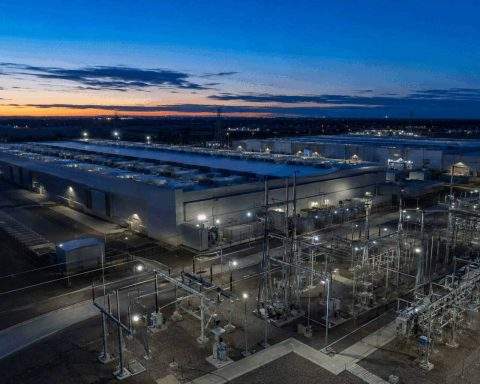
Reuters reported that soaring electricity demand tied to AI data centers is contributing to the return of older “peaker” power plants—facilities meant to run only during periods of peak demand—complicating the energy transition and raising concerns about local pollution and grid stress. Reuters
For AI stocks, this isn’t an abstract climate-policy subplot. It hits fundamentals:
- Data-center buildouts can be delayed by interconnection and grid constraints, not just chip supply.
- Power pricing volatility can reshape operating costs for cloud and colocation providers.
- Permitting and community pushback can become a gating factor in where AI compute can scale.
This theme also reshuffles the “AI winners” conversation: the market has increasingly treated power, cooling, and grid equipment companies as picks-and-shovels beneficiaries of AI—even when they’re far removed from model development.
The financing story under the financing story: $120 billion shifted off balance sheets
Today’s most underappreciated AI-stock headline might be about how AI data centers are being paid for.
The Financial Times reported that tech groups including Meta (META) and Oracle (ORCL) (along with private players such as xAI and CoreWeave) have shifted more than $120 billion of AI data-center debt off their balance sheets using special purpose vehicles (SPVs) backed by large asset managers and Wall Street firms.
In plain English: instead of “Company X borrows a huge amount directly,” some projects are financed through separate entities whose debt may be less visible in headline leverage metrics—while still being economically tied to the AI buildout.
Why this matters for AI stocks (and why markets care now):
- It can keep reported leverage and credit optics cleaner, supporting valuations and flexibility.
- It can concentrate risk in private credit and structured finance, which may not reprice as quickly—or as transparently—as public markets.
- If AI demand slows, the question becomes: who is left holding underutilized infrastructure and the associated financial obligations?
This doesn’t mean “AI crash incoming.” It does mean investors are increasingly forced to analyze AI not just as a technology trend, but as a capital cycle—complete with leverage, duration risk, and refinancing sensitivity.
Enterprise AI software: two big stories—ServiceNow’s deal and Meta’s regulatory pressure
While chips and data centers dominate the AI narrative, today also delivered meaningful news in enterprise software and platform regulation—two areas that can affect AI monetization.
ServiceNow’s $7.75B Armis acquisition: cybersecurity as an AI-era growth lever
ServiceNow (NOW) announced it will buy cybersecurity firm Armis for $7.75 billion in cash, in what’s described as its largest acquisition to date. The rationale is straightforward: as AI expands the number of connected systems and automates more workflows, security and governance become bigger budget lines—not smaller.
Markets, of course, tend to be allergic to big-price-tag M&A in the moment. Coverage noted that ServiceNow shares dipped following the announcement, reflecting investor caution about deal risk and integration—even when the strategic fit is plausible.
For AI-stock watchers, the signal is bigger than one ticker: the enterprise AI race is increasingly being fought through platforms that promise control, compliance, and security, not only through raw model performance.
Meta faces an AI chatbot competition probe tied to WhatsApp terms
Meta’s AI posture is also in focus today—this time via regulators.
Reuters reported that Italy’s antitrust authority ordered Meta to halt certain WhatsApp contractual terms that allegedly restrict rival AI chatbots, as part of an investigation into potential abuse of dominance. Meta criticized the order and said it plans to appeal.
This is the kind of headline that matters to AI investors because distribution is the scarce resource:
- If AI assistants and chatbots become “default interfaces,” the gatekeepers are messaging platforms, mobile operating systems, browsers, and app ecosystems.
- Regulators are increasingly alert to the idea that platform terms can shape who gets access to users, and on what conditions.
In other words: the market’s AI narrative is drifting from “who has the best model?” toward “who controls the pipes?”
IPO watch: Motive files, adding fresh fuel to the “AI equity” pipeline
Not all AI-stock news is about mega-caps. Reuters reported that Motive Technologies, an AI-powered fleet management firm, filed for a U.S. IPO and disclosed growing revenue alongside ongoing losses. Motive reported $327.3 million in revenue for the nine months ended Sept. 30, with a net loss of $138.5 million over the same period, and plans to list on the NYSE under “MTVE.” Reuters
For public-market investors, this is another reminder that AI is still minting a steady supply of “AI-enabled” businesses looking to go public—often with strong growth narratives and profitability still under construction.
What AI-stock investors are watching next
With Christmas-week liquidity and year-end positioning in play, the catalysts that can move AI stocks quickly are less about product demos and more about constraints and policy:
- Export controls, tariffs, and enforcement details (and whether U.S.-China measures broaden from advanced AI chips into broader semiconductor categories).
- Power availability and permitting for data centers, which can determine the pace of cloud AI capacity expansion.
- Balance-sheet and private-credit structure risk embedded in the AI infrastructure boom, especially if demand forecasts wobble.
- Regulatory posture in Europe around AI distribution on dominant platforms, which can affect monetization and competitive dynamics.
- Platform M&A logic (like ServiceNow’s deal) that signals where enterprises are actually spending in the AI era: governance, security, and operational integration.
The bottom line for Dec. 24, 2025
AI stocks are closing out 2025 with momentum—but today’s news cycle makes the tradeoffs unusually clear:
- The upside is still powered by scale (chips + cloud + enterprise platforms).
- The downside risk is increasingly powered by policy, power, and financing complexity.
That combination is why “AI stocks today” remains less a single theme and more a live ecosystem—one where a tariff briefing, an antitrust order, or a financing structure can move sentiment nearly as fast as a blockbuster product launch.
Related articles: NASDAQ:META