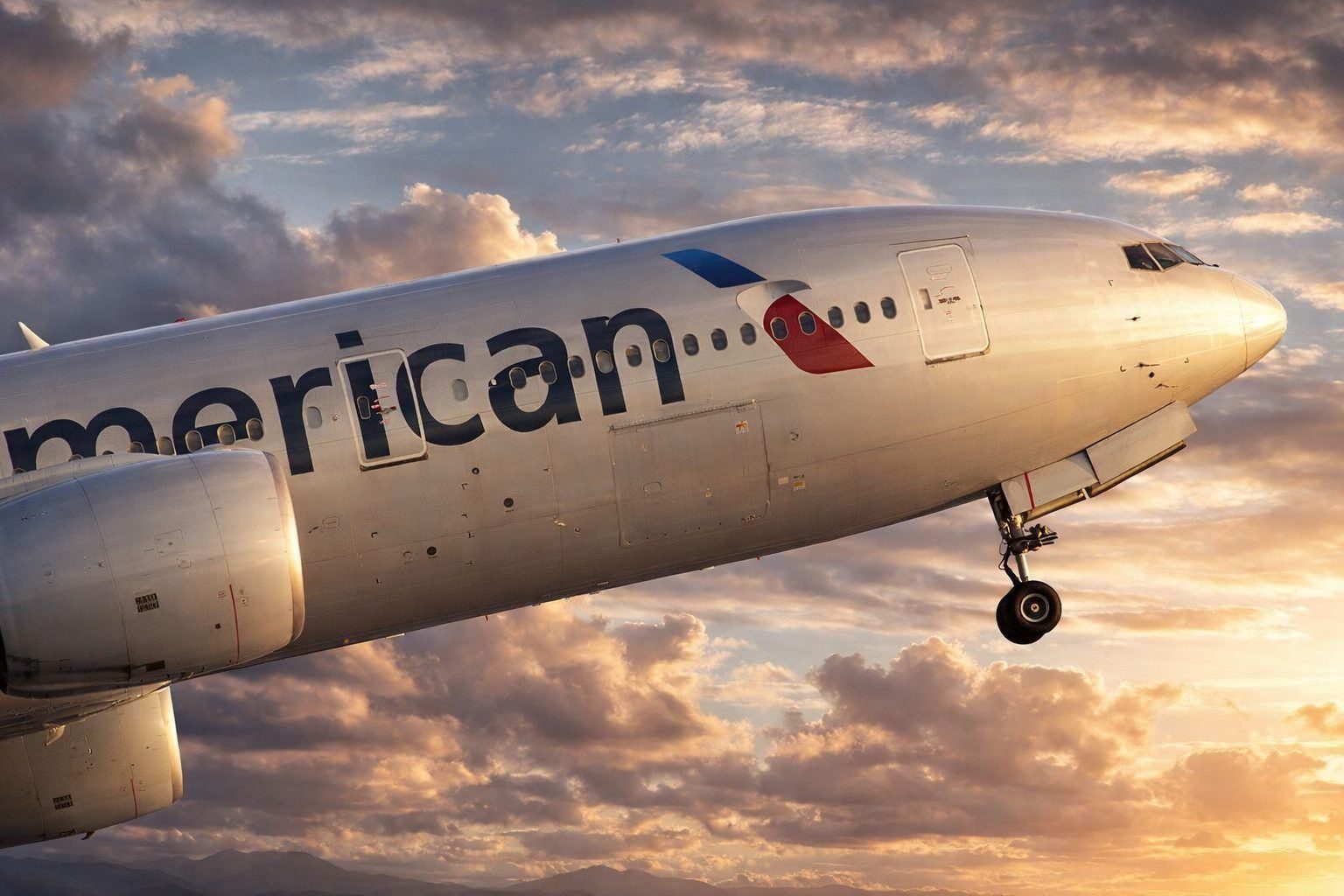
December 25, 2025 — U.S. markets are closed for Christmas Day, so American Airlines Group Inc. NASDAQ:AAL is effectively “on pause” after Wednesday’s shortened Christmas Eve session. The Economic Times
As of the last trade on Dec. 24, 2025, AAL finished around $15.68, up modestly on the day, after trading between roughly $15.49 and $15.74 in that early-close session.
That headline number looks calm. The story underneath it is not.
Over the past two weeks, AAL has been tugged by three forces that matter a lot for airline stocks heading into 2026:
- A strategic pivot toward premium revenue (and the costs required to get there)
- A loyalty-program tightening that may improve economics but risks customer backlash
- Regulatory + legal headlines that can turn into real dollars (and reputational drag)
Below is a full, up-to-date roundup of the news, forecasts, and market analysis available as of Dec. 25, 2025, written for investors trying to understand what could move American Airlines stock when markets reopen.
American Airlines stock price action: why AAL’s “quiet” close isn’t the whole picture
Even with the holiday pause, AAL’s recent tape shows investors are actively repricing the stock around new information—not drifting.
Recent closes show a push-pull week:
- Dec. 22: AAL jumped (a strong up day)
- Dec. 23: AAL dropped about -4.06% on heavy volume
- Dec. 24: AAL bounced slightly, closing near $15.68
That Dec. 23 drop was widely tied to fresh attention on American’s loyalty-program changes and what they could mean for customer behavior and revenue quality into 2026.
The meta-point: AAL is trading like a debate, not a consensus. Bulls and bears are both finding ammunition—sometimes on the same day.
The biggest strategic headline: American is going premium to catch Delta and United
The most consequential company narrative in late December isn’t about a single quarter—it’s about what kind of airline American wants to be in 2026 and beyond.
A Reuters report published Dec. 17 describes American’s push to regain ground versus Delta and United through a “customer reimagination” premium overhaul: more lie-flat seats, privacy suites, upgraded onboard amenities, and stronger loyalty/credit-card perks. Reuters
Key takeaways investors are reacting to:
- Premium cabins are the profit engine in U.S. network airlines right now, and American is explicitly trying to expand there.
- The plan is tied to new aircraft and cabin products (including the Boeing 787-9 and Airbus A321XLR) and aims to drive measurable revenue improvement starting in 2026.
- Reuters also emphasized the problem American is trying to fix: it has trailed Delta and United on profitability and customer satisfaction, with analysts cautioning the turnaround could be slow and expensive.
From an investor’s perspective, this strategy creates a clean “if/then”:
- If premium capacity sells well at higher yields (and reliability improves), then margins can rise meaningfully.
- If execution slips—retrofit delays, supply chain constraints, labor friction—then costs climb faster than revenue.
That execution risk isn’t theoretical; Reuters noted supply-chain and retrofit delays as real constraints.
Loyalty program change: Basic Economy stops earning miles and Loyalty Points
American also made a move that looks small on paper but can be big in practice: Basic Economy tickets purchased on/after Dec. 17, 2025 no longer earn AAdvantage miles or Loyalty Points.
This has been covered as both:
- A revenue-quality move (nudging customers to pay up to Main Cabin or higher), and
- A customer-perception risk (especially for price-sensitive travelers who still want to “earn something”).
CBS News reported the change and included American’s rationale: it regularly evaluates fare products to remain competitive, while keeping the core Basic Economy inclusions (personal item, carry-on, snacks, soft drinks, entertainment).
For AAL stock, what matters is how this plays out in the data:
- Does it increase upsell rates (good for unit revenue)?
- Does it trigger share loss among customers who view it as a devaluation (bad for volume and brand)?
- Does it strengthen loyalty economics by making elite status more “earned” and valuable (potentially good for credit-card and partner revenue)?
You can’t know the answers on Dec. 25. But you can see why investors repriced the stock when the change hit headlines.
Regulatory and operational costs: DOT wheelchair penalty reworked into mandated investments
Airlines don’t just compete on fares and seats; they operate inside a thick jungle of consumer-protection rules. In December, American landed in the spotlight again.
Reuters reported Dec. 9 that the U.S. Department of Transportation waived $16.7 million in fines tied to disability-related violations and wheelchair handling—but required American to invest about $16.8 million in accessibility improvements instead of paying the remaining fines to the Treasury.
DOT documentation describes requirements such as spending on equipment and systems to improve wheelchair handling.
For shareholders, this sits in an uncomfortable middle zone:
- It’s not purely a “one-time fine” you can mentally discard.
- It’s a set of operational investments and compliance obligations that can influence cost structure and reputation.
And because airline margins can be thin, unexpected cost layers matter—especially when paired with a premium strategy that already requires spending.
Legal headline: cadet academy lawsuit filed by 18 former students
Another December headline involves litigation risk and reputational impact.
Courthouse News reported Dec. 17 that 18 former cadets filed a complaint alleging racial discrimination and misrepresentation tied to American Airlines Cadet Academy and partners, seeking $36 million in damages.
On Dec. 25, Simply Wall St amplified this as an investor-relevant risk discussion, framing the allegations as potential reputational/legal overhang rather than the central driver of the investment thesis—but still a factor investors may need to price.
Important: these are allegations in litigation, not findings. But markets often price the possibility of cost, distraction, and reputational damage before anything is resolved.
Network expansion news: new routes for summer 2026
American is also positioning for next year’s demand with route adds. A Dec. 19 report highlighted 15 new routes for the 2026 summer season, including several tied to Texas markets and hub connectivity.
Route adds can be bullish (more revenue opportunities) or bearish (capacity pressure if industry supply outruns demand). Investors generally watch whether new flying is disciplined and profitable, especially for a carrier working to improve margins.
Holiday travel demand: supportive backdrop, but execution is everything
Macro tailwinds matter for airline stocks, and holiday travel demand is a real one. Benzinga noted a modest lift across airline stocks during the Christmas Eve session while pointing to heavy travel volumes.
The catch—always the catch—is that high demand doesn’t automatically translate into high profit if disruptions, costs, or operational constraints eat the upside.
That’s why American’s premium push and reliability focus are so central: to convert demand into durable margin, not just fuller planes.
Analyst forecasts on Dec. 25, 2025: “Hold” consensus, wide disagreement on upside
If you want the cleanest “market consensus” snapshot for AAL on Dec. 25, it’s this:
- The analyst consensus is roughly “Hold,” with price targets clustering in the mid-teens, but with a wide range of outcomes depending on execution. MarketBeat
A MarketBeat roundup published today (Dec. 25) reported:
- Average rating: Hold (with a split mix of sell/hold/buy ratings)
- Average 12-month price target: around $16.46 (per its dataset)
Other widely-followed data aggregators show slightly different numbers because they count and weight analysts differently:
- StockAnalysis shows a “Hold” consensus and an average target near $15.34, with a target range roughly $10 to $20. StockAnalysis
- MarketWatch’s analyst estimates page lists an average target around $16.01 (again dataset-dependent).
Recent notable analyst actions cited across tracking services include:
- UBS upgrade (Neutral/Hold to Buy/Strong Buy in some datasets) with a higher target
- Wells Fargo initiation around an equal-weight stance and mid-teens target
- BMO initiation/upgrade toward Hold
The practical message: Wall Street is not aligned on whether American’s improving narrative will outrun its structural challenges (debt, costs, operational execution).
That disagreement often equals volatility—especially around earnings.
Fundamentals investors keep circling back to: revenue, debt, and the 2026 “conversion” challenge
From American’s own Q3 2025 release, the company reported:
- Record third-quarter revenue of $13.7 billion
- A GAAP net loss of $114 million (loss of $0.17 per diluted share)
- Guidance for Q4 adjusted EPS of $0.45–$0.75 and full-year adjusted EPS of $0.65–$0.95
- Total debt of $36.8 billion and net debt of $29.9 billion (plus liquidity of $10.3 billion)
This is why the premium plan matters so much.
American doesn’t need “okay” demand; it needs the ability to turn demand into margin and free cash flow while steadily addressing leverage. In that same release, the company reiterated a goal to push total debt below $35 billion by the end of 2027. American Airlines Newsroom
Also notable for 2026: American said its exclusive and expanded partnership with Citi starts in January 2026, and it highlighted continued growth in AAdvantage engagement and co-branded card spending.
For many airline investors, that’s the high-level bull case in one sentence:
premium + loyalty/credit card economics + better execution = a less cyclical, higher-quality earnings stream
The bear case is the mirror image:
high debt + thin margins + execution slips + cost inflation = upside gets eaten before it reaches shareholders
What to watch next: the January earnings catalyst and early 2026 checkpoints
With markets closed today, the next major stock-moving catalyst is likely earnings.
Multiple market calendars list American’s next earnings around January 22, 2026 (estimated), with the prior quarter reported on Oct. 23, 2025.
Between now and that report, investors will be watching for:
- More detail on premium rollouts (cabins, routes, product consistency)
- Early evidence of loyalty change impact (upsell vs. backlash)
- Progress on accessibility investments and compliance expectations
- Capacity discipline and how new routes and summer planning shape unit revenue
Bottom line on American Airlines stock as of Dec. 25, 2025
American Airlines stock heads into the holiday break priced like a company in transition:
- Not a disaster story
- Not a clean turnaround either
- A “prove it” equity where execution determines whether 2026 becomes a re-rating year or another frustrating cycle
AAL closed the last session around $15.68, and analysts remain broadly neutral-to-mixed with targets clustered in the mid-teens but stretching from bearish to bullish extremes.
When markets reopen, watch whether the next wave of headlines is about premium revenue momentum and operational reliability (which tends to support airline valuations), or about costs, disputes, and compliance/legal overhangs (which tends to cap them).