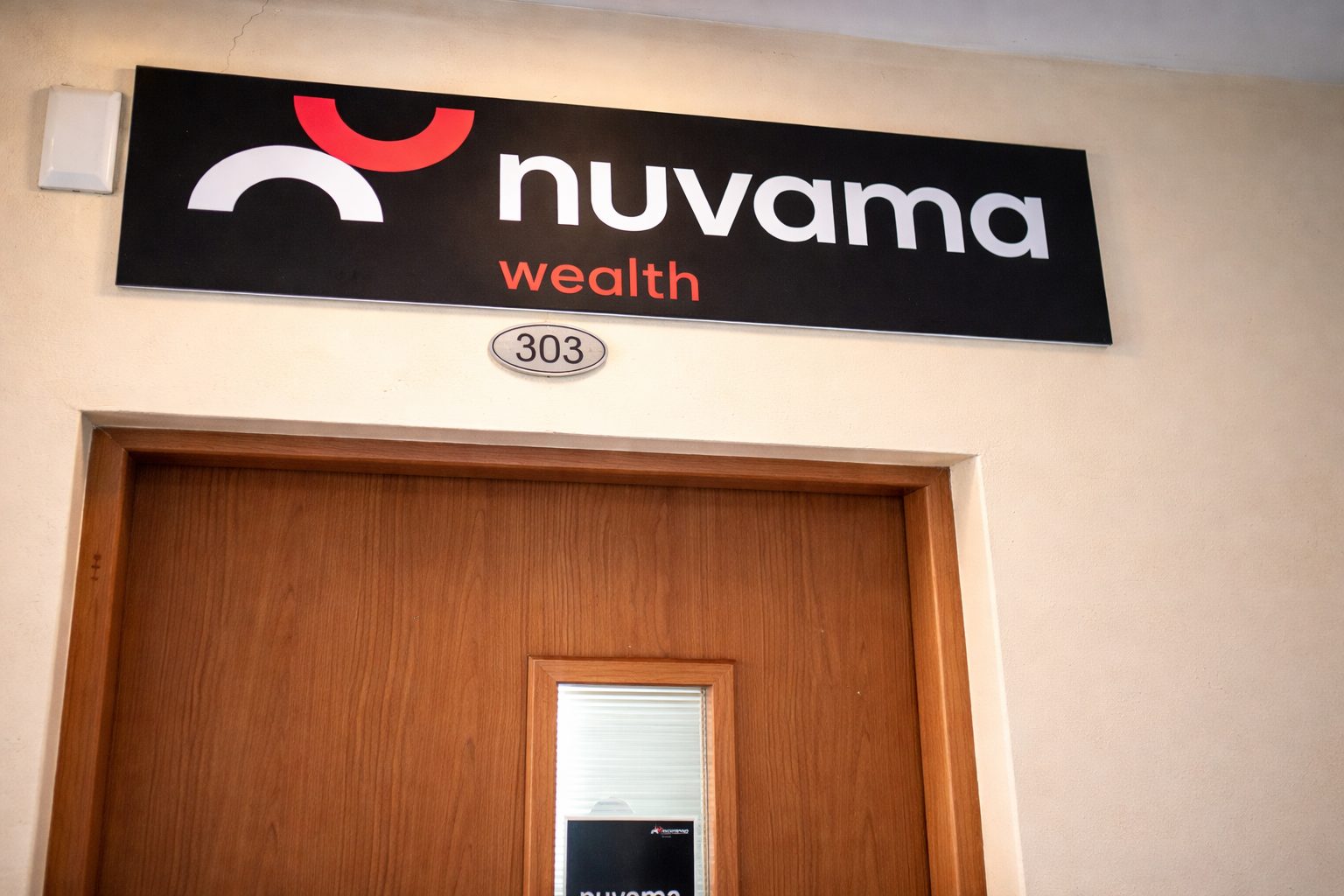
Indian markets reopened after the Christmas trading holiday to a familiar kind of investor whiplash: price screens flashing what looks like a sudden collapse in a well-followed stock — even though nothing “crashed” in the underlying business.
The headline move on Friday, December 26, 2025 was in Nuvama Wealth Management, where several trading apps and watchlists appeared to show a plunge of nearly 80% at the open. But the apparent fall was mechanical, driven by Nuvama’s 1:5 stock split (sub-division) taking effect. At the same time, three other corporate actions landed on investors’ calendars today — a demerger (DCM Shriram Industries), a bonus issue (Ram Ratna Wires), and a rights issue record date (Hilton Metal Forging) — all of which can create “false” shocks in day-on-day percentage change if you don’t adjust for the corporate action.
Here’s what’s happening, why your app may be confusing you, and what to watch next.
Nuvama Wealth’s 1:5 Stock Split: The “80% Drop” That Isn’t a Crash
On Dec 26, 2025, Nuvama Wealth’s stock began reflecting its maiden stock split — a 1:5 split where each equity share of face value ₹10 is sub-divided into five shares of face value ₹2.
That corporate action changes the quoted price per share (down) and the number of shares you hold (up), while aiming to keep the overall economic value broadly the same at the moment of adjustment.
Why apps showed a near-80% fall at the open
The “shock” came from how many platforms displayed the first traded/indicative price after the split:
- Nuvama’s shares were shown opening around ₹1,522.65 on Friday versus a previous close of ₹7,613.35 (from the prior trading session), which looks like a roughly 80% drop at first glance.
- But that difference is exactly what you’d expect when a stock priced around ₹7,600 is split into five shares (₹7,600 ÷ 5 ≈ ₹1,520), with the market cap broadly unchanged at the instant of adjustment.
In other words: many screens were comparing a pre-split closing price to a post-split trading price without properly “normalizing” the percentage change display. That can temporarily distort your day’s P&L, daily change %, and even intraday charts until the platform fully updates its corporate-action adjustments.
What shareholders actually receive in a 1:5 split
In a 1:5 split:
- 1 old share becomes 5 new shares
- Existing shareholders effectively receive four additional shares for every one share previously held (because your one share is sub-divided into five).
Your portfolio may briefly look “wrong” (fewer shares at a much higher cost, or more shares at a lower price, or a scary one-day drop) while brokers reconcile the corporate action and update average cost, holdings, and chart history.
Ex-date and record date: why Dec 26 matters
Multiple market sources flagged Dec 26, 2025 as the effective corporate-action date for the split, and it’s also widely reflected as the ex-split date in corporate action trackers.
For derivatives participants, the National Stock Exchange (NSE) specifically communicated the ex-date & effective date as 26-Dec-2025 and laid out the adjustment mechanics.
Important for F&O Traders: NSE’s Contract Adjustments on Nuvama
If you trade Nuvama in futures and options, the corporate action isn’t just a “price chart” event — it directly affects contract specifications.
In an NSE circular on F&O adjustments for Nuvama’s split, the exchange specified:
- Corporate action: SPLIT
- Ratio:5:1
- Ex-date & effective date:26-Dec-2025
- Adjustment factor:5
- Revised market lot:375 (December 2025 contract) and 500 (from January 2026 onward contracts)
This is designed to keep the contract’s economic exposure consistent through the corporate action, rather than gifting an advantage to one side of the trade.
Nuvama Wealth: Why the Split Is Happening — and What Analysts Were Saying
Stock splits are typically used to increase liquidity and make a high-priced share appear more accessible to a wider pool of investors. Business Today described Nuvama’s move as a step toward improving affordability and liquidity, while noting the price adjustment is “mechanical.” Business Today
The same coverage also pointed to generally constructive brokerage views before the split, citing targets such as ₹8,300 (JM Financial), ₹9,100 (Motilal Oswal) and ₹9,790 (Bernstein) on the pre-split price scale. Business Today
A practical note for readers: after a 1:5 split, any pre-split price targets should be divided by 5 to compare them with the new quoted price level (for example, ₹9,100 pre-split is roughly ₹1,820 post-split on a like-for-like basis).
Corporate Actions Roundup on Dec 26, 2025: 3 More Stocks in the Spotlight
Nuvama wasn’t the only name drawing attention today. DCM Shriram Industries, Ram Ratna Wires, and Hilton Metal Forging were also on watchlists because December 26 served as a key eligibility and/or trading adjustment date for their respective corporate actions.
1) DCM Shriram Industries: Demerger record date and ex-demerger trading
DCM Shriram Industries moved into focus as the stock started trading ex-demerger on the record date (Dec 26, 2025) for its approved demerger scheme.
The demerger structure described in market coverage indicates:
- Chemicals & Vinyl business to be moved to DCM Shriram Fine Chemicals Ltd
- Rayon business to be transferred to DCM Shriram International Ltd
- The existing company retains Sugar, Power, and Alcohol businesses
- Share entitlement:1:1:1 — shareholders receive one share in each resulting entity for every share held (as described in reports)
Why this can look dramatic on price screens: on ex-demerger trading, the “parent” company’s price often adjusts because part of the business value is expected to be reflected in the soon-to-be-listed (or separately valued) entities.
2) Ram Ratna Wires: 1:1 bonus issue and the “price halving” effect
Ram Ratna Wires also sits on the list of corporate-action movers, with a 1:1 bonus issue reflected in corporate action trackers — meaning investors receive one bonus share for every one share held.
A 1:1 bonus issue typically results in:
- Share count doubling for eligible holders
- A mathematical price adjustment (often roughly halving) so that the overall value remains broadly consistent right after the adjustment
If your app shows a sudden drop around the ex-bonus date, it may simply be reflecting that adjustment rather than a fundamental sell-off.
3) Hilton Metal Forging: Rights issue record date, ratio and price
Hilton Metal Forging’s corporate action is a rights issue — and Dec 26, 2025 was communicated as the record date in exchange notices.
A BSE notice (republished via Publicnow/MarketScreener) specified the entitlement mechanics as:
- Rights entitlement:14 equity shares for every 29 shares held
- Issue price: ₹10 face value per share plus ₹18.32 premium (i.e., ₹28.32 per rights share)
Business coverage also put the overall issue size at roughly ₹31.99 crore and pointed to a January 2026 subscription window beginning Jan 5, 2026. Business Standard
(Several outlets have reported slightly different “closing date” schedules for the issue window; investors typically confirm the final timetable in the company’s latest exchange filing and their broker’s rights-issue module.)
Why Corporate-Action Days Confuse Investors: Split vs Bonus vs Demerger vs Rights
If today felt chaotic, it’s because corporate actions change “what a share represents” in different ways:
- Stock split (Nuvama): same ownership stake, more shares, lower price per share — mostly a liquidity/accessibility move.
- Bonus issue (Ram Ratna): company capitalizes reserves, gives additional shares — often boosts liquidity, but price adjusts mechanically.
- Demerger (DCM Shriram Industries): businesses are separated into different listed (or to-be-listed) entities — price discovery can take time as the market revalues each piece.
- Rights issue (Hilton Metal): eligible shareholders receive the right to subscribe for new shares (often at a set price) in proportion to holdings — can affect future share count and capital structure depending on subscription.
A Quick Checklist for Investors Seeing “Weird” Drops Today
If your watchlist shows sudden double-digit moves in any of these names, a quick process can prevent wrong conclusions:
- Check for an “ex-” tag (ex-split/ex-bonus/ex-rights/ex-demerger) on your broker/exchange corporate action page.
- Do the simple math:
- Split 1:5 → price ÷ 5, shares × 5
- Bonus 1:1 → shares × 2, price often adjusts downward accordingly
- Expect timing gaps: holdings, average cost and P&L displays may update after the corporate action is processed in back-office systems.
- For targets and historical comparisons, make sure you’re comparing on the same scale (pre- vs post-split/bonus).
- Use exchange notices and reputable market reporting when dates and ratios matter — especially for rights and demergers where timelines can be revised.
Bottom line
On Dec 26, 2025, the market’s biggest “percentage drop” story — Nuvama Wealth’s apparent 80% fall — is best understood as a stock split adjustment, not a collapse in value. Business Today
And with DCM Shriram Industries’ demerger, Ram Ratna Wires’ bonus issue, and Hilton Metal Forging’s rights eligibility also landing today, this session is a clear reminder: on corporate-action days, the loudest number on your screen is often the least informative.