As of 5:21 a.m. ET in New York on Saturday, December 27, 2025, U.S. stock exchanges are closed for the weekend, and the next regular session is the Monday open at 9:30 a.m. ET.
That “markets are closed” detail matters more than it sounds. Year-end trading can be thin, and thin liquidity has a weird habit: it turns ordinary headlines into outsized price swings. Reuters’ Week Ahead coverage notes that light volumes and year-end portfolio adjustments can amplify moves, even when the macro calendar looks relatively quiet. Reuters
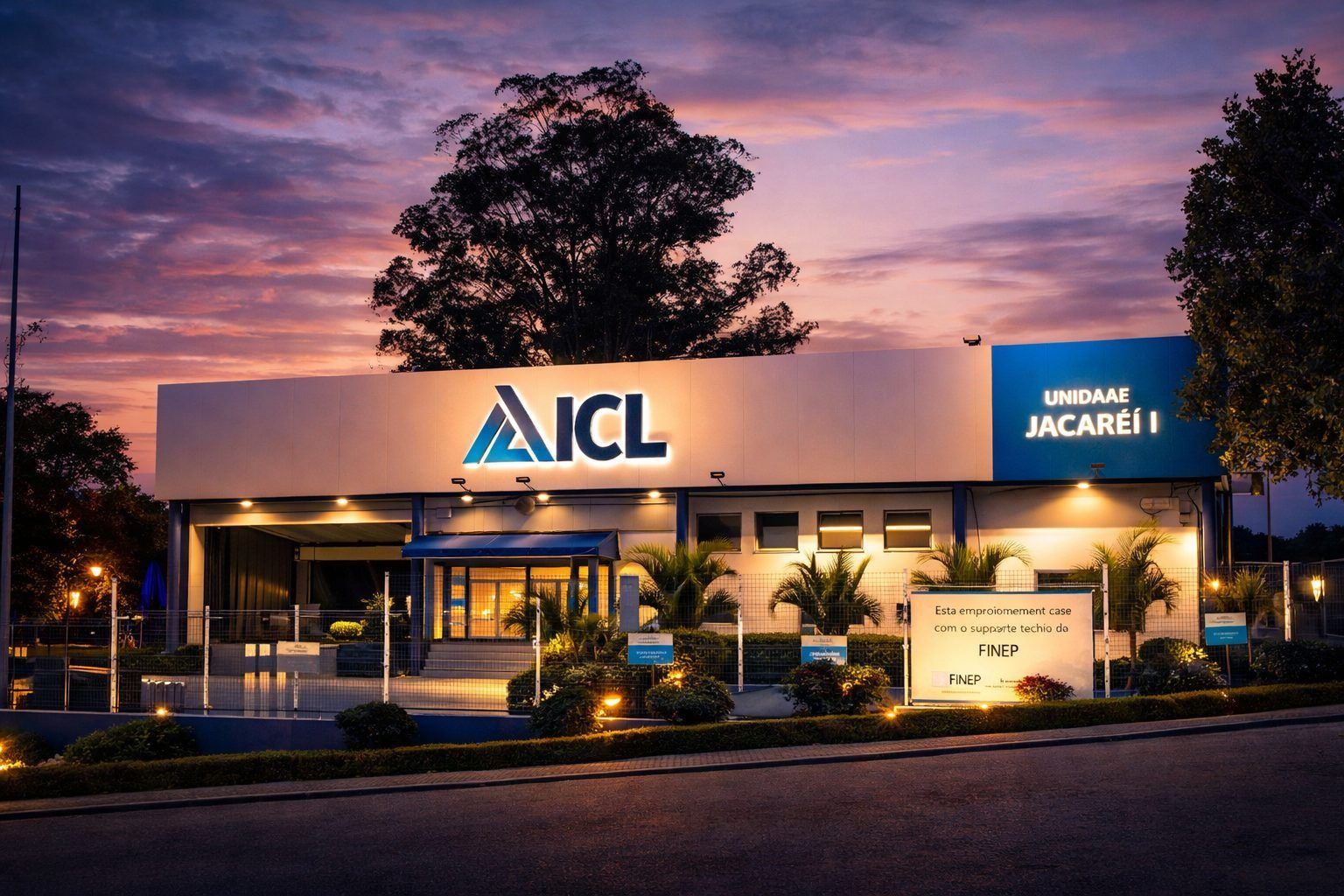
Against that backdrop, ICL Group Ltd. NYSE:ICL heads into the next session with a lot for investors to digest: a new acquisition in food ingredients, fresh potash contracting news for China in 2026, and material regulatory/legal developments tied to the company’s core Dead Sea operations.
Where ICL stock stands right now
ICL last traded around $5.54 (with the latest available quote reflecting the most recent market data). MarketBeat’s real-time snapshot pegged the Friday, Dec. 26 close at $5.54 (up roughly 3.6% on the day) and showed extended-hours trading around $5.58 later that evening.
Zooming out, the broader U.S. market is heading into the final days of 2025 near record territory. Reuters highlighted the S&P 500 sitting about 1% from 7,000 and investors watching the Fed outlook closely into year-end. Reuters The Associated Press also described light post-holiday trading on Dec. 26 with indexes slightly lower, while still up strongly for the year.
For ICL investors, that combination—big-picture bullish tape + thin year-end liquidity + company-specific headline risk—is exactly the recipe for sharp, headline-driven moves.
The three biggest ICL catalysts in the news right now
1) ICL’s Bartek Ingredients acquisition: a bigger push into specialty food solutions
In mid-December, ICL announced a definitive agreement to acquire Bartek Ingredients, describing Bartek as a global leader in food-grade malic and fumaric acid used across food, beverage, confectionery, bakery, and other end-markets.
Key deal and business details ICL disclosed:
- Bartek generates about $65 million in annual revenue.
- The deal is structured in two phases; phase one is expected to close in Q1 2026 and involves about $90 million in cash for approximately 50% of Bartek.
- Bartek is building a new production facility expected to be completed in 2026, which ICL says should expand capacity.
- ICL positioned the move as aligned with its strategy emphasizing “specialty crop nutrition” and “specialty food solutions.” Business Wire
ICL CEO Elad Aharonson framed the acquisition as a way to deepen ICL’s specialty food platform and use ICL’s global footprint to expand into additional ingredient segments. Bartek CEO Andrew Ross also pointed to synergy with ICL’s scale and R&D capabilities.
From a stock narrative standpoint, this is the “higher quality of earnings” pitch: less pure commodity exposure, more formulation/ingredient value-add. Whether investors reward that depends on execution (integration, capacity ramp, margins) and—crucially—whether the broader fertilizer cycle cooperates.
2) New 2026 potash contracts in China at $348/ton: visibility into next year
On December 23, 2025, ICL filed an update stating it signed contracts under its 2025–2027 framework agreements to supply 750,000 metric tons of potash to customers in China during 2026, with a mutual option for an additional 330,000 metric tons.
ICL said the price is aligned with recent China contract settlements at $348 per ton (CIFFO basis).
Why this matters:
- China contract pricing often functions like a reference point the market watches closely.
- Multi-year frameworks and signed volumes provide some demand visibility for ICL’s potash segment going into 2026—helpful when investors are debating whether the fertilizer cycle is stabilizing or rolling over.
This China contracting headline also lands in a moment when potash market watchers are talking about adequate supply and generally steady pricing into 2026, while still flagging geopolitical risks (sanctions, conflict-driven supply disruptions) that can rapidly change the supply picture.
3) Dead Sea concession changes and water-fee rulings: the headline risk investors can’t ignore
If you want the most “stock-moves-fast” category for ICL, it’s anything involving the Dead Sea concession—the uniquely important asset base tied to potash, bromine, and other minerals.
Two developments stand out:
A. Retroactive Dead Sea water fees: $70–90 million charge expected in Q4 2025
In a December 3 filing summary tied to an Israeli Supreme Court ruling, ICL estimated it will need to pay $70–$90 million in water fees for the period Jan. 1, 2018 through September 2025, which it expects to recognize in Q4 2025 results (excluding potential interest/linkage differentials).
ICL also flagged an ongoing annual cost of about $10–$12 million in water fees from October 2025 until the current concession expires, with the government intending to include water-fee obligations in the next concession framework.
B. Draft law for the post-2030 Dead Sea concession: tender process + heavier state take
In a separate filing tied to a draft bill published for public comment, ICL described a future framework that could include:
- Allocation through a tender process (with alternative mechanisms in limited cases).
- A state revenue model including royalties, corporate tax, and a surplus profits levy targeting a multi-year average rate of 50% of profit, plus additional fees/levies.
- A provision canceling ICL’s prior right of first offer, aligning with a memorandum of understandings referenced by the company.
Reuters also reported on Israel’s push for a plan involving a public tender and a surplus profits levy, underscoring that this is not just “company commentary”—it’s a live policy and political process. Reuters
ICL itself emphasized the draft is initial/partial and said it was too early to assess the final impact because the law may change materially through the legislative process.
Bottom line: these Dead Sea developments introduce the kind of uncertainty markets hate most—long-duration regulatory and fiscal uncertainty—even if the day-to-day operations remain intact.
What about ICL’s battery materials ambitions? The LFP thread is cooling
ICL has also been navigating turbulence in battery materials, particularly around lithium iron phosphate (LFP).
- ICL disclosed that the U.S. Department of Energy removed funding eligibility for its planned St. Louis LFP cathode active material plant and that discontinuing LFP activities could lead to an estimated $40 million (net) investment write-off.
- Reuters also reported that Dynanonic and ICL terminated a lithium iron phosphate JV project valued at 285 million euros.
- In its Q3 2025 communications, ICL explicitly tied strategic reassessment to policy changes and project economics, saying high investment/operating costs and expected low prices made the project not competitive “currently,” and it would focus on other opportunities. ICL Group Investors
For investors, this is best interpreted as a near-term negative (lost growth option + potential write-offs) but possibly a longer-term positive if it prevents capital from being sunk into low-return projects.
ICL earnings and guidance: what the company last told investors
In its Q3 2025 results, ICL reported:
- Sales: $1.853B (Q3 2025)
- Adjusted EBITDA: $398M, up 4% year-over-year
- Net income attributable to shareholders: $115M
And importantly, ICL reiterated full-year 2025 guidance:
- Specialties-driven EBITDA:$0.95B to $1.15B
- Potash sales volumes:4.3M to 4.5M metric tons
ICL also disclosed potash segment indicators in that release, including a reported potash price of $353 per ton (CIF) for the quarter and potash sales volumes of 1.046M metric tons in Q3.
Analyst forecasts and price targets for ICL stock
Analyst sentiment on ICL (at least as aggregated publicly) is not euphoric right now—it’s more “cautious neutral.”
MarketBeat’s consensus snapshot shows:
- Consensus rating: Hold
- Average price target:$6.23 (high $6.50, low $6.00) based on four analyst ratings
It also lists notable recent actions such as Barclays lowering its target from $7.00 to $6.00 (Equal Weight) and other firm-level target adjustments.
A “Hold” consensus can mean two things at once: analysts see ICL as fundamentally viable, but they’re not convinced (yet) that the risk/reward is compelling compared with alternatives in the sector—especially with Dead Sea policy uncertainty and the usual fertilizer-cycle volatility.
The fertilizer and potash outlook heading into 2026: why macro matters for ICL
ICL is not a pure-play potash producer, but potash is still a key earnings driver—and the potash tape often sets the mood for how investors price fertilizer equities broadly.
A few data points shaping the 2026 conversation:
- DTN reporting quotes StoneX fertilizer VP Josh Linville and other market experts describing the global potash market as well supplied, with many analysts expecting steady potash pricing into 2026, while flagging geopolitical uncertainty as the big wildcard.
- The World Bank’s fertilizer market commentary projected MOP (potash) prices rising in 2025 and then seeing moderate declines in 2026 and 2027, while also emphasizing that trade policy, sanctions, and routing changes can materially reshape flows.
For ICL stock, the macro setup works like a lever:
- Steady potash prices + solid contracted volumes (like the China deals) can stabilize expectations.
- Oversupply fears or a sudden global demand wobble can pressure the whole fertilizer complex, regardless of how well ICL executes on specialties.
Dividend and credit: what income-focused investors should know
ICL has remained a dividend payer. Recent filings and summaries show:
- A quarterly dividend of $0.048 per share with a record date of Dec. 2, 2025 and payment date of Dec. 17, 2025.
On the credit side, Fitch previously affirmed ICL at BBB- with a Stable Outlook, and Fitch’s note mentions ICL’s dividend policy of distributing up to 50% of adjusted net income in quarterly payments (and that the company ruled out share buybacks at that time).
For dividend investors, the key is that ICL’s payout capacity is ultimately a function of (1) fertilizer/specialty margin resilience and (2) cash calls tied to regulation and projects—like the water-fee ruling.
What investors should watch before the next session opens
With markets closed right now, here are the practical “between now and Monday’s bell” items that matter most for ICL:
Macro and tape (because correlation is real):
- Any shift in the year-end risk mood. Reuters notes markets are near record highs and heading into the final sessions of the year with focus on Fed expectations and potential volatility from year-end flows.
ICL-specific headline triggers:
- Follow-through coverage on the Dead Sea draft bill and any additional government or company commentary. This is the kind of story that can reprice ICL’s long-term cash-flow assumptions quickly.
- Any updates on the water-fee financial impact (final assessed amounts, interest/linkage, timing of payments).
- Additional details or analyst reactions to the Bartek acquisition, especially around valuation, integration milestones, and expected financial impact as it moves toward a Q1 2026 close.
- Market reaction to the China 2026 potash contracts—not just the price, but whether investors treat it as a “floor” for potash realizations or just routine contracting. Stock Titan
Near-term calendar awareness (not for Monday, but for positioning):
- Third-party earnings calendars disagree on the exact date for Q4 2025 results (some show Feb. 12, 2026, others estimate Feb. 25, 2026). Until ICL formally confirms, treat these as estimates and verify through company IR before trading around them.
The setup: how to think about ICL stock going into Monday
ICL is entering the next session with a narrative tug-of-war:
- The bull case leans on specialty expansion (Bartek), steady potash contracting (China volumes at benchmark-linked pricing), and management focus on higher-return engines like specialty crop nutrition and specialty food solutions.
- The bear case centers on Dead Sea-related fiscal/regulatory uncertainty (future concession economics, water fees), plus the reality that fertilizer equities can get whipsawed by commodity expectations even when company execution is solid.
In a market environment that Reuters describes as strong into year-end—with thin liquidity capable of exaggerating moves—ICL could trade more on headlines and positioning than on slow-moving fundamentals over the next few sessions.