
NEW YORK, Dec. 27, 2025, 12:14 p.m. ET — Market closed
Natural gas is heading into the final trading days of 2025 with a familiar winter driver back in control: weather. After sliding for two straight weeks, U.S. natural gas futures steadied and turned higher on Friday as forecasters dialed up colder risks into early January—an outlook that could tighten near-term balances even as Lower 48 production remains at record territory and LNG export demand stays historically strong.
For investors, the key question into Monday’s open isn’t just whether “it gets colder.” It’s whether the latest weather models, LNG terminal operations, and storage expectations align in a way that forces the market to reprice quickly in thin year-end liquidity—especially with a rescheduled federal storage report due during regular U.S. trading hours. World Energy News+1
Where U.S. natural gas prices stand heading into Monday
Front-month NYMEX natural gas (January) was trading around $4.29 per million British thermal units (mmBtu) on Friday, up about 1% on the session and on track for a weekly gain that would snap a two-week losing streak.
Holiday conditions mattered too. “There’s going to be thinner volume on the holiday week,” Robert DiDona, president of Energy Ventures Analysis, said, arguing that lighter participation can make prices more sensitive to shifting fundamentals—especially weather. World Energy News
The setup into early January looks constructive on paper: meteorologists were projecting a nationwide temperature step-down through roughly Jan. 10, with U.S. Heating Degree Days (HDDs) rising in recent forecasts—still below normal in the two-week view, but trending colder versus earlier model runs.
Weather is the catalyst, but supply is the ceiling
The most immediate bullish lever is demand. LSEG projections cited in market coverage showed average Lower 48 demand (including exports) rising from about 136.1 billion cubic feet per day (bcfd) this week to about 138.5 bcfd over the next two weeks, reflecting stronger heating needs.
At the same time, the market is still dealing with a supply backdrop that can blunt rallies. LSEG also pegged December Lower 48 output at record levels—around 109.8 bcfd—topping November’s prior record.
That tug-of-war—cold-driven demand versus record production—helps explain why natural gas has been volatile rather than trending cleanly in one direction. Investors should expect that dynamic to continue into January, with each major weather update effectively testing how tight balances really are.
LNG exports remain the wild card, and Freeport is back in focus
LNG has become one of the most important swing factors for U.S. natural gas pricing, and the market received fresh reminders this week that operational hiccups can quickly move sentiment.
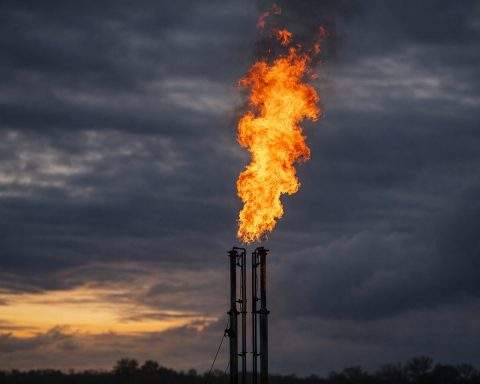
In a Reuters-reported regulatory update carried by BOE Report, Freeport LNG said all three trains at its Texas export facility experienced a trip due to an interruption of feed gas. The filing said operators managed cooldowns and restarts “to minimize flaring.” BOE Report
Why does that matter? Freeport’s three trains are capable of turning roughly 2.4 bcfd of natural gas into LNG—enough scale that disruptions can ripple into U.S. balances and sometimes global benchmarks.
By the end of the week, however, Freeport indicated that operations had resumed across all three trains after the temporary trip, easing fears of an extended outage.
More broadly, average gas flows to the eight large U.S. LNG export plants were running around 18.4 bcfd so far this month—near record territory and up from a record monthly average in November, according to the same market snapshot.
For investors, the takeaway is straightforward: as long as LNG feedgas stays near these highs, the U.S. market can tighten quickly when cold weather arrives—yet brief outages can produce sudden, sharp swings in either direction.
Global backdrop: sanctions, supply delays, and the long LNG cycle
The near-term U.S. price story is weather and LNG operations. The longer-term story is what global LNG supply and demand will look like by the end of the decade—because that trajectory increasingly shapes capital spending, pipeline buildouts, and the valuation story for gas-linked equities.
One major signal in the last 48 hours came from Russia. Deputy Prime Minister Alexander Novak said Russia has pushed back “by several years” its plan to reach an annual LNG output target of 100 million tons, citing the impact of Western sanctions. An updated government strategy sees Russia producing 90–105 million tons by 2030 and 110–130 million tons by 2036, Reuters reported. Reuters
The global competitive set matters for U.S. investors because U.S. LNG is priced off Henry Hub plus liquefaction and shipping—meaning international supply constraints, policy shifts, and competing volumes can change how “pull” from overseas markets translates into U.S. demand.
Permian pipelines and the next LNG wave: Enverus lays out the bottlenecks
While daily weather drives the screen price, infrastructure is shaping the next decade of U.S. natural gas demand—and that includes the pipeline network needed to move gas from production basins to the Gulf Coast.
A newly highlighted Enverus Intelligence Research (EIR) analysis projects U.S. LNG feedgas demand rising to 33 bcfd by 2030, with potential to approach 50 bcfd by 2035 if planned expansions move forward. To support that, the research points to about 9.0 bcfd of new Permian pipeline capacity to the Gulf Coast, plus more than 12 bcfd of additional coastal pipeline capacity dedicated to LNG supply.
“While there is ample pipeline capacity from the Permian Basin and along the Gulf Coast to supply incremental LNG feedgas to 2030,” EIR director Alex Ljubojevic said, “the challenge lies in ensuring long-term natural gas supply for additional LNG expansion.” Enverus
Reporting on the analysis also flagged a potential long-run supply gap: EIR expects the Haynesville to peak around 19 bcfd in 2033 before declining, while Permian dry gas output could climb toward ~40 bcfd by 2050—yet infrastructure and resource development would still be needed to close a projected 2–8 bcfd gap by 2035.
The counterpoint: renewables could change LNG’s long-run math
Not everyone believes LNG demand growth will remain as durable as today’s project pipeline implies.
In a Reuters Breakingviews column published Friday, analysts argued that rapid advances in solar, wind, and batteries could turn an expected LNG glut into an even deeper oversupply problem. The piece cited industry warnings about overbuilding, including TotalEnergies CEO Patrick Pouyanné saying the sector is “building too much,” and commentary from LNG executives about market exuberance. Reuters
For investors, this debate matters because it could determine which gas-focused companies are rewarded for expanding—and which are penalized for pursuing long-cycle projects that arrive into weaker-than-expected demand.
Stock market context: year-end trading, light volume, and why gas can still move
U.S. equity markets are closed today, but the broader tone into the final week of 2025 is one of muted conviction and thinner participation—conditions that can amplify moves in commodities and energy-linked names once markets reopen.
On Friday, Wall Street ended a light-volume post-Christmas session nearly unchanged, with all three major indexes slightly lower but near all-time highs, Reuters reported—an environment consistent with late-December positioning and “Santa Claus rally” narratives. Reuters
Natural gas often trades to its own rhythm, but thin liquidity and year-end positioning can still influence volatility across related equities (producers, midstream, utilities, LNG exporters) when headline catalysts hit.
What investors should know before the next U.S. session
With the market closed now, here are the key catalysts and risk points that could shape Monday’s open and the week ahead:
1) Weather model updates can reprice the strip quickly
The market is leaning heavily on forecasts calling for colder conditions into early January. Any material warming or further cooling in high-population regions (especially the eastern half of the U.S.) can shift demand expectations fast—and in year-end liquidity, those shifts can be exaggerated.
2) A rescheduled EIA storage report hits during regular hours Monday
The most important scheduled data point is the U.S. government’s Weekly Natural Gas Storage Report, which is on a holiday-adjusted schedule.
The last reported EIA figure showed working gas in storage at 3,579 Bcf for the week ending Dec. 12—down 167 Bcf from the prior week and still within the five-year range.
The release schedule shows the next storage report is set for Monday, Dec. 29 at 12:00 p.m. ET (holiday adjustment). That timing places it squarely in the middle of the regular U.S. equity and futures session, when liquidity is typically deeper—and when the market can react immediately.
3) LNG feedgas and Freeport operations remain a volatility trigger
Freeport’s trip and restart underscores how sensitive U.S. balances are to LNG export operations. With monthly LNG feedgas still running near record levels in the broader system, any unplanned downtime—or confirmation that facilities are running cleanly—can shift the near-term supply-demand picture.
4) Positioning: speculators have been adjusting exposure
CFTC data cited in market coverage showed speculators reduced net long positions across major U.S. natural gas markets in the week ending Dec. 16. That kind of positioning shift can matter into headline-heavy periods because it influences how much “dry powder” exists on either side of the trade. World Energy News
Bottom line
Natural gas is heading into the next session with bullish near-term momentum driven by colder forecasts and persistently strong LNG export pull—yet the rally is still navigating record production and the potential for sharp swings tied to LNG terminal operations and storage data.
For Monday, the market’s focal points are clear: weather updates into early January, operational stability at major LNG facilities (with Freeport back in the spotlight), and a holiday-shifted EIA storage report landing mid-session.
Related articles: Natural Gas