NEW YORK, Dec. 27, 2025, 4:06 p.m. ET — Market closed
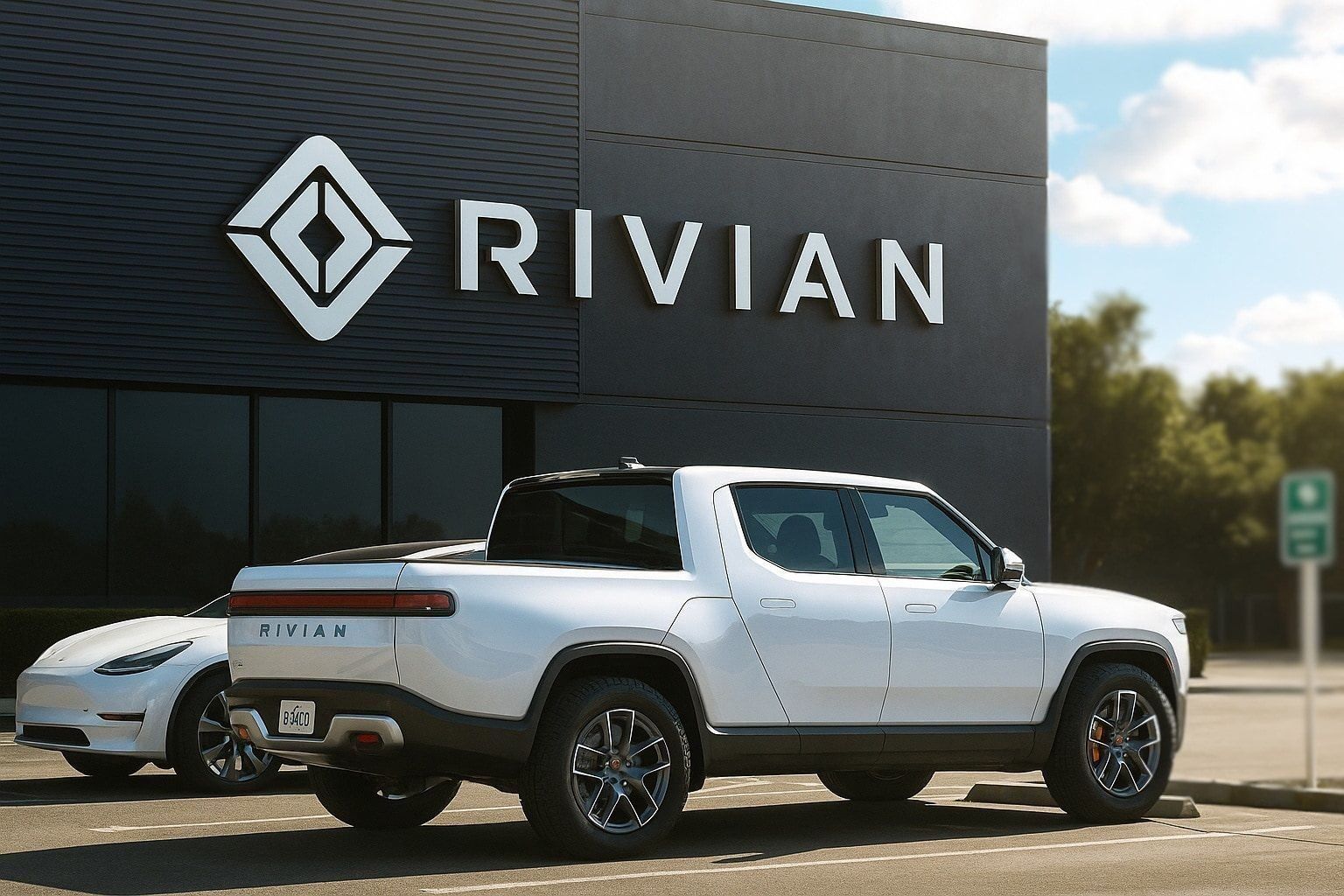
Rivian Automotive, Inc. NASDAQ:RIVN heads into the weekend with U.S. markets shut and year-end trading conditions firmly in focus: lighter liquidity, headline sensitivity, and investors positioning for the final three sessions of 2025.
Rivian shares finished the last regular session on Friday, Dec. 26 at $20.90, down 1.09% on the day after trading between $20.77 and $21.55. Volume was about 20.5 million shares, a meaningful slowdown from earlier in the month when the EV maker’s rally drove much heavier turnover.
The setup: a market “catching its breath” meets a volatile EV name
Rivian’s weekend setup arrives as Wall Street itself is dealing with a familiar late-December mix: thin volumes after Christmas, portfolio rebalancing, and the so-called “Santa Claus rally” window. Reuters reported that U.S. stocks ended Friday nearly unchanged in light post-holiday trading, snapping a five-session run but still logging weekly gains—an environment that can magnify individual stock moves when volumes are thinner. Reuters
For Rivian, that macro backdrop matters because the stock has been a momentum story this month.
Investing.com’s recent pricing history shows RIVN surged mid-December—rising 15.03% on Dec. 18 and 10.70% on Dec. 19—before sliding for four consecutive sessions into Friday’s close (Dec. 22, Dec. 23, Dec. 24, and Dec. 26 all negative).
In other words: Rivian isn’t entering Monday from a calm base. It’s entering from a pullback after a sharp run—exactly the type of pattern that tends to stay sensitive to analyst notes, product headlines, and broader risk appetite.
What’s new in the last 24–48 hours: price action, fresh commentary, and positioning
While there hasn’t been a blockbuster Rivian corporate press release over the past two days, coverage has stayed active—largely focused on where RIVN fits in the 2026 EV and autonomy narrative.
1) The latest move: RIVN underperformed a nearly flat market Friday.
Rivian closed down 1.09% on Dec. 26, while broader U.S. indexes finished only slightly lower in Reuters’ account of Friday’s session.
2) Bullish “2026 thesis” commentary hit over the weekend.
A widely syndicated piece (published Saturday) argued that Rivian’s 2025 performance and AI/autonomy push could set up further gains into 2026, framing the company as increasingly perceived through an “AI stock” lens. The Motley Fool+1
3) Long-horizon debate continues: can Rivian grow into a much higher valuation?
A separate analysis published Friday asked whether Rivian could reach far higher prices by 2030, but emphasized uncertainty around profitability and how dependent the next phase may be on execution of the upcoming R2 program.
4) Ownership and insider activity remained part of the conversation.
A MarketBeat report published Saturday highlighted institutional position changes and pointed to recent insider selling activity reported in filings, while also reiterating a “Hold”-leaning analyst consensus view. MarketBeat
Taken together, the last 24–48 hours of RIVN coverage reads less like “new facts” and more like “new framing”: the stock is being continuously re-priced around what 2026 could represent (and how much of that optimism is already in the share price).
Analyst forecasts: price targets still cluster below the current stock price, even after December’s pullback
One of the clearest tension points for Rivian stock right now is the gap between where it trades and where many aggregated Wall Street targets sit.
- Benzinga’s analyst snapshot lists a consensus price target of $15.88, with a high of $25 (Wedbush) and a low of $10 (J.P. Morgan), and notes that several of the most recent ratings updates occurred in mid-to-late December.
- MarketBeat’s consensus view similarly shows an average target around the mid-$15 range, implying downside versus ~$20.90.
That doesn’t mean analysts are uniformly bearish—far from it. It does mean the stock’s late-December run-up has pulled RIVN above where many consensus models and 12‑month target frameworks land, raising the stakes for 2026 execution.
The core 2026 catalysts behind the Rivian bull case: autonomy, software monetization, and the R2 timeline
Rivian’s biggest narrative tailwind into 2026 has been its autonomy roadmap and the plan to monetize advanced driver assistance as a paid feature—paired with the longer-awaited launch of a lower-priced vehicle line.
Reuters’ reporting from Rivian’s Autonomy & AI push earlier in December laid out several key points that investors have continued to reference:
- Rivian outlined a shift toward a custom self-driving chip strategy and deeper AI integration, and introduced a paid driver-assistance offering priced below Tesla’s comparable package.
- Reuters also reported that Rivian’s R2 models are expected to roll out in the first half of 2026, and that the company expects to launch “eyes-off” functionality in 2026 (with human oversight still required today). Reuters
- In that same Reuters report, James Picariello, a senior analyst at BNP Paribas, called the event better than expected and argued it strengthened the view of Rivian’s competitive position in North America.
Those points are essential context for why RIVN rallied earlier this month—and why investors keep treating 2026 as the “prove it” year.
Lidar, hardware choices, and credibility in autonomy
A major theme in Rivian’s autonomy push is that it is leaning into additional sensing modalities rather than a cameras-only approach.
Business Insider reported that James Philbin, Rivian’s VP of Autonomy and AI, called adding lidar to the coming R2 a “no-brainer,” arguing lidar’s cost has fallen dramatically over time and can make an autonomy system more robust. The report also noted Rivian’s stated plan for an R2 starting price around $45,000, with lidar expected later. Business Insider
Software updates: near-term proof points before the R2 even launches
While the R2 is the headline 2026 product catalyst, Rivian’s current owners (and prospective buyers) are watching what ships on today’s R1 platform.
Electrek reported that Rivian’s 2025.46 software update includes “Universal Hands-Free” driving capabilities and other features, and said Rivian has discussed expanding availability from roughly 135,000 miles to more than 3.5 million miles of roads across the U.S. and Canada—an incremental demonstration of the company’s software ambitions ahead of broader autonomy milestones. Electrek
The bear case that still hangs over RIVN: capital needs and the risk of execution in an “EV winter”
Even with the autonomy narrative gaining traction, Rivian remains an unprofitable automaker working through a capital-intensive scale-up.
A notable counterweight comes from more cautious analyst frameworks. An Investing.com report on a Morgan Stanley move earlier in December said the bank downgraded Rivian to Underweight and set a $12 price target, citing challenges around the R2 launch environment and broader EV headwinds, and included estimates that envisioned significant losses and cash burn in 2026.
This is the balancing act investors are taking into Monday: the upside case depends on Rivian proving it can turn software, autonomy, and a mass-market product cycle into improving margins—before the market starts asking “how much more capital?”
What investors should know before the next session
Because the market is closed now, the next meaningful catalysts for RIVN will arrive when liquidity returns on Monday, Dec. 29, and traders re-engage for the final stretch of the year.
Here’s what to watch heading into that open:
1) Year-end conditions can exaggerate moves
Reuters highlighted that only a handful of sessions remain in 2025, and that year-end positioning plus lighter volumes can create outsized swings—especially in high-beta names.
2) Macro catalysts are still on the calendar next week
Reuters also flagged the market’s focus on rate expectations and the potential for fresh signals from the Federal Reserve (via the release of meeting minutes), a reminder that growth-oriented, cash-burning equities can remain sensitive to shifting rate narratives.
3) Watch for Rivian’s production/delivery update cadence in early January
Rivian has historically released quarterly production and delivery figures in early January. For example, an SEC-filed Rivian release covering Q4 2024 production and deliveries was dated January 3, 2025. SEC
Rivian’s investor relations “News” page also reflects this pattern, with production/delivery updates typically published near the start of a new quarter. Rivian
Investors often treat that production/delivery update as a near-term sentiment driver—especially when the market is trying to determine whether demand and production are tracking into a major new product cycle.
4) Next earnings: dates shown on calendars may be estimates
Several market calendars list Feb. 19, 2026 as the next expected earnings date. Investing.com’s earnings FAQ for Rivian includes that date, though companies can change schedules and may not confirm until closer to the event.
Bottom line for Rivian stock heading into Monday
Rivian stock enters the final trading week of 2025 in a classic “high expectations vs. high uncertainty” posture:
- The price action says momentum cooled after a powerful mid-December run.
- The news flow over the last 24–48 hours has leaned toward forward-looking 2026 framing rather than new operational disclosures.
- The Street’s target picture remains split, with consensus targets below the current price but notable bullish outliers.
- The next catalysts are less about weekend trading and more about what hits the tape Monday—plus the early-January cadence around deliveries and production.
With markets closed, the key for investors before the next session is simple: separate broad-market year-end noise from Rivian-specific execution signals—because the 2026 thesis is already being priced and debated in real time.