
NEW YORK, Dec. 28, 2025, 1:07 a.m. ET — Market closed.
American Airlines Group Inc. NASDAQ:AAL heads into the final days of 2025 with investors balancing two very different storylines: near-term operational turbulence from winter weather snarling travel in the Northeast, and a longer-term operational reset at the carrier’s most important hub designed to improve reliability and connections.
With U.S. markets closed for the weekend, AAL’s next major “price discovery” moment arrives in Monday’s regular session, when traders can digest the latest weather-driven disruption data and fresh details around American’s Dallas–Fort Worth (DFW) schedule redesign—changes the airline says will begin showing up in published schedules starting Dec. 27 and roll into full effect beginning in April. American Airlines Newsroom+1
AAL stock snapshot heading into the weekend
American Airlines stock last traded around $15.44, down about 1.6% from the prior close, with an intraday range of $15.31 to $15.69 and volume near 37.8 million shares on the most recent trading day.
That price level matters because AAL has been moving through a classic “prove it” phase: investors have listened to management’s multi-year improvement narrative (premium upgrades, loyalty economics, and operational reliability), while still demanding evidence that execution is catching up to peers—especially during real-world stress tests like holiday travel and severe weather. Reuters+1
The big near-term catalyst: Winter Storm Devin and holiday travel disruption
Over the past 24–48 hours, headlines have been dominated by Winter Storm Devin, which pushed thousands of flight cancellations and delays across the U.S., hitting key New York-area airports especially hard during peak holiday travel.
On Friday, Reuters reported that 1,802 flights were canceled and 22,349 delayed as of late afternoon ET, with 146 cancellations attributed to American Airlines at that time. Reuters A follow-up Reuters report early Saturday described continued disruption, with more than 9,000 domestic U.S. flights canceled or delayed as of early evening, concentrated around airports including JFK, LaGuardia, and Newark, and noted that American (along with United and JetBlue) waived change fees for affected travelers.
The operational takeaway for investors is straightforward (if unglamorous): weather-driven cancellations can pressure near-term results through rebooking costs, crew and aircraft repositioning, and irregular-operations expenses—even when demand is strong. At the same time, how an airline recovers from disruption can shape customer sentiment and loyalty over time, which in turn affects pricing power and higher-margin revenue streams.
A second storyline: American’s DFW hub overhaul aims to improve reliability
While the storm dominates weekend news, American also dropped a major operational update that could matter for the stock’s longer-term narrative.
In a Dec. 26 company release, American said it is “fundamentally changing” how it runs Dallas–Fort Worth (DFW)—its largest hub—pointing to the hub’s outsized impact on the airline’s systemwide performance. The airline highlighted that more than 30% of its daily connecting customers and connecting checked bags move through DFW. American Airlines Newsroom
Key elements of the plan include:
- Shifting from nine flight “banks” to 13 banks beginning in April (visible in schedules starting Dec. 27), designed to spread activity more evenly, reduce overly tight connections, and improve “trip certainty.” American Airlines Newsroom+1
- Adding “block time” (scheduled gate-to-gate time) as a buffer to support more on-time performance and reduce cascading delays across the network. American Airlines Newsroom+1
- Investing in remote deplaning capability and other operational resilience tools aimed at improving recovery when disruptions hit.
Jim Moses, American’s Senior Vice President of DFW Operations, framed the change as an adaptation to evolving operating conditions and customer expectations: “Our approach at our largest and most impactful hub must also evolve.” American Airlines Newsroom
Why this matters for AAL shareholders: operational reliability has been one of the most persistent criticisms of the airline relative to top competitors, and reliability directly influences missed connections, compensation costs, aircraft utilization, and customer loyalty behavior. The DFW plan reads like an attempt to convert operational plumbing into financial outcomes—less chaos, fewer misconnects, more predictable journeys, and (in theory) a stronger platform for premium and loyalty monetization.
Institutional positioning: a fresh 13F-related headline
One additional item making the rounds over the last day: MarketBeat reported that Vontobel Holding Ltd. increased its stake in American Airlines during the third quarter, citing an SEC filing and describing the position as 171,048 shares after an increase.
This type of headline is typically more “context” than “catalyst” for most traders—because it reflects prior-quarter positioning rather than real-time flows—but it can still reinforce the notion that AAL remains actively followed across institutional portfolios, especially as investors debate whether the airline is a turnaround story or a value trap. MarketBeat+1
The Wall Street debate: forecasts, price targets, and what analysts are watching
Analyst views on AAL remain mixed, and the numbers show it.
- MarketBeat’s analyst roundup lists a consensus rating of “Hold” and a consensus price target around $16.46, with targets ranging widely (as high as $24 and as low as $10). MarketBeat
- TipRanks’ snapshot for the current month shows a rating mix skewed toward Hold, with an average price target in the mid-teens (about $15.70 in its display).
On earnings timing, Nasdaq’s earnings page indicates American is estimated (not confirmed) to report around Jan. 22, 2026.
Short interest also remains part of the AAL conversation. MarketBeat’s short-interest page lists 51.85 million shares short as of Dec. 15, 2025, about 7.9% of the public float, and notes a decline versus the prior report. MarketBeat
That matters because higher short interest can amplify moves in either direction when news hits—good or bad—especially around earnings, guidance shifts, and operational disruptions.
The strategic backdrop: premium push, loyalty economics, and execution risk
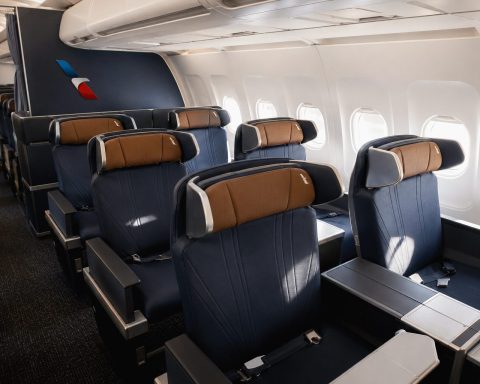
American’s near-term headlines (storm cancellations; hub schedule changes) sit on top of a broader strategy the company has been pitching to investors: a push upmarket into premium cabins and higher-yield travelers, plus loyalty upgrades.
In a Reuters deep dive earlier this month, American’s new Chief Commercial Officer Nat Piper said the airline believes investing in customer experience can help grow revenue: “We think investing in customer experience will help us grow the top line.” Reuters
But Reuters also captured the bear case: analysts warned the turnaround could be “slow and costly,” pointing to supply-chain bottlenecks, delays in aircraft and cabin retrofit timelines, and the reality that customer experience and operational reliability are difficult to fix quickly at scale. Travel industry analyst Henry Harteveldt summed it up bluntly: “American Airlines is not going to turn itself around on a dime.” Reuters
For investors, the connection is important: the DFW banking restructure can be read as a concrete “execution move” that complements the premium/loyalty strategy. A premium product is easier to sell—and keep selling—when the operation runs on time and missed connections don’t torch customer trust. American Airlines Newsroom+1
What investors should know before the next session (Monday, Dec. 29)
With markets closed right now, the practical question becomes: what could move AAL when trading resumes?
1) Watch for updated storm impacts and recovery metrics.
Storm Devin has already produced substantial cancellations and delays, and weekend recovery performance can influence sentiment into Monday’s session—especially because New York-area disruption was central in reporting.
2) Pay attention to whether weather disruption becomes a “financial narrative.”
Most weather events fade quickly in equity pricing, but large-scale holiday disruptions can become a talking point if they meaningfully affect unit costs, completion factor (how many flights actually operate), or customer perception. Reuters+1
3) DFW overhaul: expect investors to debate “nice press release” vs. “measurable improvement.”
The 13-bank shift and additional block time are concrete operational levers. The key for the stock will be whether investors believe these changes translate into materially improved on-time performance and fewer misconnections—especially as the schedule changes roll in during 2026. American Airlines Newsroom+1
4) Keep one eye on the calendar.
With an estimated earnings window approaching in late January, positioning can shift as traders recalibrate around what the next report might show on premium revenue trends, guidance, and operational metrics.
Bottom line
American Airlines stock enters Monday’s session with a classic airline setup: a near-term operational shock from winter weather colliding with a longer-term operational and product strategy aimed at closing the gap with higher-performing peers.
If the weekend’s storm disruption fades quickly and the market’s attention shifts back to execution milestones—like the DFW schedule overhaul and the premium/loyalty strategy—AAL’s narrative could become less about weather noise and more about whether management’s “reliability + premium” thesis can finally show up in sustained profitability and investor confidence. Reuters+2American Airlines Newsroom+2
Related articles: NASDAQ:AAL