NEW YORK, Dec. 28, 2025, 7:52 a.m. ET — Market closed
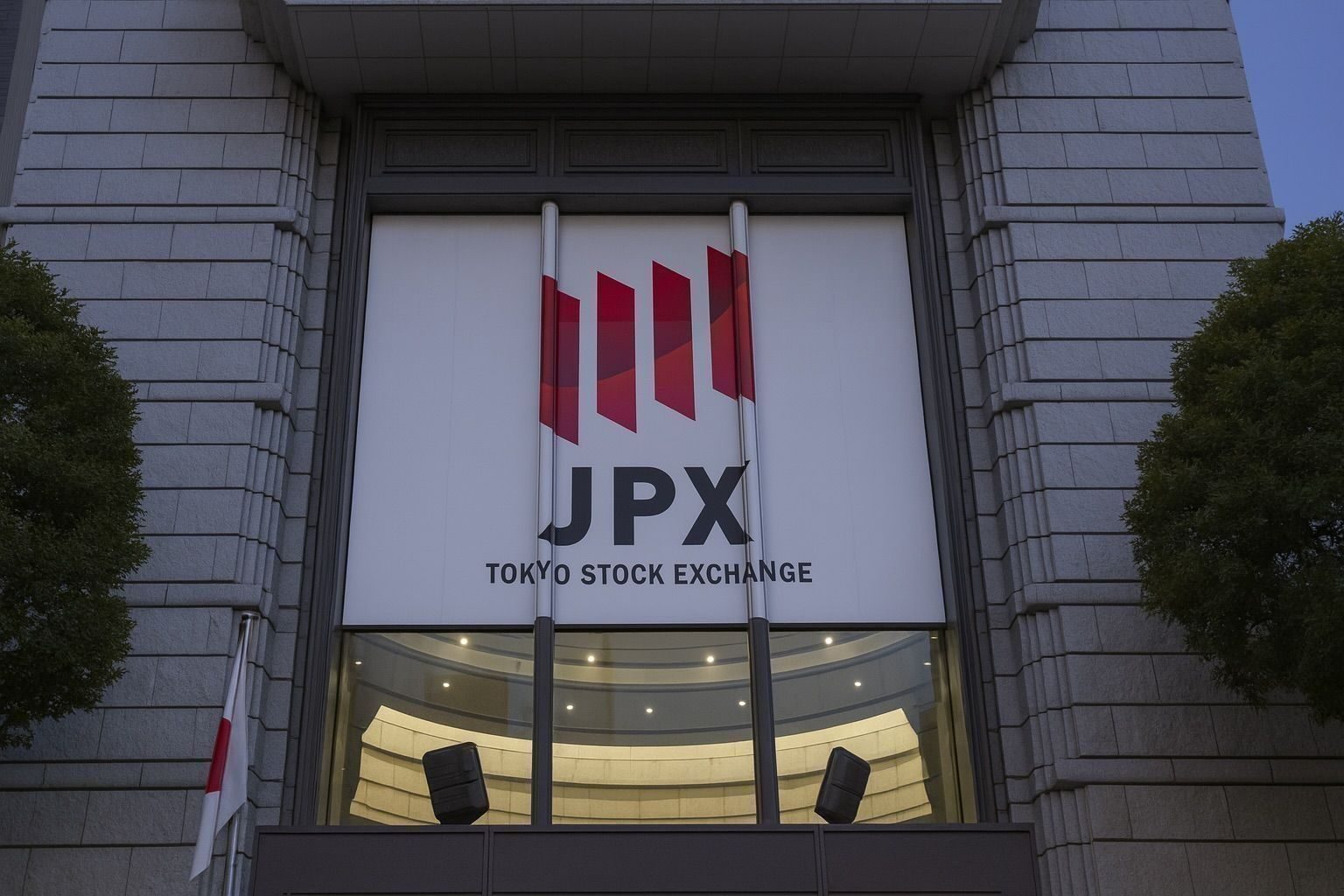
As Wall Street takes its weekend pause, attention shifts across the Pacific to the Tokyo Stock Exchange (TSE) — where Japan’s TOPIX just capped the week at a fresh record, the yen remains under an intervention cloud, and year-end liquidity is thinning fast.
Friday’s Tokyo close mattered for more than bragging rights. It stitched together three threads investors will likely be juggling as cash trading resumes: (1) Japan’s equity momentum (with the TOPIX pushing to new highs), (2) the yen’s uneasy slide even after a Bank of Japan (BOJ) rate hike, and (3) a fiscal story that is now moving markets alongside monetary policy.
Where Tokyo left off: records in the TOPIX, strength in the Nikkei 225
Japan’s TOPIX — the broad benchmark that tracks Prime Market stocks — ended Friday at 3,423.06, after setting an intraday record high of 3,436.75.
The headline-grabbing Nikkei 225 finished the latest session at 50,750.39.
Reuters framed the move as part of a broader “risk-on” pulse in Asia, helped by a softer yen and thin, post-holiday trading conditions globally. Reuters
For U.S.-based investors tracking Tokyo in real time: the TSE’s cash equity sessions run 9:00 a.m.–11:30 a.m. and 12:30 p.m.–3:30 p.m. Japan time, with orders accepted ahead of each session.
The yen is still the swing factor — and officials keep the intervention threat alive
The currency backdrop is doing a lot of the heavy lifting for Japan equities right now, especially for exporters. On Friday, the yen softened even after the BOJ’s recent hike, with Reuters noting investors remained alert to the possibility of official intervention during thin year-end liquidity.
The intervention signaling hasn’t been subtle. Japan’s top currency diplomat, Atsushi Mimura, said recent FX moves were “one-sided and sharp” and that authorities would take “appropriate” action against excessive moves — language that traders typically read as keeping the option of yen-buying intervention on the table. Reuters
That matters for Tokyo Stock Exchange investors because a sudden yen squeeze can flip the script quickly: exporters and overseas-earners (often heavyweights in TOPIX and the Nikkei) tend to benefit from yen weakness, while a rapid yen rebound can pressure those same stocks.
Budget math and bond supply: why “fiscal optics” are moving stocks
Japan’s fiscal path is no longer a background storyline — it’s a market driver, especially through bond yields and the yen.
Reuters reported that Japan’s cabinet approved a record budget for the fiscal year starting April 2026, while emphasizing efforts to keep debt issuance in check.
At the same time, Japan’s finance ministry will issue the fewest super-long Japanese Government Bonds (JGBs) in 17 years in the next fiscal year, according to a plan approved by the cabinet — a move Reuters linked to officials’ sensitivity to the recent rise in yields.
Why this matters for the Tokyo Stock Exchange: higher long-term yields can tighten financial conditions, weigh on equity valuations, and destabilize the yen if investors decide Japan deserves a bigger “fiscal risk premium.” Conversely, credible signals that issuance will be restrained can ease pressure on yields — and equities can breathe.
What JPX and the Tokyo Stock Exchange are changing right now
Beyond macro forces, the exchange itself has been busy — and several developments from Japan Exchange Group (JPX) and the TSE over the past two trading days are directly relevant to product access, liquidity, and governance narratives investors have been watching for years.
Carbon markets: a new settlement service for carbon credit OTC trades
The TSE said it will introduce a “Carbon Credit OTC Trade Settlement Service” to support over-the-counter transactions in carbon credits, using the carbon credit market’s trading and settlement system functions to match trades, settle funds, and transfer credits executed outside the market. Japan Exchange Group
This is part plumbing, part strategy: as carbon markets mature, settlement and operational friction can be a bigger barrier than “price discovery” in the abstract.
New listed products coming in January: actively managed JGB ETFs and thematic ETNs
The TSE approved new actively managed ETFs from Asset Management One tied to Japanese government bonds, with listings scheduled for Jan. 20, 2026.
It also approved new ETNs from Mitsubishi UFJ Securities Holdings, including an “inbound tourism” Japan equity theme and European sector themes, scheduled to list Jan. 26, 2026. Japan Exchange Group
Trading unit and tick-size changes for some ETFs
The TSE announced trading unit changes (from 10 units to 1 unit) and corresponding tick-size changes for three currency-hedged U.S. equity ETFs, effective Jan. 16, 2026.
For investors, these “microstructure” changes can meaningfully affect how easy (or costly) it is to trade smaller ticket sizes — especially during volatile FX periods.
Governance and valuation pressure: more guidance tied to cost of capital and minority shareholders
The TSE published a new set of case studies aimed at helping listed companies improve “management that is conscious of cost of capital and stock price,” including updated “Key Points” reflecting discussions and feedback gathered through engagement with over 400 investment firms. Japan Exchange Group
It also published a compilation of case studies related to parent-subsidiary listings and minority shareholder protection — one of the most persistent governance concerns in Japan equity investing.
Listing status actions: delistings and supervision designations
The TSE issued several listing-related notices, including a delisting decision for Freund Corporation (Standard Market), with a designation period as securities to be delisted running through Jan. 26, 2026 and the delisting date set for Jan. 27, 2026 (subject to change under certain circumstances).
These exchange actions don’t move the TOPIX alone — but they shape investor confidence in market quality and governance enforcement over time.
Forecasts and analysis: BOJ timing, fiscal risk premium, and why Tokyo could stay FX-driven
In recent analysis, Reuters highlighted a key point for the next several sessions: Japan’s equity market may trade like a currency market — with the yen acting as the fastest transmission channel between policy expectations, yields, and stock leadership.
Former BOJ board member Makoto Sakurai told Reuters the central bank “probably wants” to resume hikes “about once every six months,” and he projected further increases toward 1.5%, with one hike around June or July next year. Reuters
Reuters also quoted Akira Otani, a former BOJ executive now at Goldman Sachs Japan, saying he expects another rate increase in July, while adding that yen moves could sway the timing — effectively tying future BOJ decisions to currency-driven inflation risks.
On the fiscal side, former BOJ policymaker Seiji Adachi warned Reuters that yen weakness and yield rises are being driven by growing concern over Japan’s finances — arguing investors may be demanding a higher premium for fiscal risk, and calling rising bond yields “the biggest risk” to Japan’s economy next year. Reuters
If the Tokyo Stock Exchange is closed now, what should investors know before the next session?
The TSE is closed for the weekend, and year-end calendar effects are about to matter more than usual.
1) Know the holiday calendar and the year-end rhythm.
JPX notes its markets are closed on weekends, national holidays, and specific market holidays — with Dec. 31 listed as a market holiday, followed by Jan. 1–3. Japan Exchange Group
That means the “last stretches” of liquidity can get weird: fewer participants, wider spreads in some names, and bigger reactions to FX moves.
2) Watch USD/JPY and official rhetoric as closely as earnings.
Intervention risk tends to rise when liquidity is thin — which Reuters explicitly flagged in its latest yen coverage. Reuters+1
A sharp yen move can change the day’s winners and losers on the Tokyo Stock Exchange fast.
3) Track JGB yields and the bond supply narrative.
Japan’s move to cut super-long issuance was interpreted as a sign officials are trying to calm the bond market. Reuters
If yields resume climbing, that can pressure equity multiples and add stress to the yen (via “fiscal risk premium” concerns).
4) Be aware of exchange-level changes that may affect trading in January.
Tick-size/trading-unit changes and new ETF/ETN listings may influence liquidity and trading behavior around specific products and themes.
The setup for the next Tokyo session: a year-end market that may trade “macro-first”
Heading into the next open, Tokyo’s backdrop is unusually concentrated around a few macro levers: the yen, bond yields, and confidence that Japan can balance record spending plans with credible debt management.
The good news for bulls is that Japan’s broad market just proved it can still print new highs into year-end. The risk for everyone else is that thin liquidity plus intervention talk plus rate-path uncertainty is exactly the sort of cocktail that can turn a calm session into a sharp one — before New York has even finished dinner.