
NEW YORK, Dec. 28, 2025, 10:33 a.m. ET — Market Closed (Weekend)
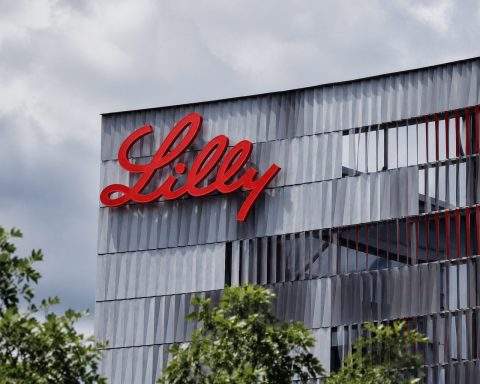
Eli Lilly and Company NYSE:LLY heads into the final two trading days of 2025 with U.S. markets closed for the weekend and investors weighing a familiar mix of catalysts: the booming obesity-drug franchise (Zepbound and Mounjaro), the intensifying race to bring weight-loss pills to market, and fast-evolving policy and pricing dynamics that could reshape demand.
LLY last closed at $1,077.75 on Friday (Dec. 26), with the session’s trading range roughly $1,068 to $1,081 on about 1.01 million shares, according to Investing.com’s historical data. That put the stock just below its recent peak levels, with a 52-week range shown near $623.78 to $1,111.99—a reminder of how powerful the run has been as GLP‑1 demand and pipeline expectations continue to dominate the story.
Weekend market context: why Monday may feel “bigger” than the calendar suggests
Year-end trading can be deceptively quiet—until it isn’t. Reuters’ “Week Ahead” outlook flagged that thin liquidity and portfolio adjustments around year-end can amplify stock moves, even absent major company-specific headlines. That matters for a mega-cap momentum name like Eli Lilly, where positioning and sentiment around obesity drugs can shift quickly. Reuters
Macro attention next week is also expected to stay fixed on the Federal Reserve’s policy path. Reuters reported investors are watching for the Fed minutes due Tuesday (Dec. 30) for additional clarity on rates, alongside ongoing market rotation and end-of-year flows.
What’s new in the last 24–48 hours: a fresh funding headline tied to Lilly’s R&D ecosystem
The most notable new Lilly-linked headline over the last two days has been a funding update from South Korea’s ABL Bio, which said it secured $55 million tied to Lilly—$40 million as an upfront payment under a license/research/collaboration agreement for ABL’s Grabody platform plus a $15 million equity investment. ABL Bio CEO Sang Hoon Lee said the company plans to deploy the funding to expand indications (including obesity and muscle disorders) and advance next-generation antibody-drug conjugate programs, among other efforts.
From a stock-trading standpoint, this is not the kind of “needle mover” investors typically treat like a Zepbound prescription shock or an FDA decision. But it underscores a broader point: Lilly’s war chest and deal-making posture remain active as it scales both its marketed portfolio and its longer-cycle pipeline options. PR Newswire
The bigger driver: weight-loss pills are no longer theoretical—and that matters for Lilly’s valuation narrative
While not within the last 48 hours, the dominant theme investors are still digesting heading into Monday is the FDA’s approval of Novo Nordisk’s weight-loss pill—a milestone that formalizes the next battleground in obesity care and puts fresh pressure on “who wins the pill era.” Reuters reported the FDA approved Novo’s oral Wegovy (25 mg semaglutide), with a late-stage study showing 16.6% average weight loss over 64 weeks for the 25 mg dose versus 2.7% for placebo. Reuters
For Eli Lilly, the key takeaway isn’t simply that a rival got there first—it’s that the pill category is now validated, which can expand the total addressable market and potentially widen patient adoption beyond injections. Reuters quoted Anand Iyer, chief AI officer at telehealth firm Welldoc, saying broader indications and oral options could drive a big increase in uptake; Reuters also cited Christopher Chrisman, managing director and partner at BCG, who argued pills won’t replace injections outright but offer clear advantages for some patients (including travel convenience and not needing refrigeration).
Just as important for Lilly shareholders: Reuters noted Lilly’s next-generation pill orforglipron could be approved as soon as late March, and that Lilly’s pill does not carry the same empty-stomach dosing restrictions described for Novo’s oral semaglutide.
Pricing and access: policy headlines that can move demand assumptions—and investor models
Access and price are becoming as influential as clinical data.
Reuters reported that Novo and Lilly agreed to offer starter doses of their weight-loss pills at $149 per month for Medicare/Medicaid programs and cash-paying customers via the White House’s direct-to-consumer TrumpRx site, a development that can influence how investors model long-term pricing power and volume growth.
Separately, Reuters reported the U.S. Centers for Medicare & Medicaid Services (CMS) unveiled a voluntary coverage model under its BALANCE initiative that could ultimately set standardized terms and negotiated pricing, with eligible Medicare beneficiaries paying $50 per month for GLP‑1 drugs (including Wegovy and Lilly’s Zepbound), according to the agency. Reuters cited CMS administrator Mehmet Oz discussing the initiative publicly.
For LLY stock, these policy signals matter because Lilly’s premium valuation has been built on sustained, high-volume growth in obesity/diabetes—so any credible path to wider coverage can be a volume tailwind, while new pricing frameworks can cap margins and force investors to rethink long-run economics.
Global demand lens: India’s obesity market is heating up—and Lilly is already competing there
International expansion is another underappreciated driver. Reuters reported Lilly and Novo are battling for India’s obesity market ahead of expected cheaper generics (with Reuters citing March 2026 as a key timing point for semaglutide generics). Reuters quoted Shrikant Akolkar (Nuvama Institutional Equities) describing the competitive intensity, and Dr. Anoop Misra (Fortis C‑DOC Hospital) on the demand backdrop; Reuters also cited Vishal Manchanda (Systematix Institutional Equities) and Novo Nordisk India managing director Vikrant Shrotriya on market dynamics.
Even if India’s near-term revenue impact is smaller than the U.S., investors often treat global adoption as a “duration” signal—supporting the idea that GLP‑1 demand is not a one-country phenomenon, and potentially smoothing growth after initial U.S. penetration matures. Reuters
Pipeline credibility: orforglipron and retatrutide remain central to “what’s next”
Beyond near-term prescriptions, Lilly’s pipeline is a core reason LLY trades like a market leader rather than a traditional pharma stock.
Orforglipron (pill): Reuters reported late-stage trial results showing Lilly’s oral pill helped maintain weight loss in patients switching from injectable GLP‑1 drugs. Reuters quoted Evan Seigerman of BMO Capital Markets on the “convenience” differentiation, and Courtney Breen of Bernstein describing orforglipron as a potentially strong option for long-term weight maintenance and de-escalation. Reuters also noted discussion around whether FDA review timelines could be sped up, with the agency potentially deciding as early as March 28 if an accelerated timeline is adopted. Reuters
Retatrutide (next-gen injectable): Reuters reported Lilly’s next-generation obesity drug retatrutide delivered 28.7% average weight loss in a late-stage trial—outperforming Zepbound—while also raising tolerability questions. Reuters cited analyst reactions from Evan Seigerman (BMO), Chris Schott (J.P. Morgan), David Evans (Kepler Cheuvreux), and Kevin Gade (COO at Lilly shareholder Bahl & Gaynor).
This is the setup investors are trading: Lilly’s current blockbuster franchise (Zepbound/Mounjaro) plus a pipeline that could extend leadership into a multi-product, multi-format “obesity platform” over the next decade. Reuters+1
Forecasts and analyst positioning: target prices are tightening as LLY’s rally matures
With LLY already up sharply, forecasts increasingly hinge on whether earnings growth can keep outrunning expectations.
MarketScreener’s consensus snapshot shows 30 analysts with a mean consensus at “BUY”, and an average target price around $1,093.22 versus a last close of $1,077.75—implying a relatively modest incremental upside from here. MarketScreener also lists a year-to-date change near +39.60% for LLY. MarketScreener
That “tightening upside” dynamic is common late in a momentum cycle: price targets rise, but the stock price rises too—so incremental upside compresses unless the next set of catalysts (often prescriptions, margins, and the next wave of pipeline data) clearly re-rate the earnings trajectory upward again. MarketScreener+2Reuters+2
What investors should know before the next session
With the U.S. stock market reopening Monday (Dec. 29), here are the practical, stock-specific items most likely to matter for LLY at the open and into the final week of the year:
- Watch for policy/pricing headlines over the weekend and premarket. The market is actively modeling the downstream impact of the TrumpRx pricing framework and CMS’s evolving coverage model for GLP‑1s.
- Track the weight-loss pill narrative. Novo’s approval validates the pill category; Lilly’s orforglipron timeline—and any new commentary on FDA review speed—can quickly swing sentiment.
- Expect year-end trading effects. Reuters’ week-ahead outlook flagged light volumes and portfolio adjustments as a potential volatility amplifier—important for a high-dollar, heavily owned large-cap like LLY.
- Know the near-term technical context. LLY’s most recent session range near $1,068–$1,081 is a simple “map” many traders will use for early-week support/resistance reads. Investing.com
- Keep an eye on deal flow and R&D tie-ups. The ABL Bio funding update is a reminder that Lilly’s ecosystem investing remains active, even when headline news is otherwise light.
Bottom line
Heading into Monday’s open, Eli Lilly stock remains a market heavyweight whose short-term direction can be nudged by macro and year-end flows—but whose medium-term narrative is still being written by the obesity franchise, the race for a scalable weight-loss pill, and policy-driven shifts in affordability and coverage. The weekend’s freshest company-linked headline—ABL Bio’s funding update—adds to the sense that Lilly is still investing to extend its pipeline moat, even as investors watch whether the next leg higher requires a new catalyst or simply confirmation that demand and margins remain durable into 2026.
Related articles: NYSE:LLY