
NEW YORK, January 1, 2026, 19:57 ET
- A letter in the Financial Times urged BP to split its oil-and-gas arm from its retail and EV-charging businesses.
- The call lands as activists push more companies toward divestments and break-ups.
- BP remains tied to Reliance in India, where Reuters has reported a $30 billion arbitration claim over gas output.
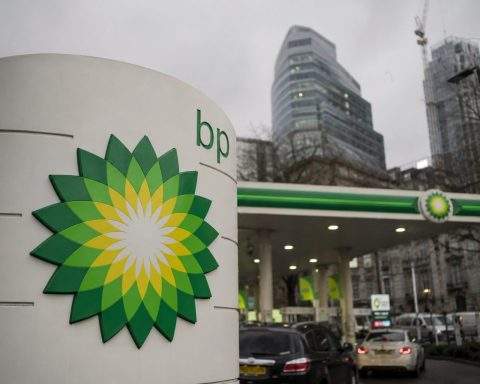
A letter published in the Financial Times argued BP should split into two companies, separating its oil-and-gas production business from its downstream consumer-facing operations such as fuel marketing and electric-vehicle charging.
The debate comes as activist pressure helps drive a new wave of corporate restructuring. Dealogic data cited by the Financial Times showed global companies announced more than $1 trillion of asset sales in 2025, with nearly $1.2 trillion across almost 7,000 deals by mid-December.
BP’s structure has drawn attention in part because the company straddles traditional oil and gas and newer businesses tied to the energy transition, including EV charging. The FT letter pointed to BP Pulse, BP’s EV-charging network, and its joint venture in India with Reliance Industries.
The letter’s author, Ian Byrne of Milton Keynes, said BP has already shrunk its retail footprint over decades, disposing of more than half its European networks and most downstream operations in Africa and Asia since a peak in the 1970s. He said the remaining chains are positioned for a “convenience” model that pairs fuel with retail sales.
Byrne argued BP should avoid selling assets “piecemeal” and instead create two entities. He said a downstream company could hold fuel marketing, convenience stores, EV charging, lubricants and any remaining solar activities.
He said climate-related scrutiny would fall mainly on the upstream half — the oil and gas production business — while demand for refuelling and recharging is likely to persist. Byrne cited U.S. examples such as Sunoco and Marathon as precedents for a split.
BP has previously pushed back on break-up ideas. In 2021, then-CEO Bernard Looney told Reuters the group was “better together.” Reuters
The break-up talk also comes as BP faces legal and contractual risk in India alongside Reliance. Reuters reported on Dec. 29 that India is seeking more than $30 billion from Reliance and BP in an arbitration case over alleged underproduction from two deepwater fields, D1 and D3, in the KG-D6 block.
The tribunal has heard the dispute since 2016 and final arguments took place on Nov. 7, Reuters reported, citing people familiar with the proceedings. Reuters reported the three-member tribunal is expected to deliver a verdict in mid-2026, and that any ruling can be challenged in Indian courts.
India’s case centres on allegations that the companies mismanaged the fields, leading to a loss of reserves. Reuters reported the government alleged Reliance drilled fewer wells than originally planned and used “unduly aggressive” production methods, while a 2012 oil ministry statement to parliament said reserve estimates were revised down sharply before production began.
Reliance has denied the size of the claim. In a separate Reuters report, Reliance said there was no $30 billion claim against it and BP, and said the matter was “sub judice” — meaning it is before the courts. Reuters
Arbitration is a private dispute-resolution process where a tribunal, rather than a court, hears evidence and issues a decision. Reuters reported the KG-D6 block was awarded under a production-sharing contract, a model that typically allows contractors to recover costs from sales before splitting profits with the state.
Related articles: LSE:BP