
New York, Jan 11, 2026, 07:08 EST — Market closed
D-Wave Quantum Inc. shares closed Friday around 4% lower at $28.11, wrapping up a volatile week for the quantum computing firm. The stock fluctuated between $31.14 and $28.07 during the session, with roughly 46.7 million shares traded. Investors will face a fresh deal timetable come Monday.
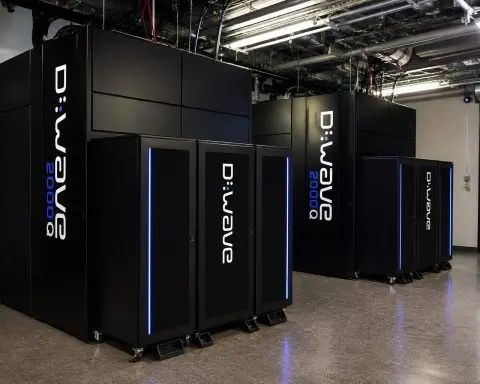
The pullback is significant because D-Wave’s strategy is shifting beyond just marketing quantum services. The firm now aims to expand its focus from “quantum annealing”—a niche method typically applied to optimization problems—toward gate-model machines, the architecture most competitors target for a wider range of computing applications.
That change raises immediate concerns investors hate: the dilution tied to the stock portion of a major deal, and the timeline for turning lab breakthroughs into market-ready products. Activity in options and analyst commentary points to expectations of volatility, not a slow, steady climb.
Rosenblatt Securities analyst John McPeake bumped his price target on D-Wave to $43 from $40 over the last two days, citing the company’s latest technical update and its upcoming acquisition of Quantum Circuits, TipRanks reports.
A securities filing detailed the deal’s structure that investors are now dissecting. D-Wave will pay $550 million for Quantum Circuits — splitting $250 million in cash and $300 million in common stock. The share count is based on a 10-day volume-weighted average price, or VWAP, but with a “collar” setting a floor at $22.30 and a cap at $39.03. According to the filing, the deal can be called off if it hasn’t closed by April 6, 2026. SEC
D-Wave announced the combined company aims to launch superconducting gate-model systems by 2026. “With this acquisition, we believe that D-Wave has unequivocally cemented its position” in superconducting quantum computing, CEO Alan Baratz said. Quantum Circuits co-founder Rob Schoelkopf added the deal should “significantly speed up the timeline” for achieving fault-tolerant, error-corrected quantum computing. D-Wave Quantum
Just days ago, D-Wave announced it had achieved “on-chip cryogenic control” for gate-model qubits — or quantum bits — a move designed to slash the wiring and hardware demands as these systems grow. “Without on-chip control and multiplexing, useful gate-model quantum computers require an impractically large amount of wiring,” said chief development officer Trevor Lanting. SEC
The wider quantum-computing sector cooled off heading into the weekend. IonQ dropped close to 2% on Friday. Rigetti Computing dipped around 2%, and Quantum Computing Inc. lost about 1.8%, highlighting just how sensitive the sector remains to risk.
Options pricing suggested more volatility ahead. According to a note from TheFly on TipRanks, implied volatility hovered near 100. Calls were trading more actively than puts, while the put-call skew grew steeper, indicating that some traders were willing to pay a premium for downside protection.
But the deal math works both ways. Should QBTS dip toward the collar’s lower bound, D-Wave will have to issue more shares to reach the $300 million stock value, upping dilution risk. If it holds steady, fewer shares get issued — yet the stock stays vulnerable to quick shifts in momentum trading.
Traders will zero in Monday on fresh details about the regulatory timeline and how the Quantum Circuits deal will wrap up. They’ll also look for clues on whether the company plans to raise capital to cover the $250 mln cash portion.
D-Wave’s Qubits 2026 conference on Jan. 27–28 is the next key date for investors, who will be scanning for details on the product roadmap and any progress on the gate-model strategy.
Related articles: NASDAQ:QBTS