
New York, January 13, 2026, 10:14 EST
- Alphabet’s market value briefly hit $4 trillion following an Apple-Google AI agreement
- Shares climbed to an intraday high of $334.04 before pulling back
- Growth in Google Cloud and fresh chip rental deals have intensified the AI narrative
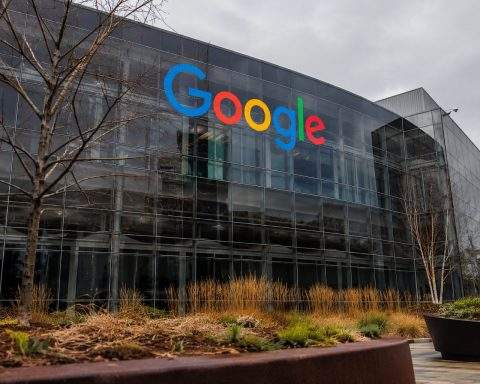
Alphabet Inc briefly touched a $4 trillion market cap on Monday, joining the ranks of mega-cap tech giants hitting that benchmark as investors rallied behind its expanded AI efforts.
This move is key because Alphabet has long battled a straightforward perception issue: it helped kickstart the AI era but watched others steal the limelight. Partnering with Apple now embeds Google’s Gemini models into a device network that’s in countless pockets, every day.
Alphabet’s class A shares jumped up to 1.7% early on, hitting a record $334.04, but later pared those gains. Market capitalization, or market cap, measures a company’s total share value.
Apple plans to incorporate Google’s Gemini models into its updated Siri voice assistant later this year, under a multi-year agreement announced by Alphabet. Google said Apple chose its AI tech after “careful evaluation,” calling it the “most capable foundation for Apple Foundation Models.” Elon Musk, Tesla’s CEO, slammed the deal as “an unreasonable concentration of power for Google.” Parth Talsania, CEO of Equisights Research, suggested ChatGPT will remain relevant for “complex, opt-in queries” rather than replacing default AI layers. https://www.reuters.com/business/google-ap…
Alphabet overtook Apple in market cap last week for the first time since 2019, claiming the spot as the world’s second most valuable company. The stock has jumped roughly 65% in 2025, outpacing the “Magnificent Seven,” Wall Street’s label for the seven mega-cap tech giants that lead major indexes.
“Among the Magnificent 7, it’s the one stock that’s caught us off guard,” said Phil Blancato, CEO of Ladenburg Thalmann Asset Management, highlighting a move beyond Alphabet’s usual ad-centric approach. The shares also got a boost after a U.S. judge’s September decision blocked a breakup of the company, keeping its hold on Chrome and Android intact. https://www.reuters.com/business/alphabet-…
Google Cloud drove much of that reset, with revenue climbing 34% in the third quarter. Its backlog—the value of signed deals waiting to be recognized as revenue—swelled to $155 billion.
Alphabet has begun leasing out its in-house AI chips to external clients, shifting hardware once reserved mostly for internal projects. This move provides cloud customers with an alternative source for limited computing capacity.
Advertising continues to drive revenue. Alphabet’s ad division has remained resilient amid economic uncertainty and fiercer competition for marketing dollars, supporting the expansion of data centers and AI development.
With a market value topping $4 trillion, Alphabet now joins Nvidia, Microsoft, and Apple—only three other firms to reach this mark amid the ongoing AI surge. For investors, this highlights how the AI rally is increasingly concentrated in a handful of dominant players.
But the surge carries risks. Some investors worry Big Tech’s heavy AI spending could backfire if demand falls short of costs. Alphabet CEO Sundar Pichai cautioned that the current AI-driven market frenzy might not last. “I think no company is going to be immune, including us,” he said, if the enthusiasm fades. https://halifax.citynews.ca/2026/01/12/goo…
Apple had introduced ChatGPT access on its devices back in late 2024, enabling Siri to use OpenAI’s chatbot for tougher queries. When announcing the Gemini deal, Apple confirmed there were no significant updates to that setup. OpenAI did not reply to requests for comment.
Related articles: NASDAQ:GOOGL