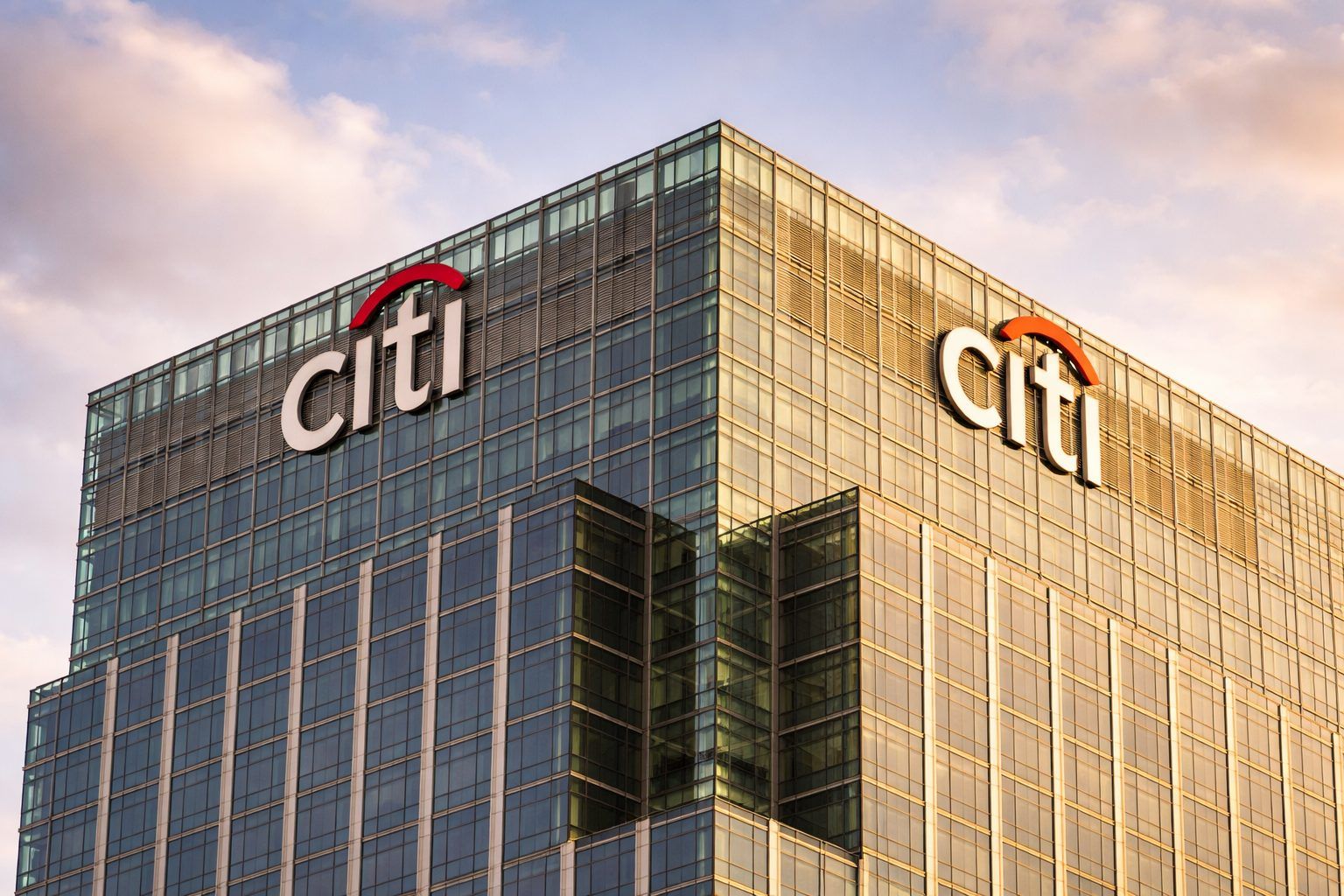
Citigroup stock drops after earnings: Russia hit, cost cuts in focus
14 January 2026
2 mins read

Citigroup stock drops after earnings: Russia hit, cost cuts in focus

New York, Jan 14, 2026, 11:57 a.m. EST — Regular session ongoing.

  • Shares of Citigroup dropped close to 4% following the release of its quarterly earnings
  • A $1.2 billion loss tied to Russia dragged on reported profits, but adjusted EPS still beat expectations
  • Expense control, headcount reductions, and hitting a 2026 profit goal remain key investor concerns

Citigroup shares dropped Wednesday following the release of its fourth-quarter results, as investors balanced gains from dealmaking-driven revenue against losses linked to its planned exit from Russia. The stock slid roughly 3.8% to $111.93, trading within a range of $118.50 to $111.93.

The reaction is crucial as major U.S. banks shape early-year risk appetite, with Citi’s stock standing out as one of the sector’s more notable turnaround plays. Traders are looking for evidence that higher investment banking and services fees can balance out the challenges of managing a vast global bank during its restructuring.

It comes as Citi ramps up efforts to close the profitability gap with competitors. The bank has focused heavily on capital returns and simplifying operations; this quarter will reveal if that approach is still paying off or just driving up costs.

Citi reported fourth-quarter net income of $2.5 billion, or $1.19 per diluted share, on $19.9 billion in revenue. The results factored in a $1.2 billion loss on the sale related to its plan to offload AO Citibank in Russia. Stripping out that charge, earnings came in at $1.81 per share. Operating expenses rose 6% to $13.8 billion.

Investment banking fees jumped 35% to $1.29 billion in the quarter, while revenue in the banking unit surged 78% to $2.2 billion, according to Reuters. David Wagner, equity head and portfolio manager at Aptus Capital Advisors, described it as a sign Citi’s turnaround is gaining steam. He added, “Citigroup could be officially shedding its laggard reputation.” Reuters

The selloff highlighted just how sensitive the market remains. Citi’s return on tangible common equity (RoTCE) — which excludes goodwill and other intangibles — came in at 5.1% this quarter, far short of its 10%-11% target for 2026. Meanwhile, expenses climbed higher.

Cost control is heating up. Citigroup plans to slash roughly 1,000 jobs this week, according to a source speaking to Reuters. The cuts are part of a larger effort to trim headcount. A company spokesperson said these moves are simply staffing tweaks to align with current demands.

The bank also pointed out it still has capacity to return cash. On Monday, Citi’s board approved a quarterly common dividend of $0.60 per share, set for payment on Feb. 27 to shareholders of record as of Feb. 2.

Citi’s report arrived during a packed week for the sector. JPMorgan released its results Tuesday, followed by Bank of America and Wells Fargo on Wednesday. Investors are reassessing how trading, lending, and deal fees will shape 2026.

The path isn’t straightforward. Should the deal pipeline slow or lower interest rates compress net interest income — the gap between what banks make on loans versus what they pay on deposits — the boost from investment banking and services might dwindle, leaving Citi with less cushioning against climbing costs.

Investors are now focused on whether management will maintain the 10%-11% RoTCE goal for 2026, and how swiftly expenses and headcount begin to drop with the newest round of cuts. The next key dates for shareholders are the Feb. 2 record date and the Feb. 27 dividend payout.

Khadija Saeed is a financial markets reporter at TS2.tech, specializing in stocks, technology and emerging industries. She studied economics and finance at the London School of Economics and previously worked in market research before moving into financial journalism. Her coverage focuses on the companies, innovations and economic trends influencing global investors. Follow Khadija Saeed on Google News.

Google Preferred Source

TS2 TECH • AI MODEL PORTFOLIO

Top Stock Picks Today

Five earnings-confirmed ideas for a mixed U.S. session with elevated AI-valuation risk and a Federal Reserve decision ahead.

Today’s market stance Defensive • staged buys
Portfolio type Earnings-confirmed
Initial deployment 40% of planned capital
Model horizon 6–18 months
#1 • HIGHEST RISK-REWARD 24% target weight

United Parcel Service

NYSE: UPS
BUY • STAGED
Model score 93 / 100
★★★★★

The low-margin Amazon volume reset is largely complete. A quarterly beat, higher 2026 targets and network cost leverage create today’s clearest turnaround setup without relying on crowded AI exposure.

Q2 revenue$22.83B
Adjusted EPS$1.76
2026 revenue guideAbout $91.2B
Action today

Open 40% of the target position. Add after the July 29 Fed decision or on a controlled pullback.

Next catalyst

U.S. Domestic margin recovery and delivery of the 2026 cost-savings plan.

Main risk: Fuel costs, consumer weakness and restructuring execution.
#2 • PRICING POWER 22% target weight

Sherwin-Williams

NYSE: SHW
BUY ON PULLBACK
Model score 91 / 100
★★★★★

A clean sales and earnings beat, raised guidance and resilient price/mix show that Sherwin-Williams is gaining share despite uneven construction and housing demand.

Q2 sales$6.79B • +7.5%
Adjusted EPS$3.70
2026 adjusted EPS$11.80–$12.20
Action today

Do not chase the result-day gap. Build in two tranches after a pullback or a two-to-three-day base.

Next catalyst

Delivery against raised guidance and further price/mix gains.

Main risk: Housing weakness, raw-material inflation and a post-earnings reversal.
#3 • DEFENSIVE GROWTH 20% target weight

Unilever

LON: ULVR • NYSE: UL
BUY ON WEAKNESS
Model score 90 / 100
★★★★★

Unilever delivered its strongest quarterly volume growth in more than a decade and lifted its outlook. The shares add defensive global growth and reduce dependence on U.S. mega-cap technology.

Q2 underlying sales+5.8%
Q2 volume growth+5.5%
2026 sales guide+4% to +6%
Action today

Start no more than one-third after the result-day rally. Add only as the price consolidates.

Next catalyst

Evidence that volume-led growth converts into durable margin expansion.

Main risk: Currency moves, commodity inflation and portfolio-change execution.
#4 • CASH-FLOW DEFENSIVE 18% target weight

Coca-Cola

NYSE: KO
ACCUMULATE
Model score 88 / 100
★★★★☆

Broad volume growth, resilient brands and upgraded earnings guidance make Coca-Cola a high-quality stabilizer. The lower rank reflects a strong year-to-date run and a less attractive entry after today’s jump.

Q2 net revenue+7%
Unit case volume+5%
2026 comparable EPS+9% to +10%
Action today

Do not chase the breakout. Use a one-third starter or wait for a 2%–3% retracement.

Next catalyst

Sustained volume growth and execution against the upgraded 2026 outlook.

Main risk: Valuation, input-cost inflation and foreign-exchange pressure.
#5 • SELECTIVE AI EXPOSURE 16% target weight

Cadence Design Systems

NASDAQ: CDNS
STARTER ONLY
Model score 86 / 100
★★★★☆

Cadence offers direct exposure to chip-design software rather than chip manufacturing. Revenue growth, record backlog and raised guidance are strong, but valuation and sector volatility justify the smallest weight.

Q2 revenue$1.584B • +24%
Non-GAAP EPS$2.11
Backlog / 2026 growth$8.1B / about 19%
Action today

Open at most 25% of the target position. Add only after AI and semiconductor volatility stabilizes.

Next catalyst

Backlog conversion, AI-design adoption and progress toward the higher cash-flow target.

Main risk: AI valuation compression, China/export controls and chip-sector volatility.
Target portfolio structure
Consumer defensives 38%
Logistics 24%
Coatings & materials 22%
AI design software 16%
Capital deployment plan
40%
Initial positions

Deploy only the first tranche today.

30%
After the Fed

Add after the July 29 decision if the market confirms direction.

30%
Pullback reserve

Keep cash for 2%–5% retracements or failed earnings gaps.

These percentages describe planned capital deployment, not target portfolio weights.

Event-risk watch WAIT BEFORE BUYING
VisaNYSE: V

Reports after the close on July 28.

Microsoft + MetaNASDAQ: MSFT • META

Both report after the close on July 29.

Amazon + AppleNASDAQ: AMZN • AAPL

Both report after the close on July 30.

High-beta AI chipsNVDA • MU • INTC • ASML

Wait for valuation pressure and semiconductor volatility to stabilize.

Portfolio heat 5.8 / 10

Moderate risk. Favor fresh earnings revisions, defensive demand and staged entries.

Market risk check

AI-valuation concerns are pressuring technology shares, while the July 29 Fed decision can reset rates and risk appetite. Avoid full-size entries and do not chase result-day gaps.

TS2 AI MODEL PORTFOLIO 100% target allocation

Data points reviewed from company releases and current market reporting. Target weights are model allocations, not instructions to invest all capital today. Editorial content only; not personalized investment advice. Model scores are comparative signals, not guaranteed-return forecasts.

Tesla stock slips premarket after Musk says Full Self-Driving will be subscription-only from Feb. 14
Previous Story

Tesla stock slips premarket after Musk says Full Self-Driving will be subscription-only from Feb. 14

Amazon stock drops today: tariff-driven supplier talks and Italy fine appeal keep AMZN in focus
Next Story

Amazon stock drops today: tariff-driven supplier talks and Italy fine appeal keep AMZN in focus