New York, January 20, 2026, 13:13 ET — Regular session underway
- AbbVie shares slipped 0.4%, trading at $213.53 in early afternoon action; the stock swung between $210.00 and $214.23 during the session
- Phase III Epkinly (epcoritamab) results reveal a progression-free survival benefit, though overall survival falls short of statistical significance
- Investors are now eyeing the Feb. 4 earnings report and the 2026 outlook
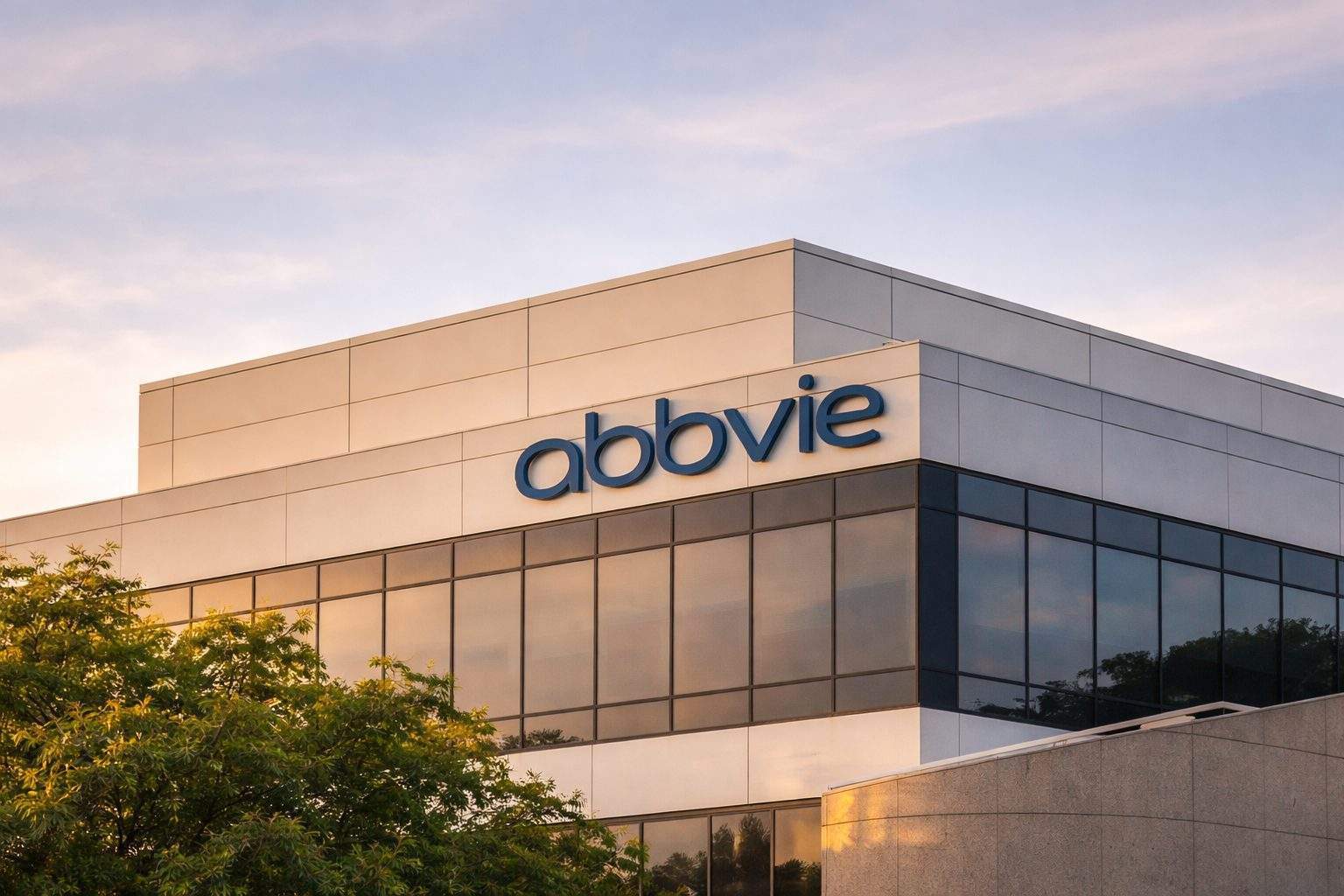
Shares of AbbVie Inc slipped 82 cents, or 0.4%, to $213.53 in early afternoon trading on Tuesday, fluctuating between $210.00 and $214.23. Around 2.9 million shares changed hands.
The tick-by-tick move was modest, yet AbbVie’s shares have grown quick to respond to drug data. Investors are grappling with the impact of new oncology assets as the company shifts more aggressively toward newer brands to offset Humira-era revenue declines.
The pressure plays out in what grabs focus: clinical endpoints, regulatory routes, and upcoming guidance updates. A typical down day can flip quickly if a pipeline headline hits hard enough.
Risk appetite took a hit, with the SPDR S&P 500 ETF Trust shedding roughly 1.5%. The Health Care Select Sector SPDR Fund also edged lower, slipping 0.2%.
OncLive highlighted phase III results for AbbVie-partnered epcoritamab (Epkinly) in 483 patients with relapsed or refractory diffuse large B-cell lymphoma. The drug cut the risk of disease progression or death by 26% compared to chemotherapy, showing a progression-free survival hazard ratio of 0.74. However, overall survival, measuring how long patients live, wasn’t statistically significant, with a hazard ratio of 0.96, the site reported. Genmab CEO Jan van de Winkel called the EPCORE DLBCL-1 trial “the first phase 3 study evaluating a bispecific antibody monotherapy to demonstrate improvements in progression-free survival” in a news release. OncLive
Epcoritamab enters a crowded lymphoma field, where bispecific antibodies and cell therapies battle for the same patients. Even a win on one front doesn’t guarantee broad adoption or rapid doctor switching in this space.
For AbbVie, the implications go beyond just one trial. Investors are focused on whether growth from newer drugs will hold up well enough to counter Humira’s drop, and if oncology can deliver steady gains instead of one-off boosts.
Late-stage oncology is complicated, with survival ultimately deciding the debate. When regulators or doctors prioritize overall survival, or competitors produce clearer data, the market opportunity can shrink—even if a trial meets progression-free survival targets.
AbbVie announced it will release its full-year and Q4 2025 results on February 4, ahead of the market open, followed by an earnings webcast at 8 a.m. Central. Investors will be focused on the 2026 guidance and any news regarding Epkinly’s future in treating DLBCL.