New York, Feb 1, 2026, 13:28 (EST) — Market closed.
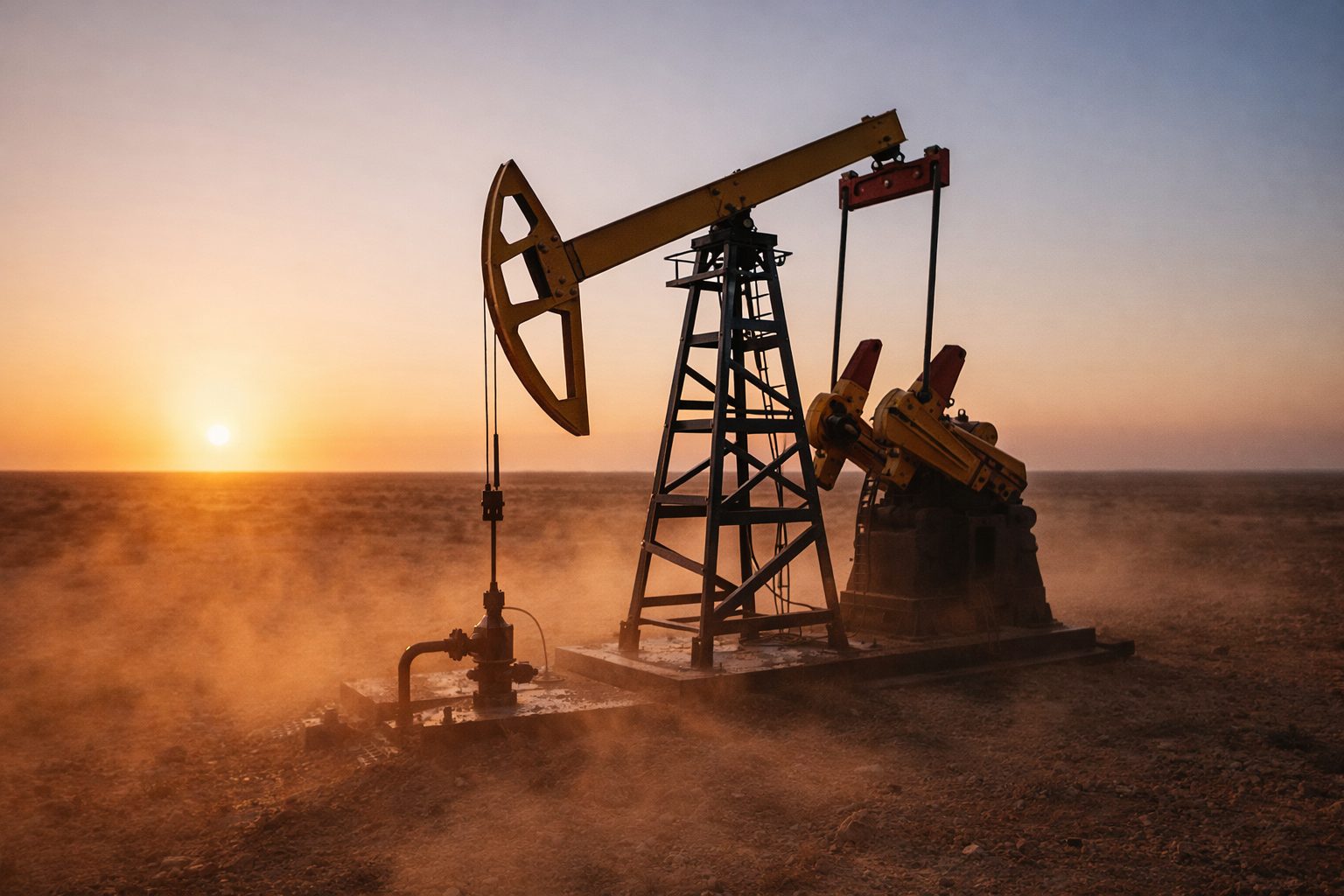
- OPEC+ held March oil production steady on Sunday, with U.S.-Iran tensions pushing crude prices close to multi-month highs.
- The Energy Select Sector SPDR ETF (XLE) climbed 1.1% on Friday, closing at $51.05, buoyed by stronger oil prices and solid Big Oil earnings.
- Traders are eyeing oil’s immediate response as futures reopen, along with any fresh developments on Iran and Venezuela.
U.S. energy stocks are set to open Monday with crude prices still elevated after OPEC+ announced on Sunday it would hold March output steady. Prices have climbed to their highest since late summer amid worries over potential U.S. moves against Iran. Jorge Leon, head of geopolitical analysis at Rystad Energy, noted, “With rising uncertainty around Iran and U.S. tensions, the group is keeping all options firmly on the table.” Reuters
The timing is crucial since oil dictates producer cash flow and buybacks, while the market prices in the geopolitical premium on the fly. That premium can disappear just as quickly as it shows up.
Investors have just digested a wave of major earnings reports aiming to ease concerns about costs and production amid a weaker oil price outlook for 2025. The Energy Select Sector SPDR fund, often used as a benchmark for U.S. oil and gas stocks, follows key energy giants in the S&P 500.
The Energy Select Sector SPDR ETF (XLE) ended Friday at $51.05, gaining 1.1%. Exxon rose about 0.7%, closing near $141.40, while Chevron jumped roughly 3.3% to $176.90, according to market data.
Oil prices dipped a bit heading into the weekend but remained high: Brent closed at $70.69 a barrel, while U.S. West Texas Intermediate (WTI) finished at $65.21. “It’s really all about Iran right now,” said John Kilduff, partner at Again Capital. Reuters
Exxon reported adjusted Q4 earnings of $1.71 per share, edging past analysts’ $1.68 forecast. Strong output from the Permian and Guyana drove annual upstream production to a four-decade peak of 4.7 million barrels of oil equivalent per day. CEO Darren Woods said the company is “capturing more value from every barrel and molecule” as it pushes growth. Exxon also confirmed plans to buy back $20 billion in stock by 2026. Reuters
Chevron reported adjusted earnings of $1.52 per share, beating LSEG’s consensus estimate of $1.45. The company is also exploring further opportunities in Venezuela amid changing geopolitical conditions. CEO Mike Wirth emphasized Chevron’s ongoing “commitment” to the country, while CFO Eimear Bonner noted that output there could increase by 50% within 18 to 24 months, pending additional U.S. government approvals. Reuters
Venezuela is starting to draw more market attention. On Saturday, U.S. President Donald Trump announced that India will purchase Venezuelan oil to substitute some Russian supplies, following a relaxation of U.S. sanctions on Venezuela’s oil sector.
However, the trade could swing the opposite way. Should the Iran story fade and crude prices slip back into last year’s familiar range, energy stocks might lose ground fast—particularly those tied to higher-cost production or with significant refining operations.
Traders are zeroing in on one thing: how oil reacts once futures come back online, alongside any new developments from Washington and Tehran. The upcoming OPEC+ meeting on March 1 could shake up supply forecasts — and, by extension, energy stocks — heading into the quarter’s close.