Today: 20 May 2026
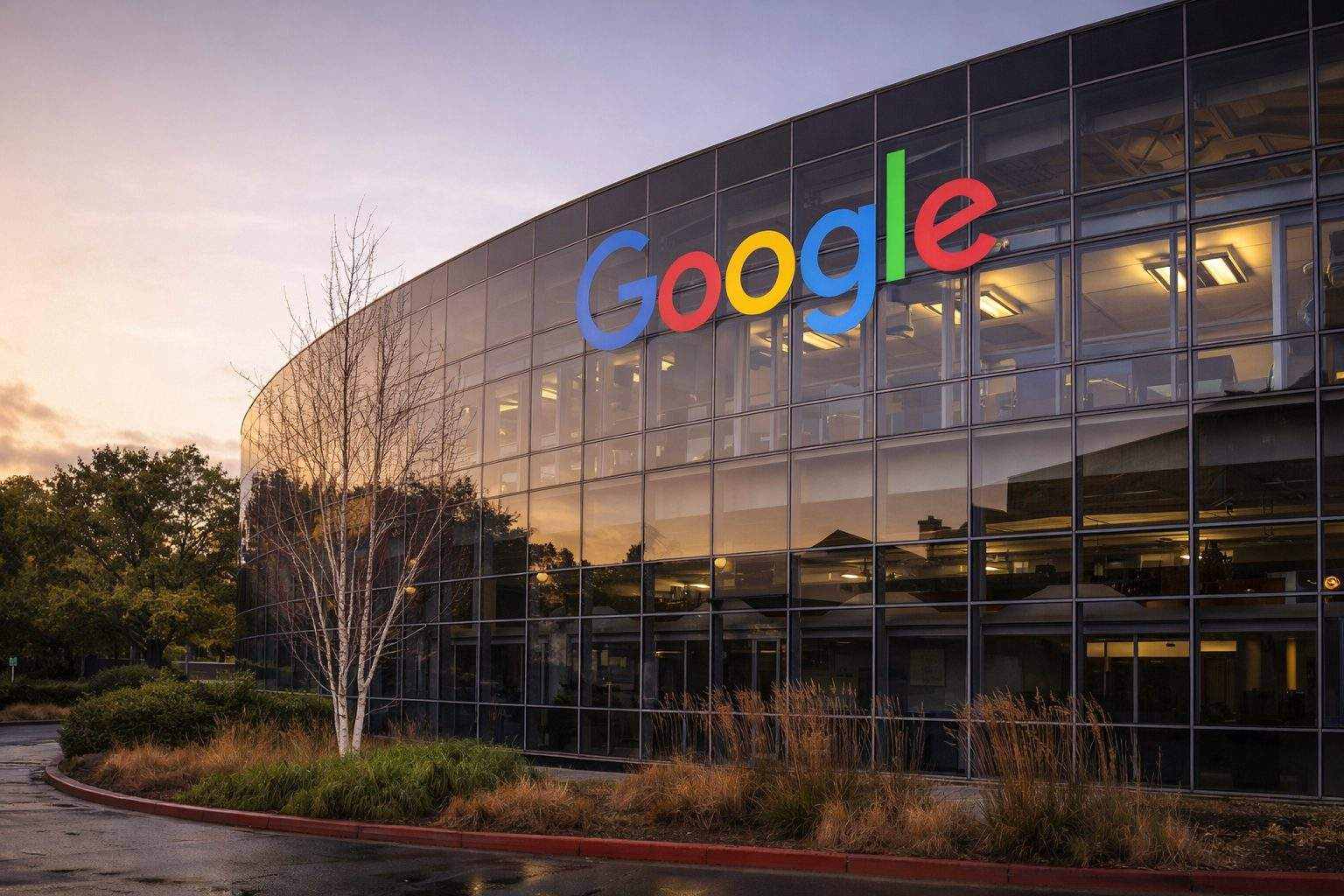
Alphabet stock (GOOGL) slides as Google’s AI capex bill grows — what Wall Street watches next

Alphabet stock (GOOGL) slides as Google’s AI capex bill grows — what Wall Street watches next

New York, Feb 5, 2026, 13:42 EST — Regular session.

Alphabet’s Class A shares slid about 2.4% Thursday afternoon, following a volatile session that saw the stock drop nearly 8% at its lowest point. The shares last changed hands at $324.95.

The sell-off hit big tech stocks broadly, as investors grew wary of the mounting costs behind the AI push. “The AI trade … is perhaps the extinguisher this year,” said Melissa Brown, managing director of investment decision research at SimCorp. Traders were also gearing up for Amazon’s earnings after the bell. Reuters

For Alphabet, the issue isn’t just if AI boosts growth anymore — it’s whether the ramp-up in spending eases. Capital expenditure, or capex, covers investments in long-term assets like data centers, servers, and networking equipment; it requires upfront cash outlay and affects profits down the line via depreciation.

Alphabet announced late Wednesday that its 2026 capital expenditure will range between $175 billion and $185 billion—almost double the $91.45 billion budgeted for 2025, and far exceeding the $115.26 billion average estimate from analysts, per LSEG data. This surge slots Alphabet alongside Meta and Microsoft in the escalating Big Tech spending spree, with combined AI investments expected to top $500 billion this year.

Some bulls chalked up the spending spike as a necessary step for cloud expansion. “Cloud at 48% growth … is no longer a ‘show me’ story,” said Ethan Feller, a stock strategist at Zacks Investment Research. Reuters

During the earnings call, CFO Anat Ashkenazi revealed Alphabet’s 2025 capex hit $91.4 billion, allocating about 60% to servers and the remaining 40% to data centers and networking gear. She cautioned that ramped-up infrastructure spending would weigh on the income statement via increased depreciation and energy expenses.

Alphabet reported a fourth-quarter revenue gain of 18%, hitting $113.828 billion, while net income surged 30% to $34.455 billion, or $2.82 per share. Google Cloud posted a 48% jump, reaching $17.664 billion in revenue. The company also highlighted that its Gemini models now handle over 10 billion tokens per minute via direct API usage, and the Gemini app has surpassed 750 million monthly active users.

The cash machine keeps churning out ads, with investors keen to see if AI shifts user clicks — and what advertisers shell out — as quickly as the company ramps up compute. Cloud remains the closest proof point, though it’s also the segment that typically gobbles up the most capacity.

The risk is clear: higher capex cuts into the margin for error if growth slows. It can take quarters before new data-center capacity actually translates into billable cloud services. If enterprise AI demand stalls, the spending hits upfront while the revenue lags—or might never come.

After the shutdown, the U.S. data schedule picks up with the January employment report set for Wednesday, Feb 11. Then, the January consumer price index (CPI), a crucial inflation measure, is due Friday, Feb 13.

Stock Market Today

  • Tesla Q1 2026 Earnings Beat; Stock Faces Mixed Outlook for 2030
    May 20, 2026, 10:24 AM EDT. Tesla (TSLA) reported Q1 2026 earnings per share (EPS) of $0.41, exceeding the $0.36 consensus, with automotive gross margin rising to 21.1% from 16.2%. Operating income increased 135.8% year-on-year (YoY), and services plus Full Self-Driving (FSD) revenue jumped 42% to $3.75 billion, with 1.28 million active FSD subscriptions up 51%. Despite strong fundamentals, Tesla shares fell 8.83% year-to-date to $409.99 amid skepticism about AI monetization and scaling autonomy. Wall Street's average target is about $412, while a proprietary model estimates a base case price of $510 by 2030, with a bull case of $645. Achieving $650 requires significant price-to-earnings multiple expansion or sharp EPS growth from AI ventures, amid challenges like increased operating expenses and production constraints.

Latest articles

POET Technologies Jumps After $400M AI Photonics Raise, Dilution Questions Linger

POET Technologies Jumps After $400M AI Photonics Raise, Dilution Questions Linger

20 May 2026
POET Technologies shares rose 11% to $14.55 in early Nasdaq trading Wednesday after closing a US$400 million direct offering of 19 million shares and warrants. The rebound followed an 8% drop Tuesday on dilution concerns. The company reported Q1 revenue of $503,389 and a net loss of $12.3 million. A recent $50 million order from Lumilens could scale to $500 million over five years if production ramps up.
Nokia’s U.S. Broadband Order Arrives While AI-Driven Gains Test Supply Chain

Nokia’s U.S. Broadband Order Arrives While AI-Driven Gains Test Supply Chain

20 May 2026
Nokia shares rose 3.37% in Helsinki trading Wednesday after the FCC conditionally approved its Beacons and ONT devices, exempting them from U.S. Covered List restrictions. Nokia also transferred 975,289 treasury shares to equity plan participants. Dell’Oro Group forecasts the optical transport equipment market will grow 16% in 2026, driven by AI data centers.
Apellis Shares Disappear After Biogen’s $5.6 Billion Buy—One Play Left

Apellis Shares Disappear After Biogen’s $5.6 Billion Buy—One Play Left

20 May 2026
Biogen completed its acquisition of Apellis Pharmaceuticals, removing APLS shares from Nasdaq and paying investors $41 per share plus a contingent value right tied to Syfovre sales. Apellis shareholders tendered 82.4% of outstanding stock before the offer expired May 13. Biogen shares rose 0.9% to $192.34 Wednesday. The CVR could pay up to $4 if Syfovre meets future sales targets.
Dow Jones today: Index slides about 1% as Alphabet capex plan stirs fresh AI jitters
Previous Story

Dow Jones today: Index slides about 1% as Alphabet capex plan stirs fresh AI jitters

Boston Scientific stock rebounds after brutal selloff — what Wall Street watches next
Next Story

Boston Scientific stock rebounds after brutal selloff — what Wall Street watches next

Go toTop