
London, Feb 12, 2026, 07:52 GMT — Premarket
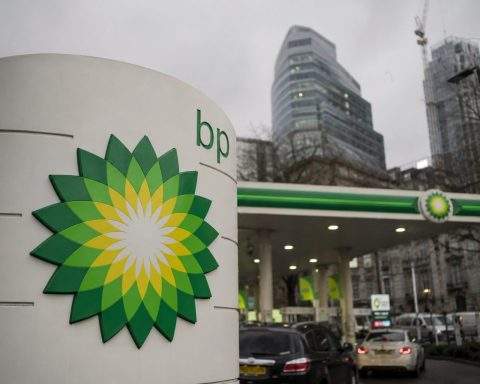
BP finished Wednesday at 472.75 pence. The shares are drawing renewed attention before Thursday’s London session, following the oil major’s move to halt its share buyback programme earlier in the week.
Timing’s crucial here. Major oil companies have leaned heavily on buybacks to prop up valuations—particularly when crude weakens and growth opportunities dry up.
BP wants shareholders to weigh a new balance: holding back on immediate cash payouts, channeling more toward cutting its debt and shoring up the balance sheet, while making it clear dividends aren’t a given anymore.
BP left its quarterly dividend unchanged at 8.32 cents a share in its fourth-quarter and full-year 2025 update and halted buybacks, opting instead to direct “excess cash” onto the balance sheet. The company posted underlying replacement cost profit of $7.5 billion for 2025, with $1.54 billion in underlying profit for the fourth quarter—the metric BP favors to cut out the noise from inventory and other one-offs. Interim CEO Carol Howle flagged a sharper focus on delivery, highlighting trimmed 2026 capital spending guidance to $13-13.5 billion, ongoing disposals, and a preliminary estimate of roughly 8 billion barrels of liquids in place at its Bumerangue find offshore Brazil. Investegate
BP shares slid up to 7% on Tuesday after the company announced roughly $4 billion in charges tied to renewables and biogas assets, while it shifted capital away from share buybacks and toward reducing debt. Net debt dropped to about $22 billion, compared with $26 billion the previous quarter. Finance chief Kate Thomson addressed the write-downs bluntly: “I really don’t like taking impairments.” Reuters
Oil’s making waves again. Brent crude added 27 cents, trading at $69.67 a barrel early Thursday as traders tracked U.S.-Iran tensions. That said, gains stayed in check after U.S. crude inventories saw a hefty build. IG’s Tony Sycamore noted that for WTI to push past the $65–$66 range, “further escalation in the Middle East” would likely be needed. Reuters
Supply signals are ramping up as March approaches. On Wednesday, OPEC projected a dip in demand for OPEC+ crude during the second quarter, just weeks before a March 1 meeting where eight OPEC+ members will weigh possible production increases for April. Traders are also watching for the International Energy Agency’s next forecast, which lands Thursday.
Stepping back from the headlines, the broader picture isn’t much better for oil producers. In its February outlook, the U.S. Energy Information Administration forecasted a buildup in inventories and predicted WTI would hold under $60 per barrel through 2027. That scenario would squeeze cash flow for the industry if it materializes.
Still, there’s a lot that could trip up BP in the coming months. If crude prices snap back on any signs of geopolitical calm, or if divestments drag, or if new charges hit the low-carbon business, the notion that a sturdier balance sheet can make up for weaker cash returns could get a real test.
BP’s action at the London open will be in focus, with traders eyeing the IEA update later Thursday and looking ahead to the March 1 OPEC+ decision. These events could shake up oil prices—and BP shares along with them.
Related articles: LSE:BP