
SHENZHEN, March 7, 2026, 2:07 PM CST
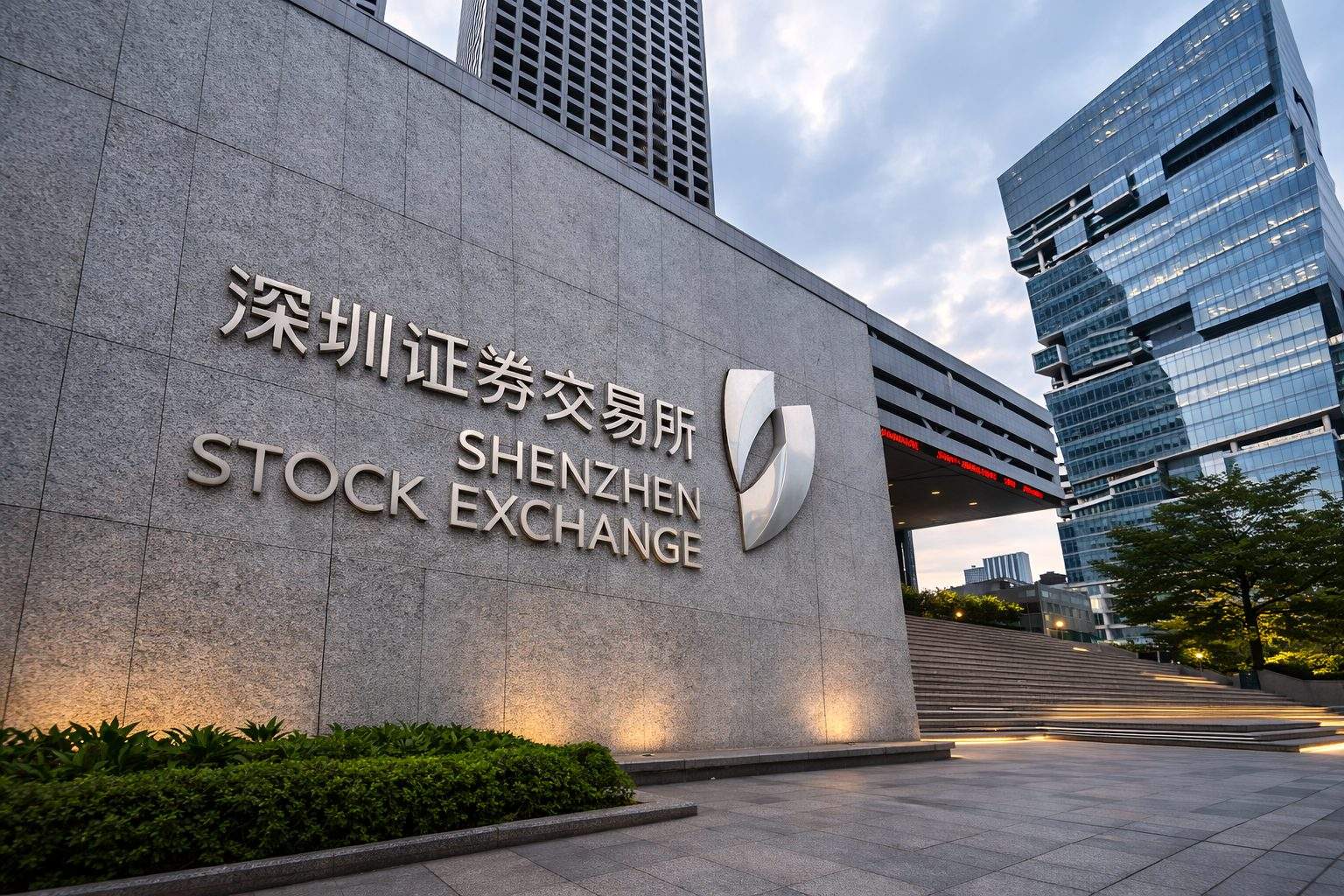
China announced Friday it’s rolling out fresh listing rules for Shenzhen’s ChiNext board, aiming to attract more innovative firms. Still, even with a small bounce that day, markets in the city wrapped up the week lower. The Shenzhen Component index added 0.59%, finishing at 14,172.63 on March 6. ChiNext, which focuses on high-growth names, climbed 0.38% to 3,229.30. Both benchmarks, though, closed out the week down—off 2.2% and 2.4% from the previous Friday.
This push is significant: Beijing is turning up the pressure on Shenzhen’s startup scene, hoping to channel more investment into tech. China’s securities regulator declared most of the sweeping ChiNext reforms finished, aiming to echo what’s worked on Shanghai’s STAR Market, but with a twist—plans call for listing rules that are both more selective and more inclusive.
Just a day after Beijing unveiled a 2026 growth target of 4.5%-5%—lower than last year’s 5%—officials on Friday rolled out promises of increased spending on infrastructure and public services, along with a 100-billion-yuan fiscal-financial coordination fund aimed at boosting consumption and private investment. For investors, that’s a dose of support, but it also signals that policymakers are prepared to accept a slower growth trajectory at the headline level.
Stocks edged up Friday, but the rebound lacked momentum. Total turnover in Shanghai and Shenzhen slipped to 2.2 trillion yuan, down from 2.39 trillion yuan the previous session. Power-grid equipment makers and firms renting out computing capacity posted gains; oil and gas names trailed behind.
Shenzhen trailed the larger mainland market this week. From Feb. 27 to March 6, the Shanghai Composite slid roughly 0.9%, while Shenzhen dropped 2.2%. That left the southern exchange lagging its Shanghai counterpart for the period.
Plenty of local policy action. On Friday, Guangdong officials announced plans to ramp up AI applications province-wide. Shenzhen Mayor Qin Weizhong pointed to double-digit gains last year in AI, robotics, and semiconductor sectors. In Beijing, authorities pledged a 300 billion yuan capital injection into state banks this year, aiming to push more funds toward tech companies through deeper reforms of state-owned financial firms.
Capital raising showed signs of restraint. Estun Automation, listed in Shenzhen, went with the lowest possible price for its Hong Kong offering, a move shaped by volatility tied to the war. Shenzhen Zhaowei Machinery & Electronics set its Hong Kong share price just under the top of its range. According to LSEG data, IPOs and secondary listings in Hong Kong are off to their fastest start since 2021—one big reason Shenzhen-based companies keep turning to Hong Kong for funding.
Mainland China’s A-share market cap has now crossed 110 trillion yuan, according to Wu Qing, the securities regulator’s chairman. Exchange market stock and bond financing will hit 64 trillion yuan by 2025, he added, with direct financing—funds raised via shares or bonds rather than bank loans—making up 31.97%. China is steering more of this capital toward technology and innovation.
Policy support is running up against a tougher global backdrop. “The policy signal is loud and clear,” said Liu Chenjie, chief economist at Upright Asset Management in Shenzhen. Marco Sun, chief financial market analyst at MUFG (China), expects the focus to remain on “new economy” sectors. But global market jitters linked to the Iran war have already pushed investors into cash. Yuan Yuwei, fund manager at Trinity Synergy Investments, argued the official outlook “has not taken into account the Iran conflict.” Reuters
Beijing laid out plans to bolster market-stabilizing tools from 2026 to 2030, crack down harder on high-frequency quant trading, and launch a national mergers-and-acquisitions fund. The move comes while Shenzhen investors are contending with weaker growth prospects and outside headwinds—factors that left last week’s market unsettled despite a flurry of fresh policy support.
Related articles: Stock Market