
NEW YORK, March 12, 2026, 09:04 EDT
Nvidia shares were on track for a softer open Thursday, with the AI chipmaker unveiling a $2 billion stake in cloud player Nebius. The stock hovered close to its $186.03 finish from Wednesday, keeping market cap steady at roughly $4.5 trillion. Premarket signals suggested a slight dip ahead of the bell.
This shift is significant: Nvidia’s ramping up the use of its balance sheet, aiming to steer the AI buildout rather than just feed it. Investors—despite a robust quarter—are still pushing management to consider returning more of Nvidia’s expanding cash reserves to shareholders, rather than plowing it all back into the broader AI landscape.
The squeeze is intensifying elsewhere. On Wednesday, Meta announced plans to roll out four generations of its own MTIA chips within the next two years, focusing a significant chunk on inference—the phase where AI models respond to users—even as it continues picking up hardware from Nvidia and AMD. “We see inference demand exploding at the moment,” Meta engineering executive Yee Jiun Song told Reuters. Reuters
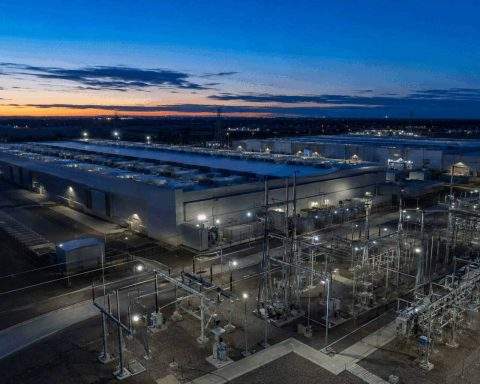
Nvidia disclosed in a filing that it’s picking up an 8.3% stake in Nebius at $94.94 a share. Nebius, one of the so-called neoclouds—smaller players specializing in AI cloud services—has plans to push past 5 gigawatts of data-center capacity by 2030, according to the companies. CEO Jensen Huang described Nebius as “building an AI cloud designed for the agentic era.” Reuters
The Nebius news followed just a day behind Thinking Machines Lab’s announcement: the startup, helmed by ex-OpenAI tech chief Mira Murati, has signed a multiyear deal with Nvidia. The agreement brings in a financial investment from Nvidia and at least one gigawatt of Vera Rubin systems. According to Reuters, the deal might amount to around $50 billion worth of computing power, a figure that highlights Nvidia’s growing footprint as both a supplier and a financier.
Nebius isn’t the only big bet out there. Nvidia, for its part, announced earlier this month it would put $2 billion apiece into Lumentum and Coherent—moves aimed at locking down optical and networking tech for faster AI, and another clear indication the company isn’t holding back on shoring up its chip-centric hardware stack.
Nvidia’s results leave little room for doubt. The company posted record quarterly revenue of $68.1 billion in late February, with $62.3 billion of that coming from data-center products. For the current quarter, Nvidia projected revenue of $78 billion, give or take 2%. That estimate specifically leaves out any data-center compute sales from China.
The bull thesis isn’t as straightforward now. “The competitive picture is also shifting,” eMarketer analyst Jacob Bourne said after earnings, pointing out that Meta’s buying has started to include AMD, while top cloud players are pouring money into their own silicon. For Nvidia, that means robust sales could continue, but snapping up the next round of AI spending won’t come as easily. Reuters
Signals of competition aren’t slowing down. Last week, Broadcom—Meta’s partner on parts of its custom-chip projects—put a big number out there: it sees more than $100 billion in AI chip sales coming its way in 2027. At the same time, AMD’s supply deal with Meta signals the tech giants are splitting up their chip orders, avoiding dependence on one supplier. “Locking in supply,” is how Matt Britzman at Hargreaves Lansdown put it, as Meta looks to break from relying on a single provider. Reuters
Nvidia’s GTC conference is shaping up as the next key stop. Scheduled to kick off in San Jose on March 16, the event spotlights inference, “AI factories,” and next-gen infrastructure—the same hot-button issues investors have been dissecting in the wake of this week’s Nebius deal and Meta’s new chip roadmap. nvidia.com
Related articles: NASDAQ:META