WASHINGTON, March 19, 2026, 09:12 EDT
Gasoline prices in the U.S. edged close to $4 a gallon on Thursday, as Brent crude made a short-lived jump above $119 a barrel following Iranian strikes on Gulf energy sites that rattled markets with fresh supply shock concerns. AAA reported the average price for regular gas at $3.884, an uptick from $3.842 the previous day.
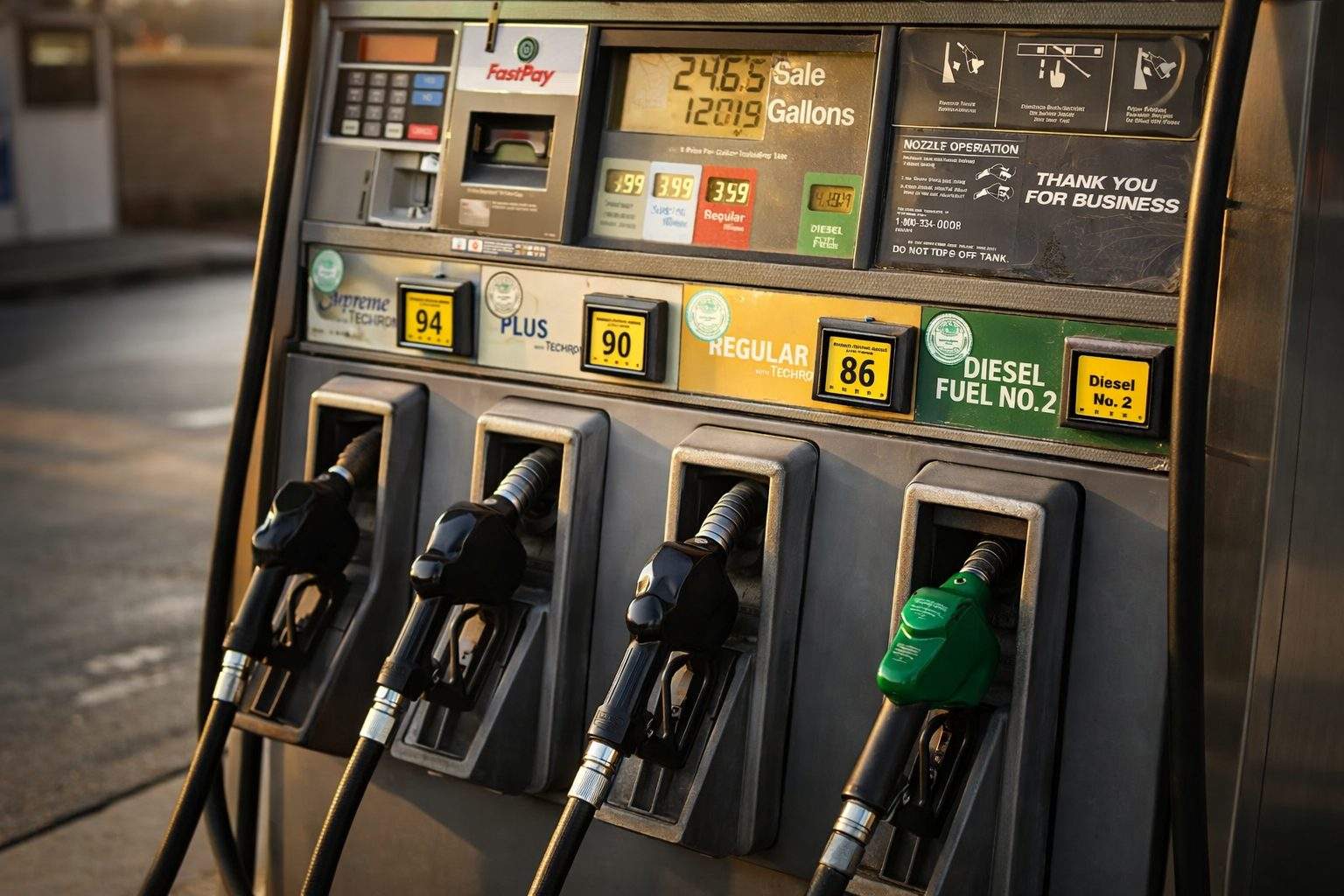
Here’s why this stands out right now: Gasoline jumps off the price board for consumers, and it’s not just at the pump anymore. Diesel broke above $5 a gallon this week—only the second time on record—putting extra pressure on trucking and industry. That kind of move raises the prospect of steeper transport costs winding up in broader consumer prices.
Prices are up across the country, though the jump isn’t uniform. On Thursday, AAA pegged California’s average at $5.616 a gallon, with Washington at $5.145 and Hawaii at $5.070. In contrast, drivers in Oklahoma and Kansas continued to see averages around $3.24. The gap highlights how sharply pump prices can diverge by region.
Oil took another hit overnight. Brent, sitting at $108.41 early Wednesday per WESH’s market roundup, spiked to $119.13 by Thursday. Reuters pointed to strikes disrupting QatarEnergy’s Ras Laffan LNG site, Shell’s Pearl plant, Saudi Arabia’s SAMREF refinery (part-owned by Exxon), and Kuwait’s Mina al-Ahmadi refinery.
The timing here changes the picture. Patrick De Haan, who heads petroleum analysis at GasBuddy, pointed out that this latest war-driven spike is hitting just as refiners are in the midst of the switch to summer-grade gasoline—a pricier, warmer-weather blend mandated by environmental regulations. That seasonal shift alone tacked on about 15 cents a gallon in Michigan, according to De Haan.
The White House maintains the surge is temporary. “Prices would drop rapidly” after military goals are achieved, spokeswoman Taylor Rogers said. The administration has been working to relieve supply bottlenecks—granting a 60-day Jones Act waiver, which suspends the shipping law to allow foreign-flagged vessels to transport fuel between U.S. ports, and drawing from strategic reserves. Reuters
Analysts aren’t so optimistic about the timing. “It’s going to take time for those prices to come back down,” Matt Smith at Kpler told Reuters. Others echoed that it could be weeks, possibly months, before any real relief shows up—even if the war starts to ease. Reuters
Still, the situation could flip. Should the Strait of Hormuz — the crucial Gulf corridor moving roughly 20% of the world’s oil — see traffic start flowing again and emergency supplies kick in quicker than anticipated, prices at the pump might ease. On the other hand, more hits to Gulf infrastructure mean, as De Haan put it, “upward pressure on fuel prices is likely to persist.” Reuters
For U.S. consumers, the $4 mark stands out. “$4 (per gallon) threshold may be the one to watch,” said Kevin Roberts, director of economic and market intelligence at CarGurus, noting that drivers usually respond when prices hit those round numbers. The national average sits roughly 12 cents under that level. Reuters