London, March 31, 2026, 14:10 BST.
- Brent hovered near $115 a barrel, with U.S. crude holding above $104. Both contracts headed for their biggest March gains on record.
- A drone hit Kuwait’s Al Salmi tanker off Dubai, stoking fresh worries that supply disruptions could persist well beyond any diplomatic outreach.
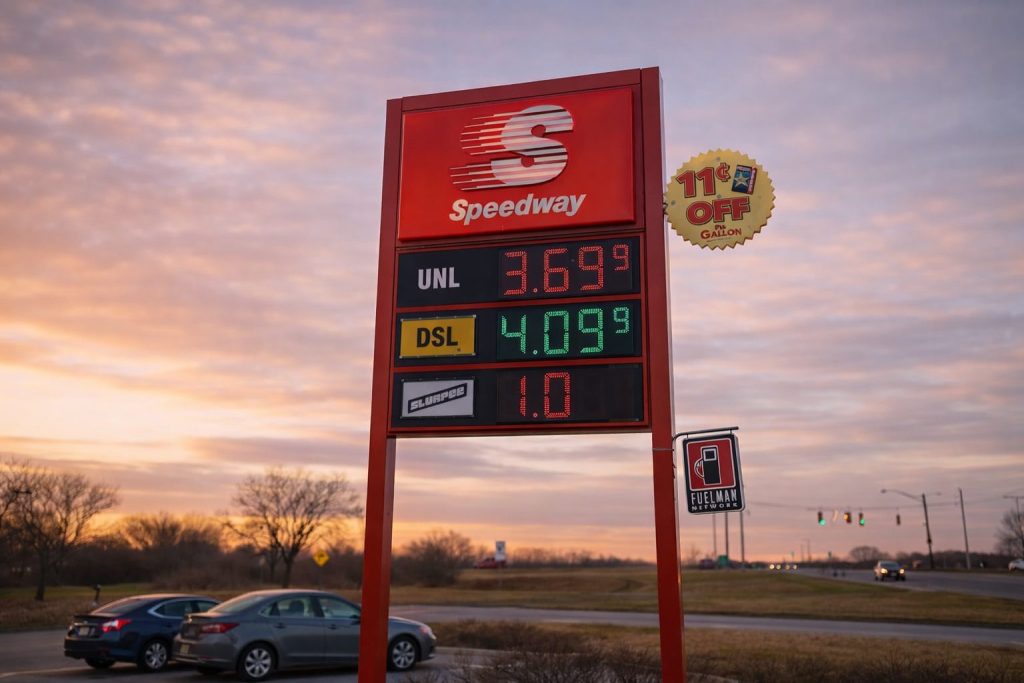
- AAA pegged the U.S. national average for gas at $4.018 a gallon—drivers are already feeling the impact from the oil shock.
Brent crude stuck close to $115 a barrel on Tuesday, pausing after another sharp move, as traders sifted through indications that President Donald Trump could be open to ending the Iran war—even as new shipping attacks and the Strait of Hormuz closure kept tensions high. U.S. West Texas Intermediate stayed north of $104, putting both contracts in position for the biggest monthly surge ever.
The oil surge is hitting the pump now, not just futures contracts. As of Tuesday, AAA reported the national average for regular gas at $4.018 a gallon. That follows GasBuddy data from Monday showing prices topped $4 for the first time in over three years. Investors dialed down expectations for Fed rate cuts, with the oil rally stoking fresh inflation concerns.
The Strait of Hormuz—a slim channel out of the Gulf—handles around a fifth of the world’s oil and LNG. With Iran effectively blocking tanker movement and damaging infrastructure, Gulf producers have trimmed output. Saudi Arabia has shifted 4.658 million barrels per day over to Yanbu on the Red Sea, a sharp jump from the 770,000 bpd average in January and February. Still, the International Energy Agency is calling this the biggest disruption to oil supply ever recorded.
The Al Salmi, a Kuwait-owned tanker loaded with 2 million barrels of crude for Qingdao, came under fire near Dubai on Tuesday. Kuwait Petroleum Corp blamed an Iranian strike while the vessel sat at anchor, though Dubai officials attributed the incident to a drone-triggered fire that was quickly put out. No injuries, no oil spill.
Trump threw out mixed signals. He first threatened to “obliterate” Iran’s oil infrastructure unless the waterway reopened, then flipped, suggesting countries hungry for crude should either buy American or just “TAKE it” from Hormuz. The Wall Street Journal, meanwhile, cited aides saying Trump was open to wrapping up the campaign, closed strait or not. Reuters
Analysts aren’t buying the mix of threats and de-escalation. “Uncertainty will persist,” said Sugandha Sachdeva at SS WealthStreet. Ole Hansen at Saxo Bank flagged a risk: unless Hormuz reopens soon, the market’s staring at “demand destruction territory”—trader code for prices rising high enough to hit fuel consumption. Reuters
A clear divide has emerged on Wall Street. The S&P 500 energy index has jumped over 11% in March, the lone sector clinging to gains, as wider U.S. indexes stumble toward their steepest quarterly drop since 2022. Dow Jones Market Data points to Exxon Mobil, Chevron, and Phillips 66 as notable outperformers.
Forecasters have ratcheted up their longer-term outlooks as well. In March, a group of 38 economists and analysts surveyed raised their 2026 Brent estimate to $82.85 a barrel—up sharply from February’s $63.85, marking the biggest jump since 2005. Frank Schallenberger at LBBW noted that the IEA’s planned release of 400 million barrels from stocks covers roughly 20 days’ worth of typical Hormuz flows. Meanwhile, U.S. officials have given foreign-flagged vessels a temporary green light under the Jones Act to transport fuel between domestic ports.
The market’s still wide open. Should tanker routes return to normal in April, that war premium might peel back almost as fast as Brent’s nearly 60% surge in March. But if Hormuz remains closed for another month, JPMorgan’s looking at oil pushing up to $150 a barrel, while Stratas Advisors warns Brent could be staring down $190 if the squeeze really tightens.
Drivers probably won’t see relief right away. Raymond James analyst Pavel Molchanov thinks this bout won’t drag out like the 2022 spike that followed Russia’s invasion of Ukraine. He’s looking for gasoline prices to “cool in the next few weeks,” but only if crude prices stop pushing higher. That’s still just a market call, not guaranteed. Reuters