
April 21, 2026, 09:02 PDT—Torrance, California.
- Navitas jumped almost 20% early as investors circled back to its spot in powering AI data centers.
- First-quarter earnings are due from the company after the bell on May 5.
- The rally has thrown the divide into sharper relief—Nvidia-related power potential on one side, valuation risk on the other.
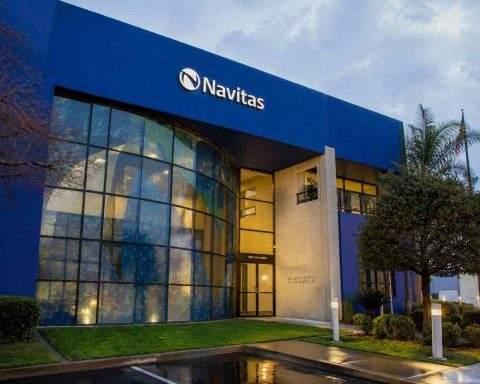
Navitas Semiconductor surged almost 20% early Tuesday, building on a big rally for the small power-chip outfit as investors reposition it as a key AI data-center supplier. Shares changed hands near $15.82, with trading volume topping 53 million. Wall Street’s focus is stretching past graphics processors and zeroing in on the power systems that keep them running.
It’s the timing that complicates things. Navitas will release first-quarter numbers after the bell on May 5. CEO Chris Allexandre and CFO Tonya Stevens are on the schedule for a 2 p.m. Pacific call to break down the results and talk guidance.
Navitas doesn’t make AI chips—it’s focused on designing power semiconductors using gallium nitride (GaN) and silicon carbide (SiC). These materials handle electricity with less heat and waste compared to old-school silicon, especially in high-power applications. James Brumley, an analyst at Motley Fool, pointed out Saturday that while Nvidia and Broadcom get all the attention, smaller outfits like Navitas are pushing to carve out a spot as data-center operators look harder at energy costs.
What started as a specialized energy play has morphed into an AI infrastructure bet. On Tuesday, a Yahoo Finance-syndicated piece from 24/7 Wall St. pointed out that Navitas now aims to secure the power-delivery role in AI data centers. The article also highlighted a drop in full-year 2025 revenue—down to $45.92 million from $83.3 million in 2024—as Navitas pulled back from its lower-margin mobile charger segment.
The core wager centers on Nvidia’s shift to an 800-volt direct-current power design for AI factories. Nvidia’s roadmap targets IT racks hitting 1 megawatt and higher beginning in 2027, with Navitas named among the silicon suppliers—joined by Infineon, onsemi, Renesas, STMicroelectronics, and Texas Instruments.
Navitas last month unveiled an 800 V-to-6 V DC-DC power delivery board at Nvidia GTC 2026. The board, which handles direct-current voltage conversion, skips the usual 48 V intermediate bus converter used in server trays. According to Navitas, this design is aiming for a peak efficiency of up to 96.5%.
Allexandre points to a design that aims to cut “system cost and power losses,” while opening up board space for “compute, memory, and GPUs.” The idea: by reducing conversion steps, you lose less electricity and give more real estate to the AI hardware that matters. Navitas Semiconductor
Navitas is bringing in more semiconductor know-how. On April 13, the company announced it added Gregory M. Fischer—a former Broadcom executive with four decades in tech—as an independent director. Chairman Richard Hendrix called it “a pivotal time for Navitas” as Fischer joins the board. GlobeNewswire
Others are moving in, too. Earlier this month, engineering publication All About Circuits reported that Infineon rolled out CoolGaN-based reference designs aimed at the same 800 VDC step-down, specifically 800 V-to-50 V and 800 V-to-12 V, both touting efficiency north of 98%.
Still, that run-up hasn’t come without hazards. On Monday, Summit Research flagged Navitas’s nearly 20% overnight surge, noting there was no obvious news behind the move. The firm called the stock a high-risk, low-reward bet at 44 times 2027 sales, pointing to what it sees as scant visibility on an ongoing earnings turnaround.
February’s data made the stakes clear. Navitas reported fourth-quarter 2025 revenue at $7.3 million, well off the $18.0 million logged in the prior year, with a GAAP operating loss standing at $41.4 million. The company told investors to expect net revenue of $8.0 million to $8.5 million for the first quarter of 2026. For the first time, high-power markets accounted for more than half of quarterly revenue.
Right now, investors are essentially buying into a stake in AI’s power infrastructure—returns are still a step behind. On May 5, Navitas faces a real test: can it translate the Nvidia narrative into more consistent revenue, or has the stock simply outrun the company’s actual results?



![Australia Stock Market Today 26/08/2026 [UPDATE: 12:44 AEST] [Hot Core Inflation Tests ASX Advance as Hike Odds Rise]](https://ts2.tech/wp-content/uploads/2026/08/AU-market-dashboard-2026-08-26-1239-480x384.jpg "Australia Stock Market Today 26/08/2026 [UPDATE: 12:44 AEST] [Hot Core Inflation Tests ASX Advance as Hike Odds Rise]")