
NEW YORK, April 24, 2026, 12:07 (EDT)
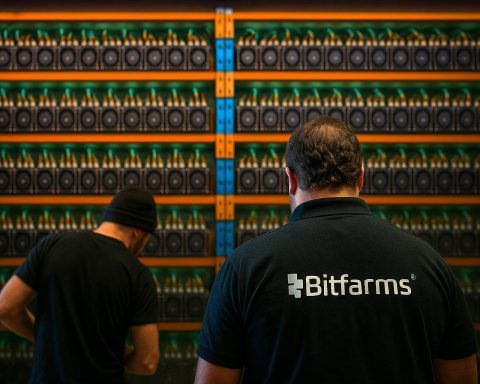
Keel Infrastructure Corp. has wrapped up the sale of its 70-megawatt Paso Pe facility in Paraguay, pulling in around $13 million after adjustments—less than half of the original deal’s potential $30 million price tag. The move marks the former Bitfarms’ full exit from Latin America, as it pivots harder toward AI-driven data-center infrastructure. A megawatt represents power capacity, essential for large-scale computing.
The timeline’s tight: Keel wrapped up its U.S. redomiciliation—a switch in its corporate legal base—on April 1, just a few weeks before the sale went through. Management frames both the move and the rebrand as steps away from Bitcoin mining, where computers earn and verify bitcoin, and toward high-performance computing, or HPC, which powers AI and other data-heavy tasks.
Ben Gagnon, the chief executive, described the Paraguay sale as “the end of a chapter,” noting Keel now holds “zero Latin American exposure.” The company plans to use the proceeds to fund its HPC and AI projects. Gagnon explained that the discounted sale price was a result of softer Bitcoin mining economics and wider macro pressures, according to Keel. GlobeNewswire
Keel stock climbed 5.4% to $3.42 as of 11:50 a.m. in New York, according to Benzinga, giving the company a market cap around $2.06 billion. Shares hovered close to the top of their 52-week band, which stretches from $2.00 to $3.55.
Bitfarms’ overhaul just happened. According to a securities filing, on April 1, Keel—a Delaware-incorporated entity—took over as Bitfarms’ top holding company. Shareholders swapped their Bitfarms stock, one for one, into Keel shares. The new Keel ticker—KEEL—was scheduled to make its debut on both Nasdaq and the Toronto Stock Exchange as of April 6.
The company went into the transition with plenty of scale—and plenty of red ink. Bitfarms listed $520 million in cash and bitcoin on its books as of March 27, plus a 2.2-gigawatt project pipeline spread through Washington, Pennsylvania, and Quebec. For 2025, revenue hit $229 million, while net losses stacked up to $284.5 million.
Keel isn’t the only player betting on power assets for AI. Hut 8 inked a $7 billion lease for a Louisiana data center, Reuters reported in December. Meanwhile, research from S&P Global Market Intelligence’s Visible Alpha flagged IREN and Core Scientific as miners pivoting their capacity toward HPC and AI.
The change hasn’t gone unnoticed by investors, but it’s also made things tougher. Nick Giles, senior research analyst at B. Riley Securities, told Business Insider that ex-crypto mining companies have outperformed all expectations. Brian Dobson at Clear Street thinks 2026 will hinge on “executing on those deals.” Business Insider
The risk is glaring. Keel’s filings plainly state that shifting from Bitcoin mining to HPC infrastructure might not work. AI data centers don’t come cheap, and the company lists financing limitations, delays, cost overruns, power supply issues, and customer risk as real threats to the strategy.
Keel’s move to sell Paraguay trims its footprint and leaves it sitting on extra cash. But now, the big question isn’t about selling off non-core mining assets anymore. The real challenge: can Keel flip its grid-tied North American sites into leased AI infrastructure before mining economics worsen?