
WASHINGTON, April 25, 2026, 18:05 EDT
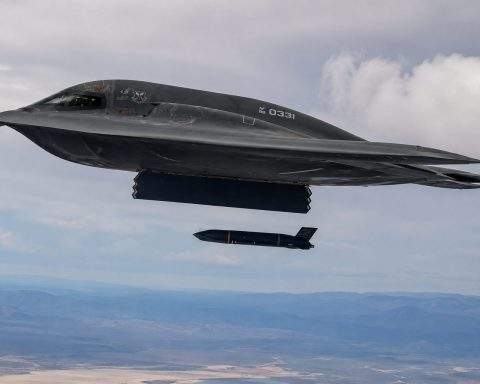
Lockheed Martin Corp now finds itself more entangled in the U.S. contest to develop space-based missile interceptors, as Space Systems Command placed the company on the list of recipients for contracts totaling as much as $3.2 billion under President Donald Trump’s Golden Dome initiative. The planned interceptors are orbital weapons or systems designed to target missiles in flight—whether that’s during the boost, midcourse, or glide stage.
Timing is crucial right now for Lockheed. The Bethesda, Maryland contractor is pursuing new missile-defense and space projects, right on the heels of a softer first quarter that has revived doubts about performance on legacy programs—particularly fixed-price deals, with prices locked in before full costs come into view.
Space Systems Command handed out 20 Other Transaction Authority agreements to 12 different companies, targeting late 2025 and early 2026 for those awards. OTAs, known for their quicker, more adaptable approach to prototyping than standard government contracts, attracted big names—Lockheed, SpaceX, Northrop Grumman, Raytheon—alongside Anduril and several other defense newcomers. A classic mix of primes and fresh contenders in the running.
Col. Bryon McClain, Space Force program executive officer for Space Combat Power, warned in the command’s release that “Adversary capabilities are advancing rapidly.” The service is targeting 2028 to demonstrate its initial capability, he said. SSC
The $185 billion Golden Dome project aims to bring space-based assets into the current missile defense system, according to Reuters. Lockheed adds this to its lineup—Patriot, THAAD, Aegis, and various space-sensing efforts—but this portion of the defense shield remains in its infancy and comes with steep technical hurdles.
Lockheed CEO Jim Taiclet this week disclosed that the company has landed multiyear framework deals with the U.S. government aimed at ramping up munitions output—Patriot missiles, THAAD, Precision Strike Missile are in the mix. Those demand commitments, according to Taiclet, could drive production of key systems up “by 3-4 times current rates.” PR Newswire
Results from the first quarter painted a messier picture. Lockheed posted $18.0 billion in sales and net earnings of $1.5 billion, translating to $6.44 per share. Free cash flow slipped into the red at negative $291 million; a year ago, that figure was a positive $955 million. Still, the company stuck with its 2026 outlook.
Lockheed pointed to a mix of headaches: F-16 profit took a hit from production and development setbacks, C-130 deliveries got bogged down by manufacturing snags, and Rotary and Mission Systems profits slipped, with the CH-53K and Seahawk programs dragging on results. Over in Missile and Fire Control, sales climbed 8%. Space sales added 7%.
Lockheed skipped share buybacks this quarter, Reuters noted—a departure from its usual approach as the U.S. government urges defense firms to channel more funds into output. JP Morgan’s Seth Seifman weighed in: “We aren’t surprised, given management’s desire to be aligned with the customer’s agenda.” Reuters
Golden Dome’s biggest swing could hit a wall on scalability. Gen. Michael Guetlein, who heads the program, told lawmakers that unless space-based boost-phase interceptors can hit targets for both price and scale, they won’t move ahead with production. Air & Space Forces Magazine, citing outside estimates, puts the costs for a large interceptor fleet far beyond what the Pentagon is budgeting right now.
Funding remains unresolved. Most of the $17.5 billion earmarked for Golden Dome in 2027 hinges on reconciliation dollars, not the Pentagon’s core budget, Defense One reported. That structure hands Congress significant control over how quickly and broadly the program moves.
Lockheed finished Friday at $513.45, with U.S. equity markets shut Saturday. Now, the focus turns to whether investors see Golden Dome as an actual growth driver—or just one more complex project tacked onto a backlog that’s already feeling squeezed.
Related articles: NYSE:LMT