
TORONTO, April 26, 2026, 14:07 EDT
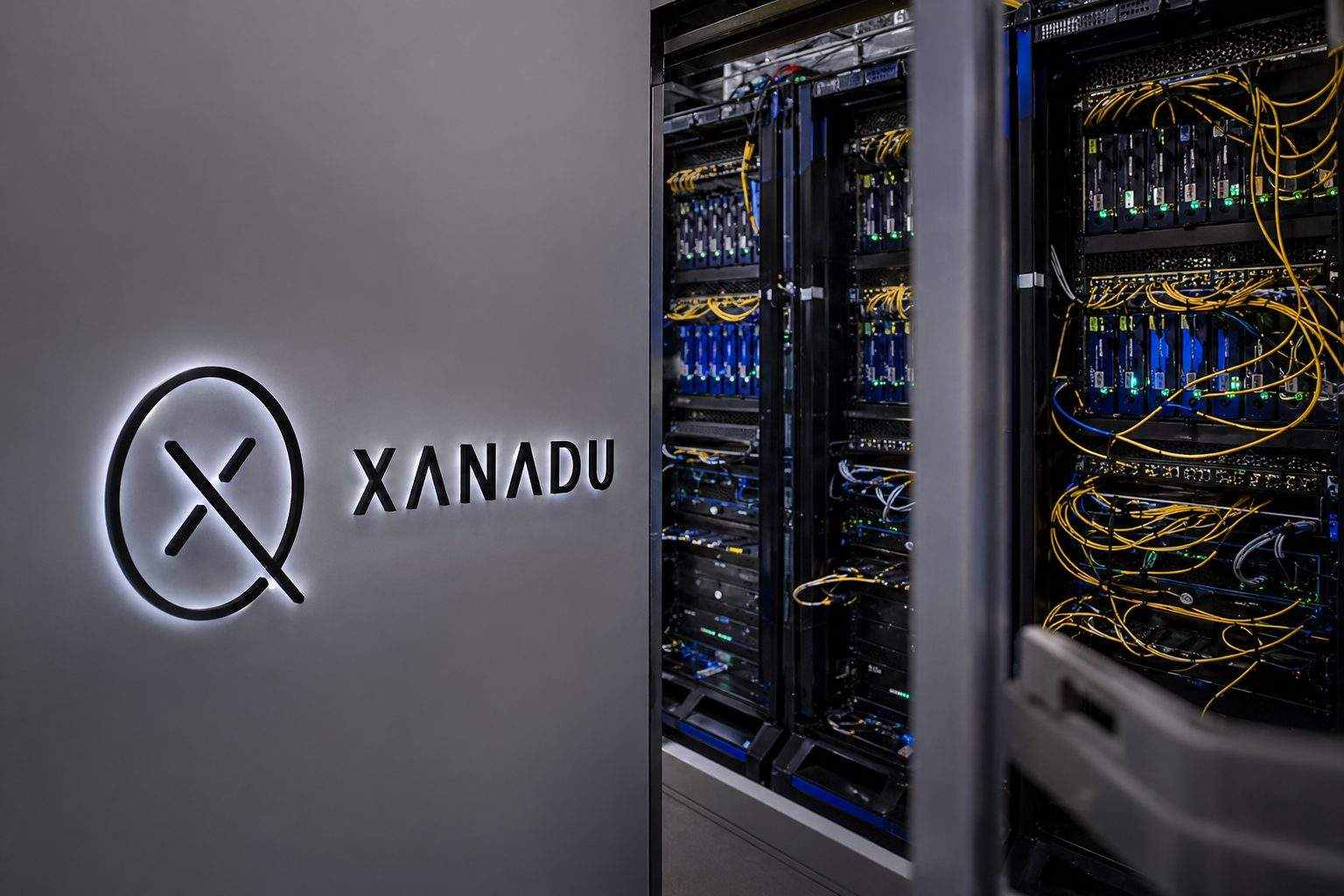
Shares of Xanadu Quantum Technologies Limited (XNDU) ended Friday at $30.95, up 7.28%, as attention turned to a fresh U.S. registration statement. The filing may let selling securityholders resell as many as 293.7 million Class B subordinate voting shares gradually. U.S. markets are shut for the weekend.
The timing of the filing is notable, given Xanadu only just went public. Shares of the Toronto quantum-computing company, trading as XNDU, started to hit the boards on Nasdaq and the Toronto Stock Exchange less than a month ago, following its merger with Crane Harbor Acquisition Corp.—a SPAC, or special purpose acquisition company, essentially a shell firm created to take private companies public.
It’s not so much a new capital raise on investors’ minds as the risk of more shares hitting the market. Xanadu, in its F-1, made clear it won’t get any cash from selling securityholders’ resales—unless those warrants actually get exercised, which could bring in proceeds.
The April 23 filing includes as many as 157,960 Class B shares tied to warrant exercises. The prospectus hasn’t reached final form. According to the filing, no securities can be sold before the registration statement is declared effective.
After sealing the Crane Harbor deal, Xanadu touted its status as the first pure-play photonic quantum computing firm to hit the public markets. The transaction brought in a $275 million PIPE—private investment in public equity. Later, the company reported $302 million in gross proceeds from the combination.
Photonic quantum computing relies on photons—particles of light—to transmit quantum information. Xanadu claims its machines use light at the core of their architecture. Its PennyLane software, on the other hand, is designed to help users develop quantum apps compatible with a range of hardware.
Founder and CEO Christian Weedbrook earlier this month called the listing and anticipated funds “capital needed to continue our rapid pace of development.” CFO Michael Trzupek added that the proceeds “position us to scale our quantum computers.” Xanadu Quantum Technologies Limited
Xanadu is still in its early days. The company posted 2025 revenue of $4.6 million—nearly tripling last year’s $1.6 million—while net losses deepened to $70.7 million from $46.0 million. R&D spending came in at $55.2 million. Cash and cash equivalents totaled $16.2 million as of Dec. 31.
Xanadu’s list of competitors remains in flux, with some working on entirely different quantum machines. Last week, Northland Capital Markets analyst Nehal Chokshi started coverage on Xanadu, slapping an outperform rating and a $43 price target on the stock. Chokshi also called IonQ his top pick among quantum names, while giving Rigetti Computing and D-Wave Quantum market perform ratings, according to Barron’s.
The risks are clear enough. According to the company, its technology still isn’t mature and it hasn’t managed to build a commercially scalable, fault-tolerant quantum computer yet. More money may be required. The filing also flags that quantum computers—including Xanadu’s own—might never achieve widespread commercial use.
The stock now hangs between two narratives: the ongoing rally for a fresh quantum listing and the more gradual effort to show these light-based machines can move past lab-scale. The resale filing leaves that issue unresolved. What it does do is open the door for holders to sell, as long as buyers stick around.
Related articles: Stock Market