
Cambridge, Massachusetts, April 29, 2026, 09:04 EDT
- Biogen trimmed its 2026 adjusted earnings outlook, now expecting $14.25 to $15.25 per share. The company pointed to acquired in-process R&D charges from recent deals as the reason for the cut.
- Revenue for the first quarter came in at $2.48 billion, up 2%, and adjusted earnings landed at $3.57 per share—topping what analysts had penciled in.
- Leqembi, the Alzheimer’s treatment co-marketed by Biogen and Eisai, saw global in-market sales hit roughly $168 million, marking a 74% jump from the same period last year.
Biogen Inc. trimmed its profit forecast for the year on Wednesday, even after first-quarter earnings came in ahead of expectations thanks to solid sales from Alzheimer’s treatment Leqembi and fresh rare-disease drugs.
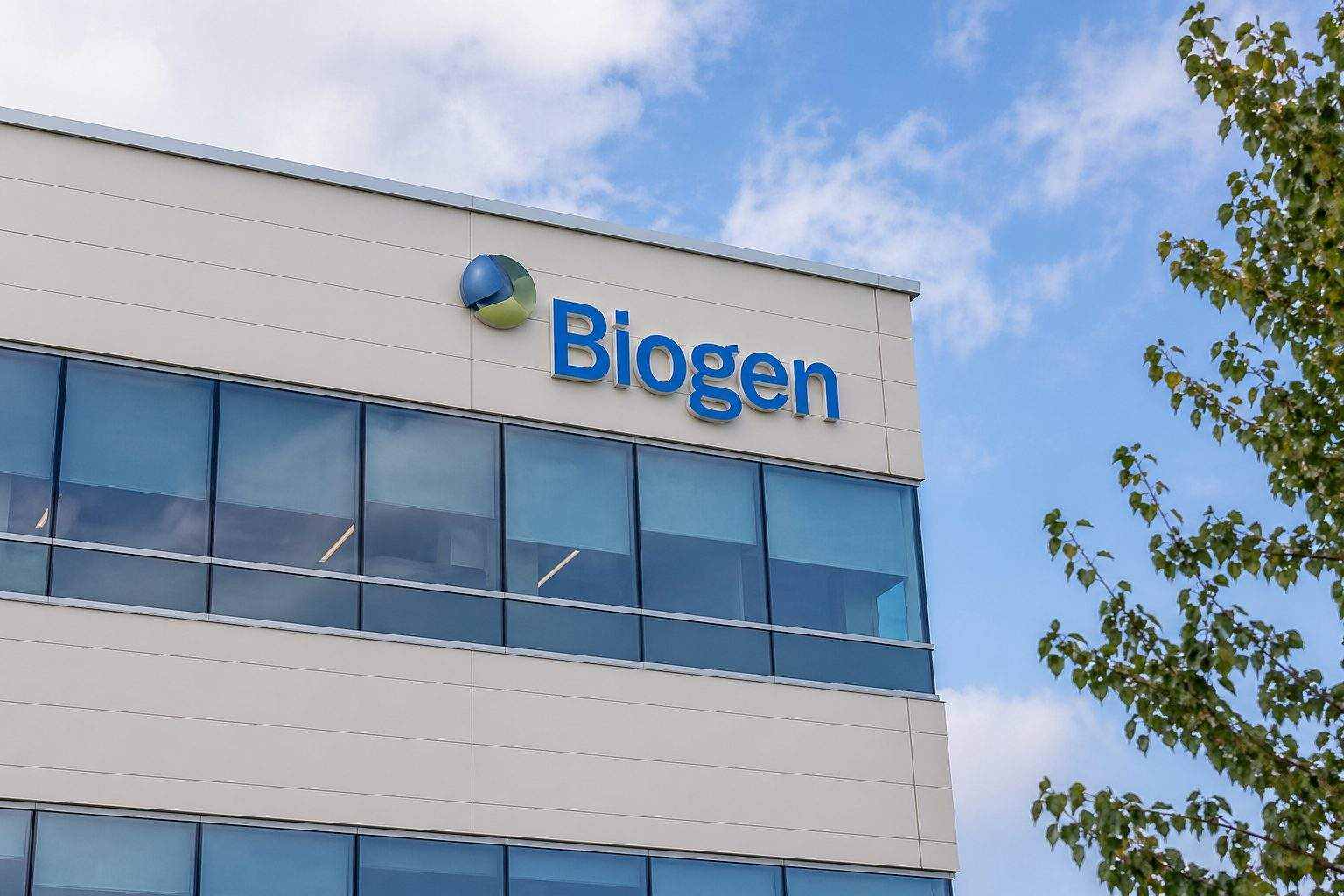
Biogen, based in Cambridge, Massachusetts, lowered its 2026 adjusted earnings outlook to $14.25 to $15.25 a share, trimming $1 off both ends of its previous forecast. The company blamed the revision on charges for acquired in-process research and development—essentially, the costs from picking up or licensing drug programs that haven’t yet reached the market.
The change is key for Biogen, which has faced years of strain on its multiple sclerosis business and is trying to convince investors of its growth story. The company is leaning harder on newer offerings like Leqembi, along with recent moves in immunology and kidney disease, to pick up the slack.
Biogen posted first-quarter revenue of $2.48 billion, a 2% gain year over year, with adjusted earnings coming in at $3.57 per share. Analysts surveyed by Reuters were looking for $2.77 a share on $2.26 billion in revenue.
Leqembi, the drug Biogen developed alongside Japan’s Eisai Co., was still its standout for growth. In-market sales worldwide climbed 74% to roughly $168 million, with $86 million booked in the U.S. That jump follows a sluggish rollout, as buyers weighed cost, efficacy, and ongoing safety requirements.
Biogen is pushing further into the Alzheimer’s space, a market that’s just beginning to take shape, as Eli Lilly’s Kisunla fights for the same group of early-stage patients. Kisunla got the green light from the U.S. Food and Drug Administration in July 2024—targeting adults with mild cognitive impairment or mild dementia linked to Alzheimer’s, matching the early-disease group that Leqembi reaches.
Biogen has “significantly advanced” its transformation, Chief Executive Christopher Viehbacher said, pointing to progress on both its commercial and pipeline fronts, as well as the planned acquisition of Apellis Pharmaceuticals. According to Viehbacher, buying Apellis brings in two already-marketed medicines and also strengthens support for felzartamab, Biogen’s kidney-disease candidate now in Phase 3. marketscreener.com
Last month, Biogen struck a deal to acquire Apellis in a transaction valued at roughly $5.6 billion upfront. With the purchase, Biogen would pick up Empaveli and Syfovre—two approved drugs in immunology, rare kidney disease, and retinal disease. If the deal goes through, the company expects it will start boosting adjusted earnings in 2027.
The rest of the quarter turned in a mixed performance, not enough to offset the overall beat. Multiple sclerosis products brought in $958 million—essentially unchanged from a year ago. Rare-disease revenue dropped to $557 million, hit by a 12% decline in Spinraza sales. Skyclarys revenue grew 22% to $151 million, while Qalsody more than doubled to $33 million.
Biogen’s so-called growth products—Skyclarys, Qalsody, Zurzuvae, Vumerity, Spinraza, plus its Leqembi partnership—climbed 12% year over year. Zurzuvae, which Biogen rolled out in the U.S. together with Supernus, pulled in $55 million.
The catch: Biogen still has to put some distance between its next chapter and what’s come before. The company is projecting overall revenue will slip by a mid-single-digit percentage in 2026, with continued declines in multiple sclerosis drugs—Vumerity not included—taking the shine off increases elsewhere. The Apellis deal? Not done yet; it needs to clear closing conditions. Biogen says it’ll revisit the numbers for that transaction with its second-quarter report.
Right now, the company wants investors to set aside concerns about the reduced earnings outlook and pay attention to its product momentum instead. It’s a tough sell, but Wednesday’s figures offered Biogen more backing than it’s managed in several prior quarters.
Related articles: Pharmaceuticals