
EINDHOVEN, Netherlands, April 29, 2026, 17:02 (CEST)
Shares of NXP Semiconductors N.V. shot higher Wednesday, as the Dutch chipmaker projected second-quarter revenue and profit to top Wall Street expectations—a clear signal of rebounding demand for automotive and industrial chips after a prolonged inventory downturn.
The timing is key here. NXP leans hard on automotive and industrial sales—sectors that took a hit as buyers burned off chip surpluses piled up during the pandemic. Those headwinds are easing, according to Reuters, with new orders picking up. That shift lets investors gauge demand without the noise from the AI-accelerator frenzy.
Shares listed on the Nasdaq surged up to 25%, according to Bloomberg—the steepest intraday move for NXP since hitting the public market back in 2010. Around late morning stateside, the stock was last seen changing hands at $288.07, also up roughly 25%.
NXP posted a 12% jump in first-quarter revenue, reaching $3.18 billion. The chipmaker reported non-GAAP earnings of $3.05 per share—this figure strips out certain items management doesn’t count as central to its performance. Looking ahead, NXP projected second-quarter revenue between $3.35 billion and $3.55 billion, with adjusted earnings expected to land between $3.29 and $3.72 per share.
Chief Executive Rafael Sotomayor said in the release, “The momentum we have built is expected to accelerate through the remainder of 2026.” He highlighted a pickup in industrial and automotive processing demand, noting the shift toward software-defined vehicles—cars where more features are handled and upgraded via software. NXP Investors
NXP’s automotive segment, which accounts for the biggest chunk of its sales, edged up 6% to hit $1.78 billion. Industrial and Internet of Things revenue jumped 24%, landing at $628 million. Communications infrastructure and other categories climbed 21% to $380 million. Mobile revenue increased 16%, with secure transaction demand giving it a lift.
During the analyst call, Sotomayor dismissed the notion that auto growth just tracks the number of vehicles produced. “This is not necessarily a story about unit growth,” he told listeners, emphasizing that the rising chip content in each vehicle is actually driving much of the expansion. The Motley Fool
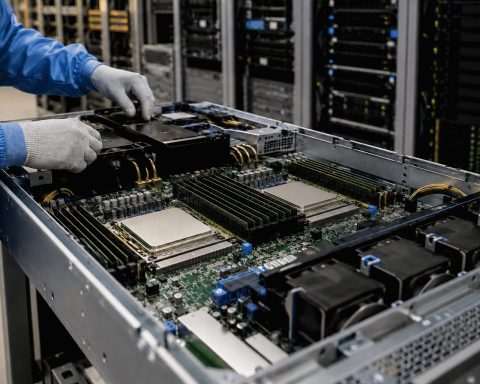
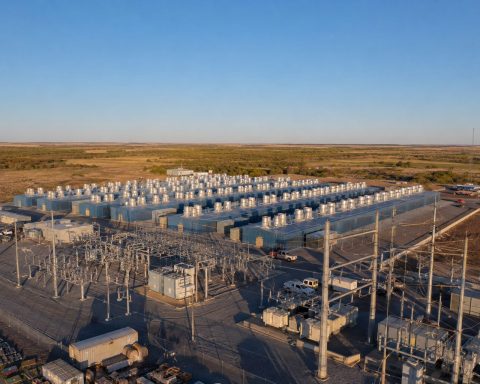
NXP put forward a fresh angle for investors, highlighting a data-center play. Management pegged data-center revenue at around $200 million for 2025, projecting that figure will climb to more than $500 million in 2026. Their emphasis: the “control plane” chips—handling cooling, power, board management, and secure controls—not GPUs or high-speed AI accelerators. The Edge Malaysia
That pushed NXP up alongside peers benefiting from stronger demand beyond just consumer electronics. Texas Instruments, according to Reuters, issued a robust outlook last week, buoyed by orders from data centers and industrial customers. Market watchers have kept an eye on STMicroelectronics as well, looking for signs that the analog and embedded-chip cycle might be shifting.
TD Cowen’s Joshua Buchalter and his team struck a more upbeat tone than before, pointing to signs of a pickup across industrial segments, and saying auto demand is holding up better than expected. “It seems the revenue engine of the company is finally reigniting,” they wrote after the results. Demand, they noted, “appears to be improving on all industrial fronts while auto is hanging in better than feared.” The Edge Malaysia
Risks haven’t disappeared. Car production is still bumpy—especially in China—and NXP flagged ongoing input-cost pressures, triggering some targeted, minor price hikes. For now, the company calls the Q2 impact “immaterial.” But if auto demand slips further or customers start restocking too fast, this bounce in shares could lose its shine. The Motley Fool
At this point, investors are framing NXP as a cyclical bounce, bolstered by a dash of fresh data-center momentum. Sotomayor told analysts the company isn’t budging from its 2027 goals—still eyeing double-digit growth for both 2026 and 2027—even after the shares’ record-setting jump. That pitch just got tougher.
Related articles: Semiconductors