
Beijing, April 29, 2026, 22:10 CST
- NIO’s Hong Kong-listed stock jumped 8.7% as its Onvo unit kicked off pre-sales for the L80, a large five-seat electric SUV.
- Pricing kicks off at 245,800 yuan, but drops to 159,800 yuan if buyers opt for the battery-as-a-service plan, leasing the battery rather than owning it upfront.
- NIO is rolling out the launch as it looks to sustain delivery growth following its first-ever quarterly net profit and a better showing in March.
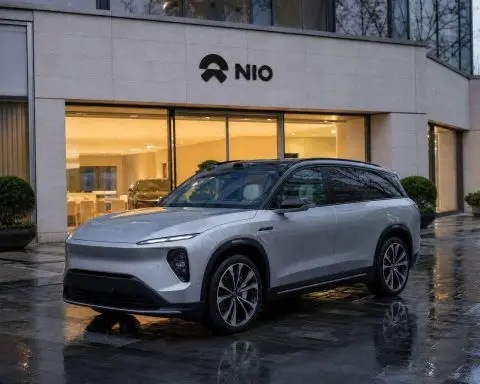
Shares of NIO Inc surged in Hong Kong trading on Wednesday, following news that the company’s Onvo brand has kicked off pre-sales for its L80—a large SUV targeting family buyers with a lower price tag in China’s highly competitive EV space.
Shares finished the session at HK$52.50, marking an 8.74% jump, Bloomberg data showed. That rally came just after NIO’s Tuesday unveiling of the Onvo L80—a model it’s counting on to break further into the mainstream SUV market, even as it keeps a tight grip on its premium image.
Timing’s key here. NIO just posted a solid quarter, but a single stretch in the black won’t cut it—repeatable sales are what it needs. For the fourth quarter of 2025, net profit came in at 282.7 million yuan. A year ago, NIO was still in the red. Vehicle margin hit 18.1%, up from before.
Onvo’s L80 comes in at 245,800 yuan to buy outright, or 159,800 yuan if you go with NIO’s battery-as-a-service program. Test drives are on the calendar for May 1, with the official debut lined up for May 15, according to Gasgoo.
The car slots in below the 2026 Onvo L90’s starting price, handing NIO a sharper entry point for big family SUVs. According to CnEVPost, the L80’s pre-sale price comes in 7.52% under the L90. NIO founder and CEO William Li ran through the model’s specs at the event.
This isn’t just a disguised price drop for the L80. Gasgoo reports the model comes with a 240-liter front trunk and a 1,200-liter rear trunk; fold down the second row and cargo capacity jumps to 2,600 liters. Buyers can pick from two assisted-driving options: the Orin-X pure-vision system or the Shenji setup, which includes LiDAR, a laser sensor that helps vehicles navigate.
NIO is tapping into a broader tech overhaul. Onsemi announced this week it’s deepening its strategic partnership with NIO, backing the Chinese EV maker’s shift from 400-volt to 900-volt platforms—a switch aimed at boosting both charging times and drivetrain performance. “From early 400V systems to today’s 900V platforms,” said Alan Zeng, who runs NIO’s powertrain unit XPT, marking how far the relationship has come. onsemi
NIO brought all three brands—NIO, Onvo, and Firefly—under one roof at Auto China 2026, highlighting 11 models alongside a dozen full-stack tech offerings. CEO William Li labeled the lineup as evidence of the company’s “multi-brand strategy.” According to NIO, its ES9 flagship SUV is on track for launch and initial deliveries before the end of May. nio.com
Competition remains fierce. Last month, Reuters highlighted Xpeng’s muted quarterly outlook, underscoring how tough pricing battles and dropping demand in China are squeezing not just Xpeng, but also NIO and BYD. NIO’s response? The Onvo L80. It’s roomier, packs in extra tech, and comes with a more accessible sticker price.
But there’s a catch here. NIO hasn’t said how many L80 orders it actually has, and buyers still don’t know exact pricing—those details land at launch. Demand might take a hit, too, if China’s subsidy cuts leave shoppers on the sidelines. New electric and plug-in hybrid registrations plunged in February, according to Benchmark Mineral Intelligence data reported by Reuters.
NIO is dealing with both supply issues and cost pressures. Back in March, Li flagged a shortage of memory chips—warning this could push costs up and, if things got bad enough, even halt production. At that point, though, the company said it wasn’t planning to hike prices.
Investors are watching the L80 closely, seeing if NIO’s stronger balance sheet and wider brand lineup can actually drive consistent sales growth. In March, deliveries jumped 136% year-on-year to 35,486 vehicles. For the first quarter, NIO delivered 83,465 units, topping its own guidance range.
Related articles: NYSE:NIO