
NEW YORK, April 29, 2026, 17:31 EDT
Wednesday’s artificial intelligence stock trade delivered a mixed bag. Alphabet moved higher in late trading, buoyed by solid cloud demand in Big Tech earnings. But Meta, Amazon, and Microsoft slipped after hours—investors were left weighing solid demand against renewed questions about the price tag for all that AI infrastructure.
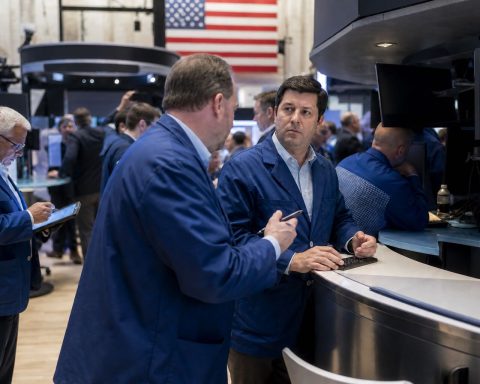
Timing’s key here. Results from Microsoft, Alphabet, Amazon, and Meta—the so-called hyperscalers fueling the AI surge—dropped after a choppy Wall Street day. Nasdaq eked out a 0.04% gain, while the S&P 500 slipped 0.04%. The Philadelphia semiconductor index jumped 2.4%. In late trading, Reuters said Alphabet climbed more than 3%. Amazon and Microsoft both lost over 3%, and Meta tumbled more than 6%.
This year, the four firms are on track to pour more than $600 billion into data centers and other AI hardware. With a combined market cap north of $10 trillion—roughly 17% of the S&P 500—their investment decisions weigh directly on suppliers like Nvidia, AMD and Broadcom. “The straw that stirs the drinks,” as Horizon Investment Services CEO Chuck Carlson put it. For BCA Research’s Noah Weisberger, the big question is whether that outlay actually “convert[s]” to cash for shareholders. Reuters
Alphabet had the most straightforward results of the group. The Google parent outperformed analyst expectations, posting a 63% jump in Google Cloud revenue to $20 billion—its quickest pace since breaking out those numbers in 2020, LSEG figures showed, per Reuters. CEO Sundar Pichai touted AI as a catalyst “lighting up every part” of the company. Alphabet reported its cloud backlog almost doubled from the prior quarter, topping $460 billion. Reuters
Meta had its own message on spending. The Facebook owner bumped up its 2026 capex outlook to a range of $125 billion to $145 billion, up from $115 billion to $135 billion, pointing to heavier AI infrastructure costs—even as layoffs loom and legal worries pile up in the U.S. and Europe. The company flagged that youth-related lawsuits “may ultimately result in a material loss,” tacking on another headache for shareholders already digesting better-than-forecast Q1 revenue. Reuters
Amazon’s AWS unit came in ahead of forecasts, with corporate AI demand giving a boost. Revenue jumped 28% to $37.6 billion, topping the 25.1% growth analysts had penciled in. Still, shares slipped after Amazon issued an operating-income outlook that left more room on the downside, and Alphabet posted even stronger cloud growth. “The standout story,” said Jesse Cohen, senior analyst at Investing.com, describing AWS’s sales pickup. But D.A. Davidson’s Gil Luria flagged Google Cloud’s faster clip as a potential letdown for AWS. Reuters
Microsoft struck a more cautious tone in its latest report. Azure’s cloud revenue climbed 40% for the January-March stretch, matching the Visible Alpha consensus. According to Reuters, that result might help dial down worries tied to slower Copilot 365 uptake or shifts in Microsoft’s OpenAI partnership hurting its AI edge. Microsoft has brought Anthropic’s models into its cloud offerings and other products. However, the updated OpenAI agreement strips away its exclusive rights to resell OpenAI products via Azure.
Chip names are still riding demand, but it’s not smooth sailing. Spending data supports appetite for processors, memory, networking hardware, and chip equipment. However, stocks that have already baked in hefty AI expectations aren’t getting a free pass—now, it takes something even bigger to move the needle. KLA called for fourth-quarter revenue to top forecasts on strength from AI chip tools, but shares dropped almost 9% after hours. Investors are coming down hard on “anything less than massive beats,” CFRA’s Brooks Idlet said. Reuters
One big worry: a single weak spot in the AI funding pipeline could trigger a broader pullback. AI-related stocks took a hit Tuesday after the Wall Street Journal flagged missed user and revenue targets at OpenAI, raising doubts about its ability to deliver on future computing deals. Shares tied to OpenAI—Oracle, CoreWeave, and Arm—slipped, Reuters said. Todd Schoenberger, CIO at CrossCheck Management, pointed out that sharp drops in established AI names tend to rattle the whole sector, even if the justification isn’t strong.
But the spending surge isn’t just a stock market narrative. Orders for U.S. core capital goods—a stand-in for business equipment investment—jumped 3.3% in March, marking the biggest move up since June 2020. Reuters pointed to AI spending and a wave of data-center builds as key factors behind that gain. It’s a real-world boost for the AI theme, though valuation headwinds from rate hikes, pricier oil, and rising capital costs persist.
So, the immediate picture is mixed. Cloud stocks with visible AI-driven sales—Alphabet was the standout in Wednesday’s results—are lining up more favorably than those pushing for another uptick in capital outlays. Chipmakers and infrastructure plays aren’t out of runway if capex keeps climbing, but expectations are already lofty. At this point, what matters next isn’t just announcements about AI spend, but proof: who’s actually collecting the checks?
Related articles: NASDAQ:META