
Dublin, May 5, 2026, 19:03 Irish Standard Time.
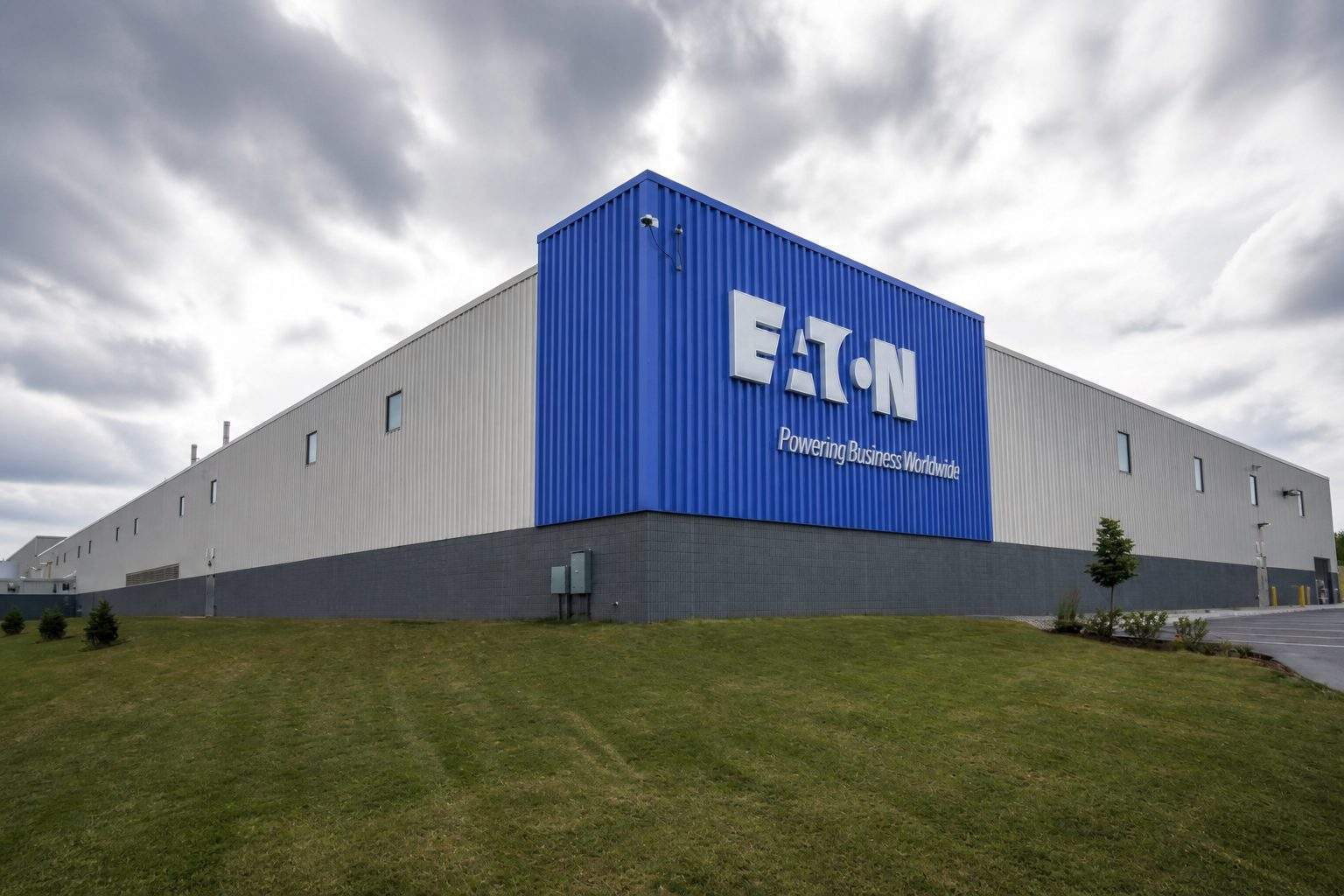
Eaton stock slipped roughly 2% in New York on Tuesday. The power-management giant delivered record first-quarter sales and bumped up its 2026 organic growth projection, but investors zeroed in on slimmer margins and a profit forecast that came up short of expectations tied to surging AI data center demand.
This shift is notable: Eaton now stands out as a clearer proxy for the physical side of the AI push. Data centers—where artificial intelligence models are trained and deployed—require everything from switchgear and power distribution to backup and cooling, all in Eaton’s wheelhouse. That dynamic has boosted the profile of competitors and suppliers like Schneider Electric and Vertiv, both of which are caught up in the scramble to keep these new sites running and cool.
Capacity remains the sticking point. Eaton posted first-quarter segment margins of 22.7%—that’s above what it had forecast, but still a slide of 120 basis points from last year’s level. The company’s book-to-bill ratio for its electrical units climbed to 1.2, meaning new orders are outpacing what’s actually getting shipped.
Dublin-based Eaton turned in first-quarter sales of $7.5 billion, climbing 17% year over year, with organic sales up 10%. Earnings came in at $2.22 per share. Adjusted earnings—factoring out acquisition costs, restructuring charges and intangible amortization—landed at $2.81 per share.
FactSet numbers cited by Barron’s pegged Wall Street’s forecast at $2.73 per share on around $7.1 billion in sales. Chad Dillard of Bernstein flagged robust order flow but called out weaker-than-expected margins. Shares of Eaton initially slumped 6.3% at the open before pulling back some of those losses, Barron’s noted.
Chief Executive Paulo Ruiz credited “strong demand across our markets” for a solid first quarter, adding that capacity is expanding in Electrical Americas—the segment with the most exposure to U.S. power infrastructure and data-center investment. Eaton
Electrical Americas posted a 20% jump in sales, reaching a record $3.6 billion, with 14% organic growth fueling the gains. Orders in the segment, measured by the twelve-month rolling average, surged 42% on an organic basis, and backlog as of March’s end stood 44% above last year. Electrical Global reported $1.9 billion in sales, up 21%. Aerospace sales increased 16% to $1.1 billion.
Eaton is targeting organic growth between 9% and 11% for 2026, and it’s guiding for adjusted earnings per share to land between $13.05 and $13.50. Looking at the second quarter, the company put its adjusted EPS forecast at $3.00 to $3.10—just short of the $3.12 analysts had penciled in, according to Barron’s. The sticking point for investors isn’t demand. The real question is whether those higher sales will flow through to profits as quickly as they hope.
Eaton wrapped up $11 billion in acquisitions for the quarter, picking up Boyd Thermal and Ultra PCS along the way. According to a Business Wire filing-style release, the company paid $9.55 billion for Boyd Thermal on March 12 and closed the $1.53 billion Ultra PCS deal on Jan. 23. The additions bring liquid-cooling tech for data centers and new aerospace controls into Eaton’s fold.
Competition keeps tightening. Schneider Electric topped revenue estimates last week—AI-fueled data center demand did the heavy lifting. Vertiv, meanwhile, leaned into cooling, picking up PurgeRite, Reuters noted earlier. That puts Eaton in catch-up mode, hunting for growth where size matters but missteps can get expensive, and quickly.
The bear case is pretty clear-cut: more capacity, pricier inputs, and ongoing integration efforts—plus any pause in big data-center builds—could pressure margins before fresh orders translate to cash. Eaton’s forward-looking statement flagged acquisition risks, shortages of raw materials and labor, inflation, tariffs, geopolitical uncertainty, and the planned Mobility spinoff as added concerns.
Eaton still expects to spin off its Mobility business in the first quarter of 2027. That unit logged $766 million in sales, a dip of 2% year-on-year; organic sales dropped 6%. The numbers underline Eaton’s drive to prioritize capital for electrical systems, aerospace, and AI-related power infrastructure.
Related articles: NYSE:ETN