
DANBURY, Conn., May 12, 2026, 06:03 EDT
FuelCell Energy rallied to a new 52-week high on Monday, closing up 16.35% at $15.94. Investors snapped up shares after the company promoted its fuel cells as a solution for AI data centers struggling with grid bottlenecks. Volume spiked—12.9 million shares traded, blowing past the 50-day average of 4.1 million, according to MarketWatch.
Timing counts here. Data centers can’t risk power hiccups, and as utility hookups drag out, more developers are turning to on-site generation. FuelCell, for its part, pitches its product as dependable baseload power—electricity that keeps flowing all day and night, not just in bursts.
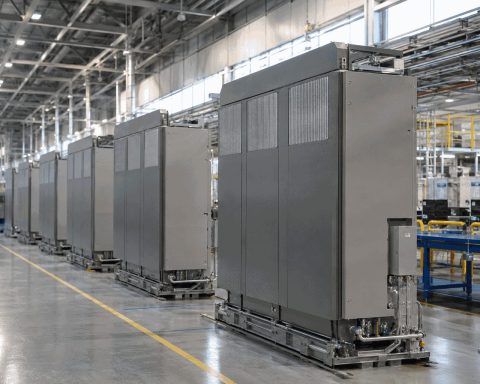
Back in March, FuelCell rolled out a standardized 12.5-megawatt power block aimed at data centers. The setup combines ten of its 1.25-MW modules in a single package—an approach designed to eliminate much of the usual custom engineering and permitting. “It’s not just about the megawatts,” Chief Executive Jason Few said. “It’s about the speed of delivery.” Eric Strayer, who heads global sales, put it bluntly: customers are demanding “fast, phased deployment.” FuelCell Energy
FuelCell pushed its data center ambitions further in the May investor deck, highlighting a partnership with Sustainable Development Capital LLP aimed at as much as 450 MW of fuel cell capacity for global data centers. The company also pointed to a memorandum of understanding for up to 100 MW at South Korea’s AI Daegu Data Center, with work expected to kick off in 2027. According to the same deck, more than 80% of its February 2026 pipeline centers on data centers—but FuelCell cautioned those projects remain under discussion, not under contract.
FuelCell wasn’t the only one catching a bid. Plug Power jumped 13% and Bloom Energy climbed 12% by midday Monday, as traders piled into fuel-cell stocks tied to on-site power demand.
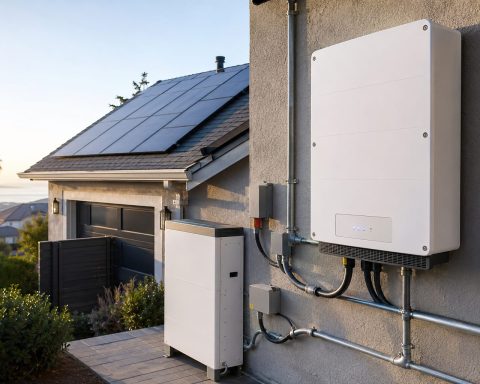
Fuel cells generate electricity using an electrochemical reaction, not by burning fuel. According to the U.S. Department of Energy, these systems work with hydrogen or a range of other fuels, and as long as fuel keeps flowing, they continue producing both electricity and heat. Reuters company data shows FuelCell’s carbonate platform is compatible with natural gas, biogas, renewable natural gas, and various blends.
The numbers are a mixed bag. FuelCell’s first-quarter revenue jumped 61% year over year to $30.5 million, but losses persisted—net loss for the quarter landed at $26.1 million. As of Jan. 31, cash and restricted cash stood at $379.6 million. Backlog slipped to $1.17 billion, compared with $1.31 billion a year ago.
The company’s management aims to prove it can scale operations if demand materializes. According to its statement, with extra capital, automation, and some outsourcing, the Torrington, Connecticut, facility could eventually ramp up to 350 MW in annualized output. Management projects $20 million to $30 million in capital spending for fiscal 2026 to kick off expanding past the 100 MW mark.
The real concern here is execution rather than demand. According to Investing.com, analysts remain neutral on FuelCell: zero buy ratings, six holds, and two sells. The average 12-month price target sits at $8.24—well under Monday’s close. Reuters reported last year that J.P. Morgan’s Mark Strouse said the company isn’t expected to achieve breakeven through fiscal 2026.
FuelCell’s efforts to rein in costs aren’t new. Back in June 2025, Reuters noted the Danbury-based firm slashed 22% of its staff, following earlier reductions, as it tried to chop operating expenses by 30%. “We need to decrease our cash burn,” then-CFO Michael Bishop told the outlet. Reuters
Right now, FuelCell gets lumped in as a small-cap play on AI infrastructure. The bigger challenge looms: landing actual data-center deals, recording revenue when they say they will, and showing that ramping up production helps cut losses instead of simply raising costs.
Related articles: NYSE:BE