Share price
$215.10
+5.43% from a $204.02 prior close.
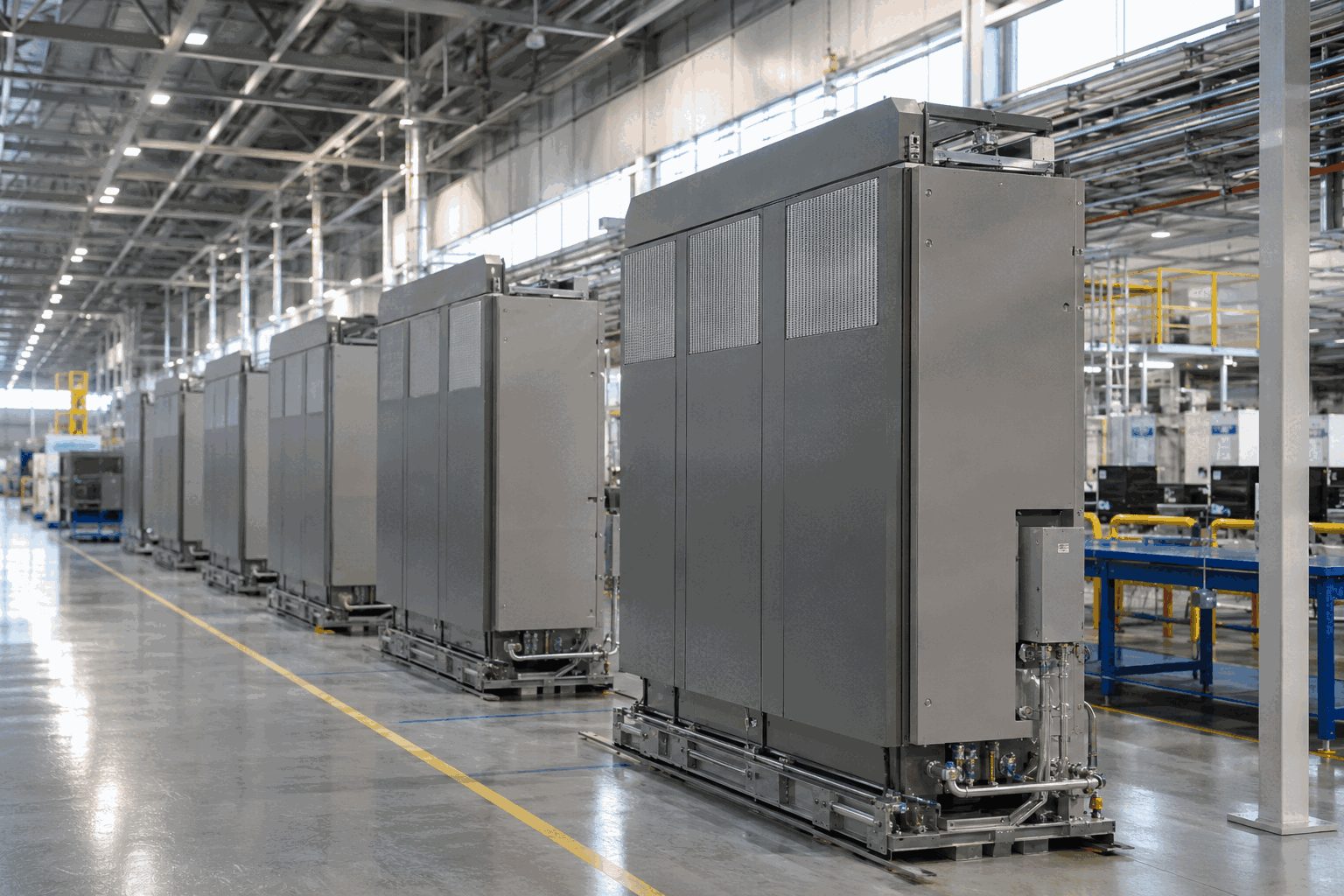
SAN JOSE, California, August 25, 2026, 12:01 EDT - Shares of Bloom Energy climbed 5% after a disclosure from the Pelosi household contributed to a $3.3 billion increase in the company's market value.
Bloom snapshot: August 25, 2026, 12:01 EDT · U.S. regular session · Peer snapshots: 11:34 EDT
+5.43% from a $204.02 prior close.
About $3.26B added during the move.
Shares traded by 12:01 EDT.
Growth expectations leave little room for execution slippage.
This compares current underlying share exposure, not the option premiums paid. The stock move is an attention signal; it does not create revenue or contracts.
Reported ranges total $3M–$12M. Exact option premiums are not disclosed.
| Metric | Q2 2026 | Q2 2025 | Change |
|---|---|---|---|
| Revenue | $1.065B | $401.2M | +165.5% |
| Product revenue | $935.4M | $296.6M | +215.4% |
| GAAP gross margin | 33.4% | 26.7% | +6.7 pts |
| GAAP operating income | $182.2M | -$3.5M | +$185.7M |
| Operating cash flow | $226.4M | -$213.1M | +$439.5M |
Consensus Buy · Average target $275.08 · 27.9% implied upside from $215.10.
| Analyst | Rating | Target | Implied return | Date |
|---|---|---|---|---|
| Bernstein | Hold | $282 | +31.1% | Aug. 18 |
| J.P. Morgan | Buy | $314 | +46.0% | Aug. 3 |
| Wells Fargo | Hold | $176 | -18.2% | July 30 |
| Mizuho | Buy | $242 | +12.5% | July 30 |
The full 29-analyst range runs from $97 to $390. That dispersion reflects both AI-power growth and valuation risk.
| Company | Price | Daily move | Market value | TTM revenue | Net income |
|---|---|---|---|---|---|
| Bloom Energy (NYSE: BE) | $215.10 | +5.43% | $63.35B | $3.11B | $244.9M |
| Plug Power (NASDAQ: PLUG) | $2.275 | +4.84% | $3.18B | $744.1M | -$1.64B |
| FuelCell Energy (NASDAQ: FCEL) | $19.59 | +4.48% | $1.57B | $167.9M | -$225.5M |
Bloom leads on scale and profitability. Similar peer gains suggest the disclosure also lifted attention across fuel-cell equities.
The disclosed purchases occurred about one month before the market reaction. They do not alter Bloom's contracts, backlog or cash. The stock trades near 62× forward earnings and remains 39% below its 52-week high. AI construction delays, permitting friction, manufacturing defects or margin slippage could compress the multiple.
Sources: Bloom market data, price history, analyst consensus, Bloom Q2 results, congressional transaction records, PLUG data and FCEL data. Time-sensitive figures are stamped August 25, 2026, 11:34–12:01 EDT.
The stock recovered from a $185.93 intraday low.
Daily closes from July 28 through August 21; August 24 uses the 11:36 EDT snapshot.
Momentum broke before fundamentals did. Monday’s rebound follows seven weaker sessions and leaves the stock 42.1% below its $351.28 yearly high.
Year-over-year company-reported GAAP results.
| Measure | Reading |
|---|---|
| Estimated market value | $59.9B |
| 2026 revenue guide | $3.9B–$4.2B |
| Market value / midpoint sales | 14.8× |
| Forward P/E | 56.7× |
| Average analyst target | $275.08 |
| Target upside | 35.2% |
A premium multiple leaves less room for shipment delays, financing friction or margin slippage.
29 current recommendations.
The fivefold expansion supports deployments, but it is a financing framework rather than recognized Bloom revenue.
Customers include major hyperscalers, neoclouds, AI labs and colocation operators.
Up today: buyers defended $200 after a deep early dip, while Q2 growth and the AI-power backlog remain intact.
Still under pressure: the shares trade at a demanding sales multiple after a large run, so investors are taking profits and demanding proof that orders become cash.
Sources: Bloom Energy Q2 2026 results and guidance; Reuters on the Brookfield framework; StockAnalysis/S&P Global market, history and analyst data. Price snapshot: August 24, 2026, 11:36 EDT. Market value and valuation multiples are rounded calculations. Informational only, not investment advice.