
New York, June 22, 2026, 13:56 EDT
- FTSE Russell will finalize the new membership after Friday’s U.S. close, with the rebuilt indexes operating from Monday’s open.
- Last June, $217.2 billion of stock traded in the closing moments of the reconstitution session across the NYSE and Nasdaq.
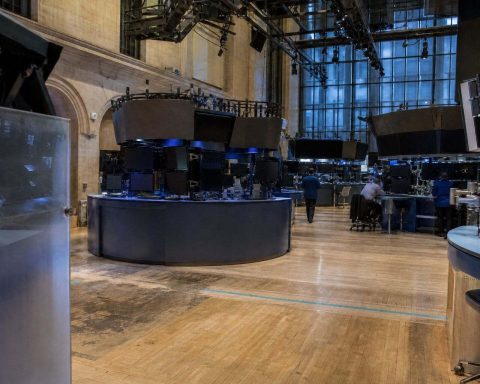
- NYSE-listed stocks will use the exchange’s closing auction, while Nasdaq names will trade through its Closing Cross, producing one official closing price for each security.
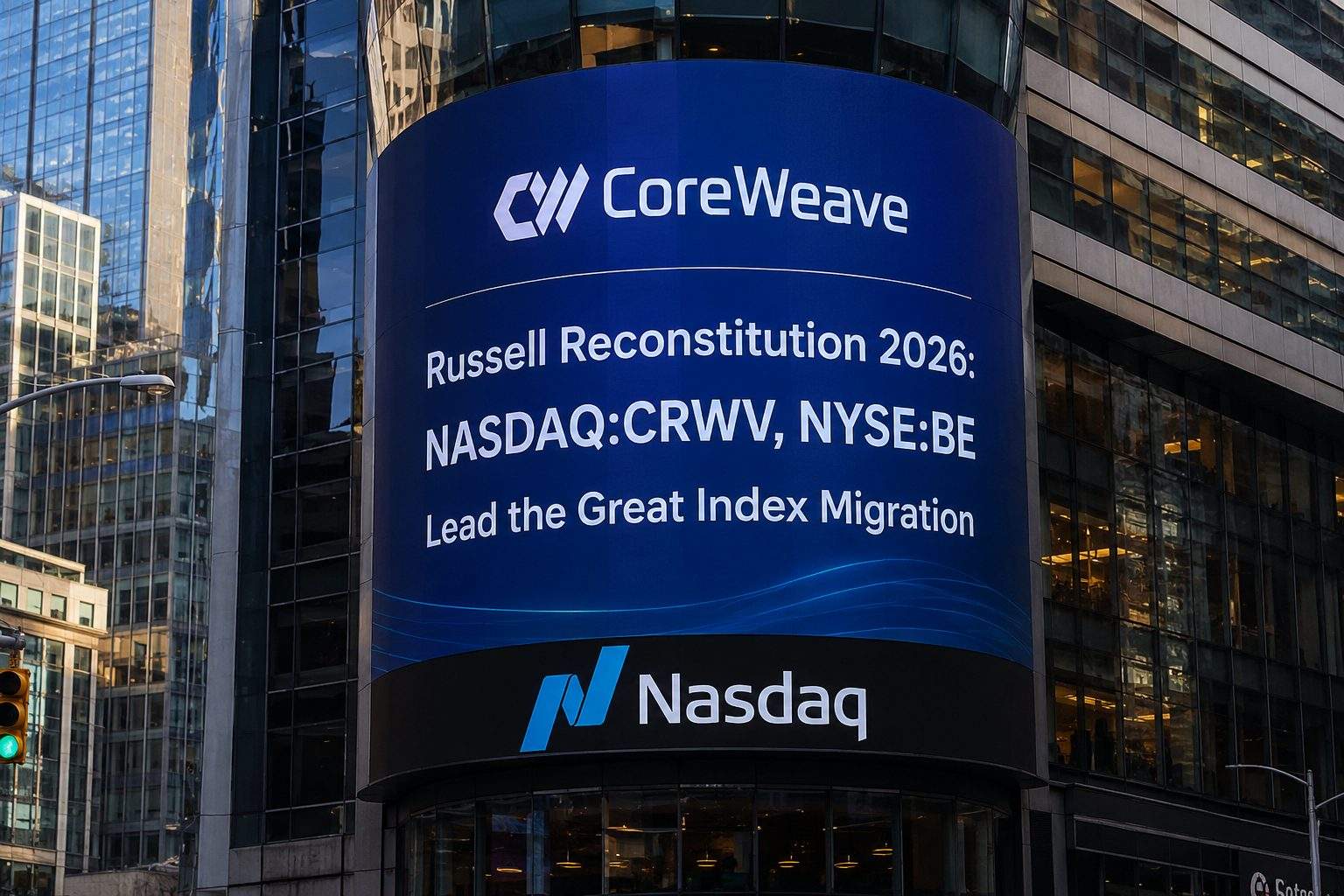
U.S. index funds are preparing for a concentrated wave of orders at Friday’s close as CoreWeave NASDAQ:CRWV enters the Russell 1000 from outside the Russell universe and Bloom Energy NYSE:BE moves up from the Russell 2000. The reset includes 62 additions to the large-cap Russell 1000, including 43 promotions from the Russell 2000, and 237 additions to the small-cap index, including 37 moving down from the Russell 1000.
This matters because roughly $12.2 trillion was benchmarked to Russell U.S. indexes as of June 2025. A reconstitution—a rules-based reset of index members and weights—forces passive funds, which are built to copy an index, to realign their holdings. “The markets have been moving more quickly, market caps are getting bigger,” Catherine Yoshimoto, FTSE Russell’s director of U.S. index product management, said. Traders Magazine
The official close is the pressure point. Funds want the same price used to calculate the benchmark, limiting tracking error, or the gap between a fund’s return and the index it follows. Nasdaq research has found that liquidity in addition candidates can begin rising months before reconstitution as event-driven investors position ahead of passive buyers.
The June 18 files show the breadth of the transfer. CoreWeave appears among Russell 3000 additions, while Beyond Meat NASDAQ:BYND is among the preliminary deletions. Inclusion can bring required buying from benchmark funds; deletion can produce the reverse, even when nothing has changed in a company’s operations that day.
The migration also cuts across investment styles. Growth stocks are screened for faster expansion, while value stocks tend to score as cheaper against earnings or assets. Based on June 5 preliminary data, MFS estimated Apple and Microsoft would rise from zero to 5.7% and 4.4%, respectively, of the Russell 1000 Value Index, while Alphabet would fall from 4.1% to zero and become fully Growth. “Large changes in index composition can materially affect benchmark performance,” MFS strategist Jonathan Hubbard wrote. MFS
That blurs a distinction many portfolios still treat as clean. Morgan Stanley Investment Management estimates the so-called Magnificent Seven will account for about 17% of the Russell 1000 Value Index after the reset, with Apple and Microsoft among the six largest holdings in both Growth and Value. Value performance could therefore become more sensitive to technology earnings and sentiment than its label suggests.
The under-reported technical setup is the retention band, a buffer designed to stop companies near the $5.7 billion large-cap cutoff from bouncing between indexes. FTSE Russell says 97 existing Russell 2000 members ranked above the cutoff but stayed put, while 111 Russell 1000 members ranked below it and retained large-cap status. Combined with the 80 actual moves across the boundary, that means about 2.6 companies were held in place for every crossover—or roughly 72% of apparent boundary breaches were absorbed by the buffer.
But the mechanical trade can run the wrong way. Investors often buy expected additions and sell deletions before the effective date, leaving the closing auction crowded and vulnerable to reversal. “If everyone starts doing that, that’s kind of what crowds the trade,” Stephens analyst Melissa Roberts said during last year’s reset. CoreWeave was down about 6.2% in Monday afternoon trading, while Bloom Energy gained roughly 3.1%; the split is not proof of an index effect, but it shows that membership alone does not dictate the day’s return. Reuters
Friday’s signal will not be the direction of the broad market. It will be the scale of price pressure in the final minutes—and whether those moves survive Monday’s open. The reset changes which funds must own which shares. It does not change the companies’ cash flows overnight.
Related articles: NYSE:BE