
New York, May 6, 2026, 06:06 EDT
Anthropic has rolled out 10 prebuilt Claude AI agent templates aimed at banks, insurers, and financial companies, zeroing in on labor-intensive tasks like putting together pitchbooks, handling customer verifications, and managing month-end accounting. The move marks another step into Wall Street operations for the company.
This shift is significant: banks have started embedding AI tools directly into spreadsheets, presentations, data rooms, and compliance systems, moving beyond just experimenting with chatbots. According to Reuters, financial services now make up Anthropic’s second-biggest source of enterprise revenue, right behind tech. Roughly 40% of its top 50 clients are financial firms.
AI agents—software built to autonomously handle discrete tasks—are drawing interest from banks still stuck in lengthy testing phases. Anthropic’s head of product for financial services, Nicholas Lin, told Axios the firm’s aim is to “reduce the deployment cycle from months to days.” That message lands squarely at financial institutions that have spent the past year poking at AI but are slow to go live. Axios
The lineup covers both front and back office, including a pitch builder, meeting preparer, earnings reviewer, model builder, market researcher, valuation reviewer, general-ledger reconciler, month-end closer, statement auditor, and a KYC screener. KYC—know-your-customer—is the process banks follow to confirm client identities and spot compliance issues.
Anthropic rolled out the templates as plugins for Claude Cowork and Claude Code, plus cookbooks for Claude Managed Agents, letting firms tweak them to fit in-house modeling, risk guidelines, and approval processes. Claude has picked up integration with Microsoft Excel, PowerPoint, and Word via add-ins, according to the company, which also noted Outlook support is on the way.
Data access rounds out the launch. Anthropic rolled out connectors for Dun & Bradstreet, Fiscal AI, Financial Modeling Prep, Guidepoint, IBISWorld, SS&C IntraLinks, Third Bridge, and Verisk. Over at Moody’s, an MCP app now pipes credit ratings and data covering 600 million-plus public and private companies straight into Claude; MCP stands for Model Context Protocol—it links AI with outside tools and data.
On May 4, FIS said it’s teaming up with Anthropic to build a financial-crimes agent aimed at anti-money laundering (AML) investigations. The system, according to FIS, is designed to pull evidence from bank systems, flag activity based on known patterns, and escalate higher-risk cases to a human team. BMO and Amalgamated Bank are early partners in this project. FIS CEO Stephanie Ferris put it plainly: banks want AI that “acts, not just assists.” FIS Investor Services
OpenAI and Anthropic are now not just vying for best-in-class models—they’re racing to get their AI embedded within corporate walls first. Reuters said Tuesday that joint ventures connected to both companies are negotiating acquisitions of engineering and consulting outfits, highlighting how the competition is pivoting from simply offering models to delivering the muscle needed for real-world rollouts.
On May 4, Anthropic rolled out a new AI services venture with Blackstone, Hellman & Friedman, and Goldman Sachs aimed at getting Claude into the hands of mid-sized businesses. “Enterprise demand for Claude is significantly outpacing any single delivery model,” Anthropic CFO Krishna Rao said. Anthropic
The finance pitch from the company draws heavily on the latest benchmark numbers. According to Vals AI’s Finance Agent v1.1 benchmark, last updated May 4, Claude Opus 4.7 is now leading, posting 64.37% accuracy for core financial analyst tasks.
The field’s packed. Rogo—a finance AI startup launched by ex-investment bankers—already counts over 250 clients, according to Business Insider. Hebbia’s offering? Tools built for running multiple queries through spreadsheets, filings, and more. Scott Keipper, who heads up EY’s Americas financial services tech consulting, told the publication that real differentiation will hinge on things like “domain-specific data, workflow design, and the control layer.” Business Insider
The risks tied to the product’s structure are obvious. Anthropic maintains that users still check Claude’s output before anything heads to a client, gets submitted, or is put into action. FIS notes that AML calls remain with human investigators. That setup could mean a slower rollout, though for regulated firms, the margin for error—think invented data, shaky permissions, or gaps in the audit trail—is slim.
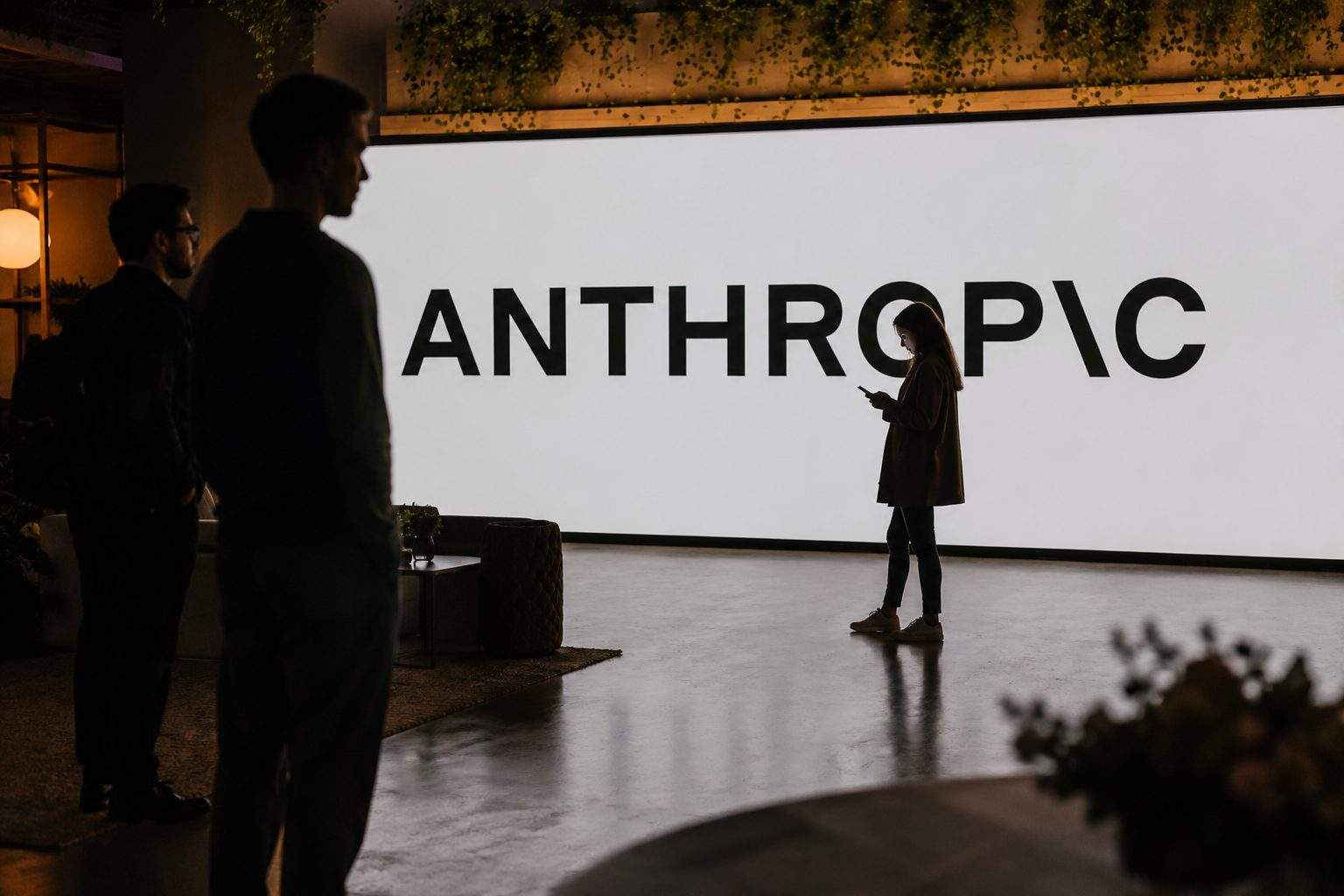
At Anthropic’s New York event, CEO Dario Amodei shifted the spotlight to finance, calling it the next big market for agentic software after the tech’s push into coding. He didn’t mince words on the stakes: software-as-a-service players that ignore AI risk “losing market value, going bankrupt, completely going bust,” according to Reuters. Reuters
Related articles: Artificial Intelligence