
NEW YORK, May 6, 2026, 08:09 EDT
CoreWeave steps into the spotlight after Thursday’s close with its first-quarter results, setting up a test for how much investors are still willing to pay for a big pile of AI cloud contracts—even as the price tag for expansion climbs. The company’s results call is slated for May 7 at 5 p.m. ET. Ahead of the U.S. market open, shares last traded at $127.89, putting them up about 2% from the previous close.
The focus has shifted. It’s not just about customers craving AI computing anymore—CoreWeave now faces the challenge of converting its hefty backlog into functioning data-center capacity and, crucially, booked revenue at speed. As of the end of 2025, the company reported a revenue backlog sitting at $66.8 billion. That figure reflects the total value of customer contracts signed and expected to hit the books once those delivery and service requirements are satisfied.
The stakes come down to guidance. CoreWeave has told investors it’s looking for first-quarter revenue between $1.9 billion and $2.0 billion, aiming for adjusted operating income anywhere from flat to $40 million. Capital expenditures are pegged at $6 billion to $7 billion, while interest expense should land between $510 million and $590 million. Looking ahead to 2026, CoreWeave projects revenue in the $12 billion to $13 billion range, with capital spending forecast at $30 billion to $35 billion.
Analysts over at TipRanks are looking for a 91-cent per-share loss on revenue close to $1.97 billion. Options traders, for their part, are bracing for a swing of about 18.7% in either direction once earnings land. Zacks, as seen on TradingView, spelled out the backdrop: EPS is still murky, but traders are likely to zero in on backlog.
Bullish sentiment got louder this week. Bank of America’s Tal Liani bumped his price target up to $140 from $120, highlighting data-center activation, contracted revenue still to come—labeled as remaining performance obligations—and margins as his main focus points. Over at Jefferies, Brent Thill took his own target to $160 from $120, calling CoreWeave’s valuation “compelling relative to its strategic importance.” TipRanks
CoreWeave has fresh momentum behind it. Meta Platforms inked a new $21 billion deal, securing more cloud capacity through December 2032—along with early dibs on Nvidia’s Vera Rubin chips. “Leading companies are coming to us for their most demanding workloads,” CEO Michael Intrator said, pointing to the Meta agreement as validation. Reuters
Anthropic came in with a multi-year agreement tapping CoreWeave’s infrastructure for its Claude AI models—no dollar figures revealed. This move diversifies CoreWeave’s roster: Microsoft made up roughly 67% of revenue last year, and Meta now ranks among its biggest clients.
Jane Street stepped in, putting roughly $6 billion on the table for CoreWeave’s cloud services and backing that up with a $1 billion equity buy at $109 per share. According to Reuters, demand is spiking for neocloud outfits like CoreWeave and rival Nebius, as firms scramble for enough firepower to train and deploy AI models.
The environment continues to work in CoreWeave’s favor. Reuters, citing a story focused on AI server demand, said Alphabet, Amazon, Microsoft and Meta are together on track to pour more than $700 billion into AI this year. That’s a major tailwind for dedicated GPU cloud businesses like CoreWeave. But it also means they’re up against giants, all chasing the same chips, energy supplies, and data center real estate.
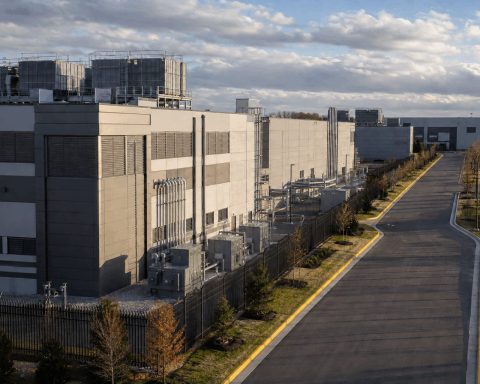
Execution, not marketing, is the sticking point here. CoreWeave’s latest annual filing underscores the complexity and heavy costs of data-center buildouts. Construction setbacks, GPU shortages, holdups with cooling systems, funding gaps, permit snags, even trouble locating sites with enough power—any of these could push revenue out to future quarters.
Debt remains a heavy load here. As of December, CoreWeave was carrying over $14 billion in long-term debt, according to Reuters. The company still expects to pour $30 billion to $35 billion into capital projects this year. First-quarter interest expense could reach $590 million. That makes any unused capacity an expensive problem.
Back in February, Intrator remarked that “demand continues to intensify.” CFO Nitin Agrawal, for his part, told investors the backlog is now more than four times what it was at the start of 2025. Investors will be watching Thursday’s report for signs of that optimism materializing in actual power usage, revenue on the books, and margins. CoreWeave
Related articles: NYSE:BAC