
Miami, May 6, 2026, 10:00 EDT
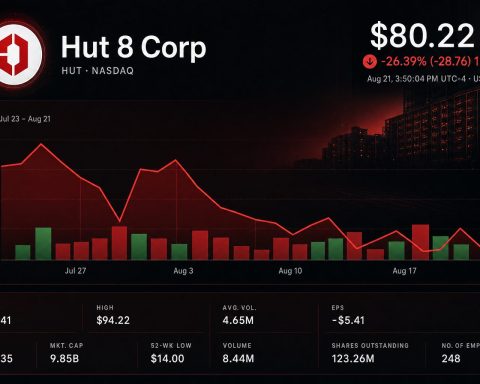
Hut 8 Corp. shares shot up over 32% early Wednesday after the company inked a 15-year lease valued at $9.8 billion for its Beacon Point data center campus in Nueces County, Texas. The move digs the bitcoin miner and data center operator deeper into AI infrastructure. The first phase of the deal covers 352 megawatts of IT capacity—dedicated to servers and related gear.
Power is emerging as a chokepoint for AI expansion, making this deal notable right now. Hut 8 says the contract bumps its total AI data center capacity up to 597 MW. Base-term contract value jumps to roughly $16.8 billion, anchoring more of its future revenue to long-term, large-scale compute contracts instead of just bitcoin-driven business.
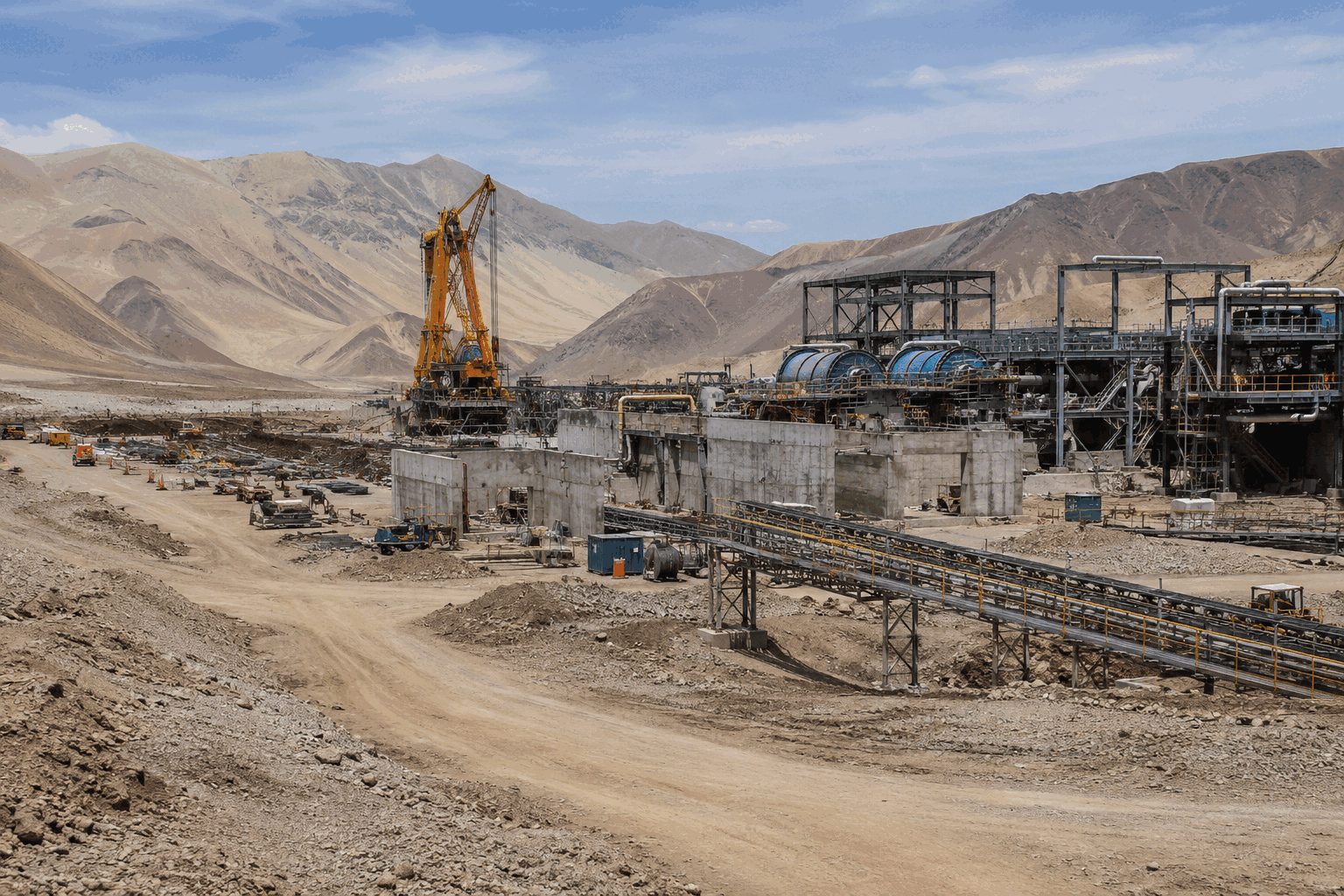
Beacon Point’s plan calls for a 1-gigawatt campus, with Hut 8 already securing an interconnection deal covering 1,000 MW of utility capacity. Initial energization is penciled in for the first quarter of 2027. The first data hall won’t arrive until the third quarter of 2027—so for now, this remains a development-phase story, well ahead of any full revenue realization.
Hut 8 hasn’t disclosed the tenant’s name, describing it only as a high-investment-grade player. Chief Executive Asher Genoot told Reuters there’s a “15-year obligation from a high-investment-grade counterparty” with the lease featuring “no termination for convenience.” Under take-or-pay terms, the customer pays for the contracted capacity regardless of usage. Triple-net leases, for their part, generally shift property costs onto the tenant. Reuters
Hut 8 says the contract brings 3% bumps to base rent each year and might push total value to roughly $25.1 billion if all three five-year renewals are picked up. For the Beacon Point site, the company’s projecting average net operating income at $655 million a year after things settle—net operating income here means property-level revenue minus direct running costs, before any wider company expenses.
Hut 8 plans to build the Texas facility to Nvidia’s DSX reference architecture, tailored for big AI computing operations. Jacobs takes the lead on engineering, procurement, and construction management. Vertiv is handling the critical digital infrastructure, while American Electric Power’s AEP Texas is linked up for the utility connection.
This wasn’t just a one-name move—Hut 8 surged to a 32.2% jump at $106.42, outpacing the rest. IREN tacked on 6.6%, Cipher Digital added 3.5%, while Core Scientific pushed ahead by 9.1% in the morning session.
Hut 8 reported first-quarter earnings and dropped the announcement at the same time. Revenue shot up to $71.0 million, well above the $21.8 million it posted last year, with compute revenue leading the jump. Net loss, though, expanded to $253.1 million from $134.3 million, weighed down by $295.7 million—mostly unrealized losses—tied to digital assets.
Adjusted EBITDA—a metric Hut 8 uses that strips out interest, taxes, depreciation, and a handful of other costs—landed at negative $250.5 million. That’s down sharply from negative $117.7 million the year before. The company noted this figure also reflects digital-asset losses.
On paper, the company’s balance sheet looks spacious. Hut 8 reported roughly $1.3 billion in combined cash and bitcoin holdings as of March 31. Breaking that down, $795.6 million comes from Hut 8 itself, while $489.0 million is tied to American Bitcoin. The company also locked in a lower rate on its $200 million bitcoin-backed credit facility with FalconX, reducing the interest to 7% from the previous 9%.
The risks are hard to miss. With the tenant still unnamed, ground yet to be broken, and project financing unresolved, investors face a stack of question marks. The company’s filing itself flags a laundry list: power needs, hurdles in data-center construction, shifts in leasing, fierce competition, customer demand swings, threats to cybersecurity, and bitcoin’s wild price action. Traders are already betting on smooth execution—well ahead of the first building’s delivery.