
DEARBORN, Michigan — May 13, 2026, 12:01 (EDT)
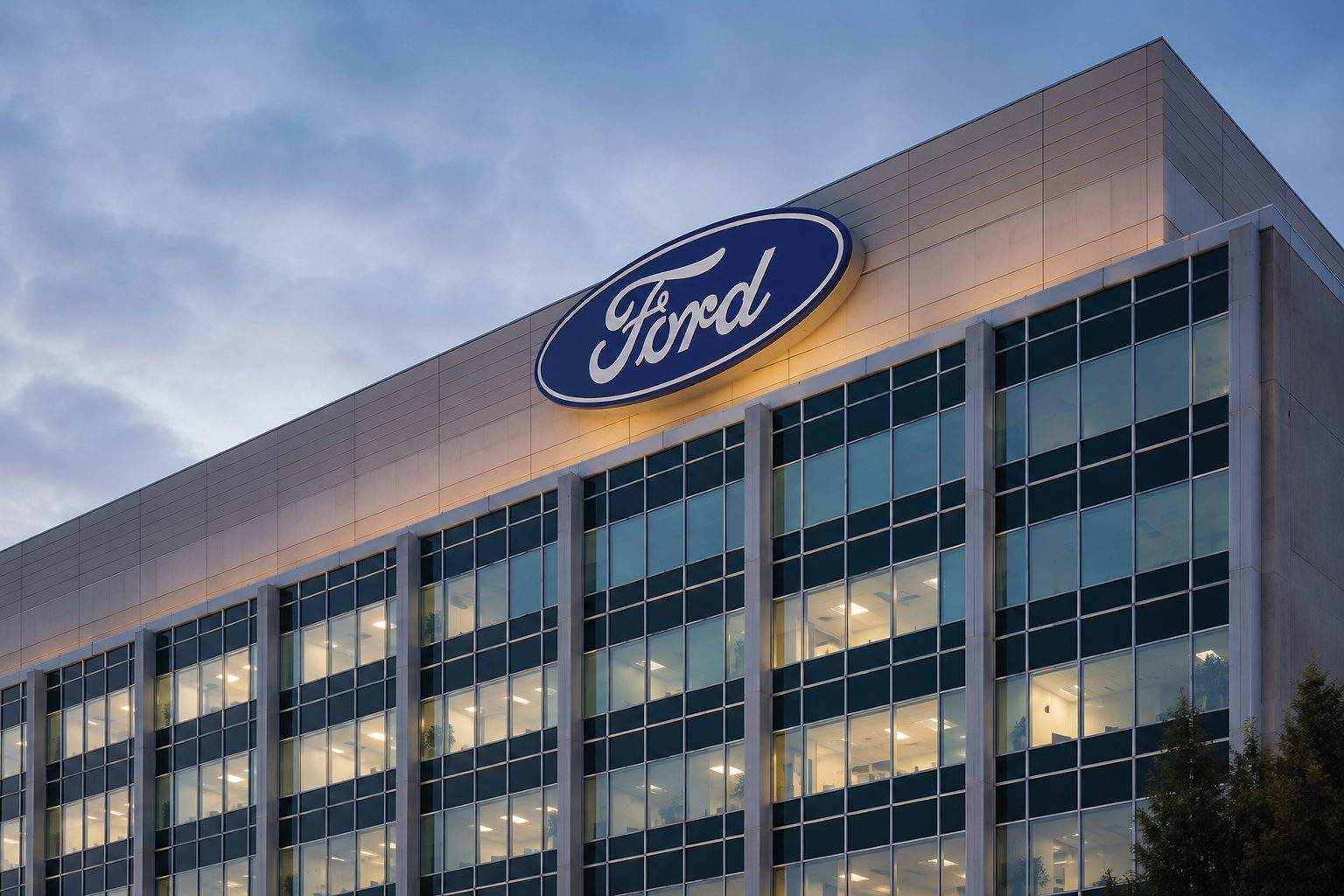
Ford Motor Co. shares surged Wednesday morning, jumping roughly 8.5% to $13.01 after Morgan Stanley flagged the company’s CATL-licensed energy storage unit as a potential new profit engine, outside the traditional car and truck business. General Motors saw a smaller uptick, around 0.4%, while Tesla advanced 4.2%.
Ford is shifting gears, aiming to redirect battery capacity originally set aside for EVs—demand there has lagged forecasts—toward supplying data centers, utilities, and heavy industry. Morgan Stanley’s Andrew S Percoco described Ford’s tie-up with China’s CATL as “an underappreciated strategic competitive advantage.” He figures Ford Energy could pull in $500 million to $600 million in run-rate EBIT off 20 gigawatt-hours of output. EBIT, or earnings before interest and taxes, tracks operating profit. Investing.com
Ford Energy is the automaker’s answer to investor questions around battery spending. Unveiled on May 11 via a company blog post, the new unit will produce battery energy storage systems, or BESS, from Ford’s Glendale, Kentucky plant. These are big batteries built for U.S. data centers, utilities, and major commercial buyers.
No rush on the calendar: Ford Energy is eyeing a minimum of 20 GWh in yearly deployments, with initial customer deliveries not expected before late 2027. “Dispatchable, bankable energy storage is accelerating” in the U.S., President Lisa Drake said. Energy-Storage.News
Ford’s first foray into the space is the Energy DC block, a 20-foot containerized storage unit packing lithium iron phosphate cells—an industry mainstay for stationary storage, thanks to their sturdiness and thermal safety. “A big strategic pivot,” said Pete Tillotson, senior research analyst at Benchmark Mineral Intelligence’s Rho Motion division, who pointed out that U.S. battery demand dynamics help make sense of Ford’s move, in comments to Energy-Storage.News. Energy-Storage.News
The storage initiative comes on the heels of a robust first quarter that’s put more wind in Ford’s sails as it pushes its turnaround story. Ford turned in $43.3 billion in revenue and $2.5 billion in net income for Q1, with adjusted EBIT reaching $3.5 billion—helped along by a $1.3 billion one-off tariff benefit. The company bumped its quarterly dividend to 15 cents, and now expects 2026 adjusted EBIT between $8.5 billion and $10.5 billion. Ford Blue delivered $1.9 billion in EBIT; Ford Pro notched $1.7 billion and boosted paid software subs 30% to 879,000. Model e, the electric unit, still posted a $777 million loss.
Ford has brought in a new point person for investors. Maria Ricciardone stepped in as chief investor relations officer on May 1, taking over from Lynn Antipas Tyson. Ricciardone joined Ford after serving as vice president, treasurer and investor relations at Lockheed Martin. CFO Sherry House said Ricciardone is expected to help translate Ford’s operating progress into a “clear narrative for investors.” Business Wire
The rally’s drawn plenty of valuation talk. Ford, according to Zacks Investment Research this week, trades at roughly 0.28 times forward sales—a ratio they call cheap. Still, auto stocks often get saddled with these kinds of low multiples, mostly because investors worry about the usual suspects: cycle risk, squeezed margins, tariffs, and those big outlays that come before any new ventures actually deliver.
Ford grabbed attention across the auto sector Wednesday. Shares were up about 7% as of the earlier 24/7 Wall St. report, pulling ahead of both GM and Tesla. The same report pointed out that the industry continues to contend with tariff headwinds, challenges around EV profitability, and demand that’s coming off the boil.
The energy-storage move isn’t without its complications—timing and politics both loom large here. Back in January, a U.S. lawmaker questioned Ford’s strategy to produce lithium iron phosphate cells and grid storage systems with CATL tech. Ford maintained the batteries would qualify for tax credits. With deliveries not set until late 2027 and pricing still a mystery, Tesla’s Megapack and rival suppliers have some runway to hold their ground.
On Wednesday, Ford got a boost from investors who appear more interested in its battery plant monetization than traditional vehicle sales. But the real hurdle remains—actual signed storage customers, not just a slicker story.
Related articles: NYSE:F