
HONG KONG, May 7, 2026, 01:04 HKT
- In New York, Alibaba’s U.S.-listed shares jumped, as investors piled into firms linked to artificial intelligence infrastructure.
- Alibaba is set to release its March-quarter and full-year numbers on May 13, with the announcement landing just days ahead of that report.
- Cloud expansion, traction for Qwen, and a big push on AI spending stand out as the key challenges. E-commerce still weighs on demand and margins.
Alibaba Group Holding Limited’s U.S.-traded shares jumped 6.6% to $141.04 on Wednesday. The move came as an AI-driven rally swept up the stock, with investors sharpening their attention on whether China’s biggest e-commerce name can leverage cloud and AI investments for quicker growth.
Timing is key here. Alibaba plans to release its unaudited quarterly and annual results for the period ending March 31 ahead of the U.S. market open on May 13. The earnings call is set for 7:30 p.m. in Hong Kong.
This round of earnings will put Alibaba’s revamped narrative to the test. Its cloud business is picking up speed and Qwen, the company’s generative AI, has caught some buzz. But the real question: Can those bright spots make up for sluggish consumer spending in China? Back in March, Reuters noted Alibaba missed on December-quarter revenue and net income, even as cloud sales jumped 36%. Jamie Chen at Third Bridge pointed out Qwen’s 30-day retention “remained relatively low,” a sign user stickiness hasn’t materialized yet. Reuters
The global AI surge drove the stock higher. Reuters said Wednesday that AMD reached a record after its bullish outlook boosted faith in demand for AI infrastructure. Samsung Electronics, meanwhile, joined the $1 trillion club among Asian firms.
According to Yahoo Finance, Morgan Stanley analysts, with Yang Liu at the helm, said, “Alibaba is the biggest winner due to its full-stack AI capabilities.” Another report diving into the same note pointed out Alibaba’s share among surveyed CIOs picking it for AI deployment climbed to 41%, up from 32%. Chief information officers—senior execs in charge of tech budgets—are driving that growth. Yahoo Finance
Alibaba wasted little time rolling out offerings for investors to value. Back in March, its international commerce arm unveiled Accio Work, an agentic AI platform designed to handle multi-step processes for small and midsize businesses, needing only minimal human input. “It’s a specialized B2B tool rather than a generalist platform,” Alibaba International Vice President Kuo Zhang told Reuters.
Alibaba rolled out Qwen3.6-Plus in April, announcing plans to plug the new model into its Wukong enterprise AI platform and the Qwen app. According to Alibaba Cloud, Qwen3.6-Plus targets agentic coding, supports multimodal reasoning, and handles long-context tasks with a standard 1 million-token context window. (Tokens here refer to pieces of text or data an AI model reads.
Competition remains fierce. On Wednesday, Reuters reported DeepSeek may see a valuation as high as $50 billion in its debut fundraising, with China’s national AI fund negotiating to lead and Tencent weighing an investment. According to the report, DeepSeek is up against well-capitalized competitors like ByteDance and Alibaba.
Still, spending discipline remains the key concern. Back in March, J.P. Morgan Private Bank flagged Alibaba’s outlays in AI, cloud, and quick commerce as a drag on short-term profits. Rising capex and operating expenses have pushed consensus forecasts for fiscal 2027 earnings down by mid-teens percentages.
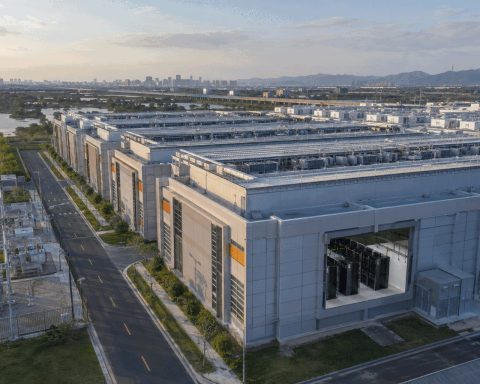
Alibaba’s pledge stands at a minimum of 380 billion yuan—about $53 billion—over three years for cloud computing and AI infrastructure. CEO Eddie Wu calls AI the company’s growth engine for the long haul. Cloud computing, according to Alibaba, is still the company’s most straightforward AI revenue stream.
So, May 13 shapes up as more than just a reaction to the stock’s swing. The AI story has lured investors back in, but Alibaba still needs to prove those investments are translating into revenue—and, crucially, that revenue is actually turning into profit.
Related articles: NYSE:BABA