
London, May 7, 2026, 12:03 BST
Oil slid under $100 a barrel Thursday, with traders wagering a partial U.S.-Iran agreement might loosen up the Strait of Hormuz and take some pressure off supply risks tied to the Middle East conflict. Brent crude shed $1.95, down 1.93%, landing at $99.32 as of 0912 GMT. U.S. West Texas Intermediate lost $1.93, settling at $93.15. Both benchmarks had plunged over 7% on Wednesday.
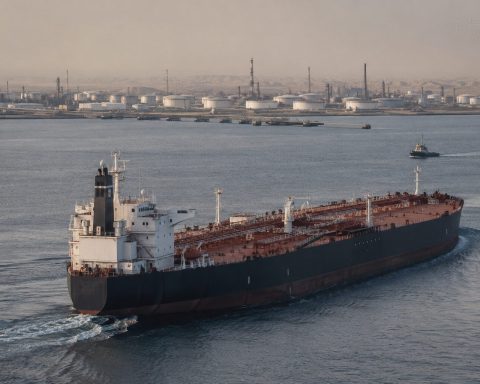
Hormuz carries more weight than your average shipping lane. In 2024, about 20 million barrels of oil passed through the strait each day, the U.S. Energy Information Administration reports. That’s one-fifth of the world’s petroleum liquids consumption. For most of that volume, there simply aren’t many workable detours.
The shift helped tamp down broader inflation worries. Brent hovered close to $99, logging its third drop in a row, Bloomberg noted, while global bonds pushed higher. The dollar slipped. U.S. equity futures stayed positive after the S&P 500 notched consecutive record closes.
According to sources and officials cited by Reuters, the United States and Iran are moving closer to a short-term deal that would put the fighting on ice and tackle the Hormuz flashpoint. The draft, as described, would stop the war and kick off a 30-day period for wider negotiations. But the thorny issues surrounding Iran’s nuclear program would remain on the table, still unresolved.
President Donald Trump called a deal “very possible” following what he described as “very good talks.” Over in Tehran, Iranian foreign ministry spokesman Esmaeil Baqaei said the U.S. offer is “under review,” adding that Iran will deliver its response to the proposal, via mediator Pakistan, once it has finalized its position. Business Recorder
Headlines continue to steer the market’s direction. Oil’s been caught between “diplomacy and disruption” for over two months now, according to Priyanka Sachdeva, senior market analyst at Phillip Nova. “The outlook beyond that remains uncertain,” said Hiroyuki Kikukawa, chief strategist at Nissan Securities Investment. Profit by Pakistan Today
Right now, the market appears to be assuming a smoother resolution than negotiations have actually produced. Should talks break down, or should there be renewed attacks on oil sites or tankers, crude prices could rebound just as swiftly as they dropped. Sachdeva noted that while a formal agreement might strip out the geopolitical premium—the added cost tied to conflict risk—any new flare-up could push prices sharply higher again.
Physical supply remains constrained. According to the EIA, U.S. commercial crude inventories dropped by 2.3 million barrels last week, landing at 457.2 million. Gasoline stocks pulled back by 2.5 million barrels, while distillate inventories—which cover both diesel and heating oil—slipped by 1.3 million barrels.
Andy Lipow, who runs Lipow Oil Associates, pointed to “continued liquidation” of crude and refined product stocks as U.S. barrels head overseas to cover supply gaps from Middle East turmoil. According to Reuters, distillate exports hit a record 1.9 million barrels per day last week. Reuters
Oil giants sent conflicting messages. Shell’s first-quarter adjusted earnings came in at $6.92 billion and the company bumped up its dividend, but it trimmed buybacks and the stock dropped 2% along with other majors as crude prices slid. According to Reuters, BP and TotalEnergies benefited from robust trading, though the numbers spoke more to market turbulence than an outright surge in demand.
Phil Flynn, senior analyst at Price Futures Group, pointed out that hopes are rising for a reopening of Hormuz—even if a formal peace deal remains elusive. But don’t expect barrels flowing right away, Rystad Energy’s Paola Rodriguez-Masiu cautioned. She put the real timeline for flow normalisation at “six-to-eight weeks,” underscoring that a truce on paper doesn’t translate into tankers docking at refineries overnight. moneycontrol.com
Related articles: Energy Markets