
TAINAN, Taiwan, May 8, 2026, 01:13 (Taiwan time)
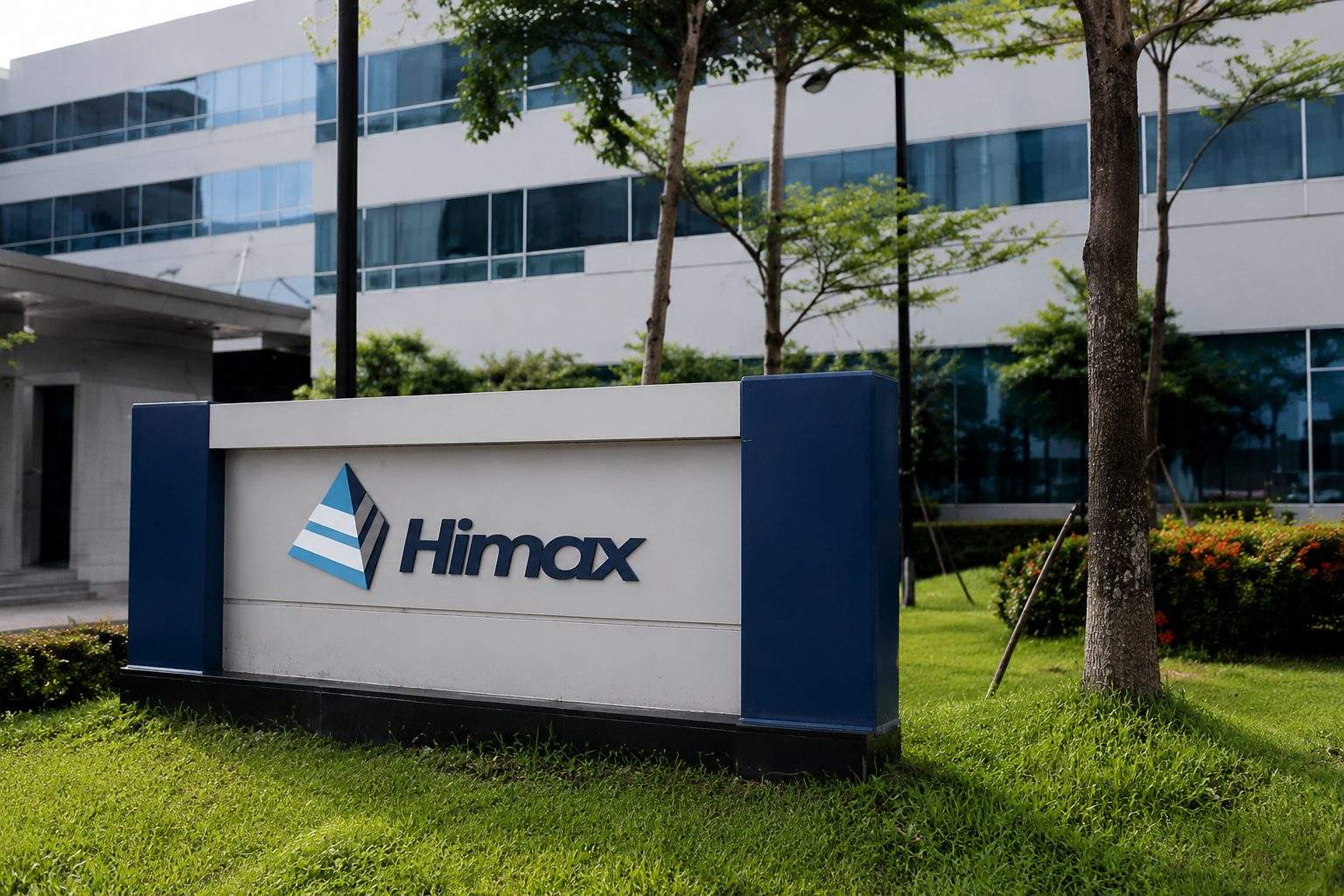
Himax Technologies surged over 30% in U.S. trading on Thursday, with the Taiwan-based display-chip company projecting a second-quarter comeback and announcing a cash dividend. The update threw fresh attention on its automotive display and low-power AI segments. Nasdaq-listed shares were last seen at $16.17, up $3.84, after spiking to $17.94 earlier in the session.
The recent surge comes after Himax told investors this was the bottom—first quarter numbers marked the trough, and so far, the current quarter’s recovery is lining up with forecasts, mostly due to customers rebuilding inventory. “Upward momentum” should continue through 2026, Chief Executive Jordan Wu said, citing demand for new automotive programs, timing controllers (Tcon chips that manage image signals in display panels), and WiseEye AI. GlobeNewswire
Himax designs display driver ICs—the chips behind how screens light up and refresh their pixels—plus other semiconductors found in everything from TVs and monitors to smartphones, tablets, vehicles, and industrial displays. These days, the company is pushing further into automotive, smart glasses, and optical connections for AI data centers, aiming to move away from simply riding legacy consumer display demand.
Himax posted first-quarter revenue of $199.0 million, according to a U.S. regulatory filing—a 2.0% dip from the previous quarter, yet still landing at the top end of its own projection. Gross margin checked in at 30.4%. Net income after taxes reached $8.0 million, or 4.6 cents per diluted American depositary share, edging past the company’s earlier guidance of 2.0 to 4.0 cents.
Himax is projecting second-quarter revenue up 10.0% to 13.0% over Q1, keeping gross margin near 32%, and expects profit to land between 8.6 and 10.3 cents per diluted ADS. That margin, the company said, reflects a shift toward higher-margin non-driver products in the mix.
Segment numbers came in mixed. Large display drivers jumped 11.7% from the prior quarter to $24.2 million, driven by a wave of TV-chip restocking. Small and mid-size display drivers slipped 2.4%, landing at $135.8 million. Non-driver sales slid 7.7% to $39.0 million. Himax pointed to continued solid demand for automotive Tcon, citing hundreds of design-win projects.
The real test comes from automotive. Himax expects its second-quarter automotive driver IC revenue—including both traditional display drivers and TDDI (that’s touch and display driver integration)—to climb by double digits quarter-over-quarter. Omdia senior analyst Queenie Jiang points to Himax, Novatek, Synaptics, and FocalTech as the leading suppliers of automotive TDDI, with Himax topping the list for market share during the first half of 2023.
Smart glasses drew fresh attention. Himax said a top brand—still unnamed—has picked up WiseEye for its smart glasses lineup, with mass output slated for later this year. WiseEye, designed for low-power vision and voice detection on smaller devices, is supposed to keep things running without killing battery life. Himax also highlighted its LCoS microdisplay tech, targeting augmented-reality glasses.
The company pointed to progress with FOCI on co-packaged optics, or CPO—a setup that shifts optical links closer to the chip, boosting data speeds in AI servers. Himax said its first-generation product is set for limited shipments in the back half of the year. As for the Gen 2 CPO aimed at AI data centers, it’s approaching the customer validation stage.
Shareholders got another boost from the move. Himax announced a cash dividend of 25.2 cents per ADS for fiscal 2025, set for payout on July 10—works out to 12.6 cents for each ordinary share.
The picture isn’t pretty. Himax flagged that surging AI demand is squeezing both memory supply and mature chip foundry capacity. On top of that, pricier gold is pushing costs higher. The company also cautioned there’s still little clarity on consumer electronics and auto demand in the back half. Large display-driver shipments? Management expects those to drop by a high-teens percentage in the second quarter, after customers accelerated TV inventory purchases earlier.
Himax’s first-quarter revenue came in about 2.1% above analyst expectations of $195 million, StockStory reported, but sales fell 7.5% year over year. That combination—a modest beat, a rosier outlook, yet lingering cyclical exposure—explains why Thursday’s rally wasn’t a straightforward earnings win. Instead, shares appeared to be getting revalued as investors leaned into Himax’s growing AI and auto angle, despite its stature as a smaller chip supplier.
Related articles: Earnings Reports