
New York, May 12, 2026, 14:03 ET
- Shares of 3D Systems jumped roughly 28%, trading at $3.22 after the company’s first-quarter numbers topped Wall Street’s expectations on both earnings and revenue.
- This isn’t so much about a wave of 3D-printing hype as it is about healthcare gains, a slimmer loss, and adjusted EBITDA swinging positive—adjusted profit before interest, taxes, depreciation and amortization.
- Bulls are hanging their hopes on a better mix and tighter costs. On the other hand, Q2 guidance still flags an adjusted EBITDA loss, with cash burn and internal-control problems lingering, per 3D Systems.
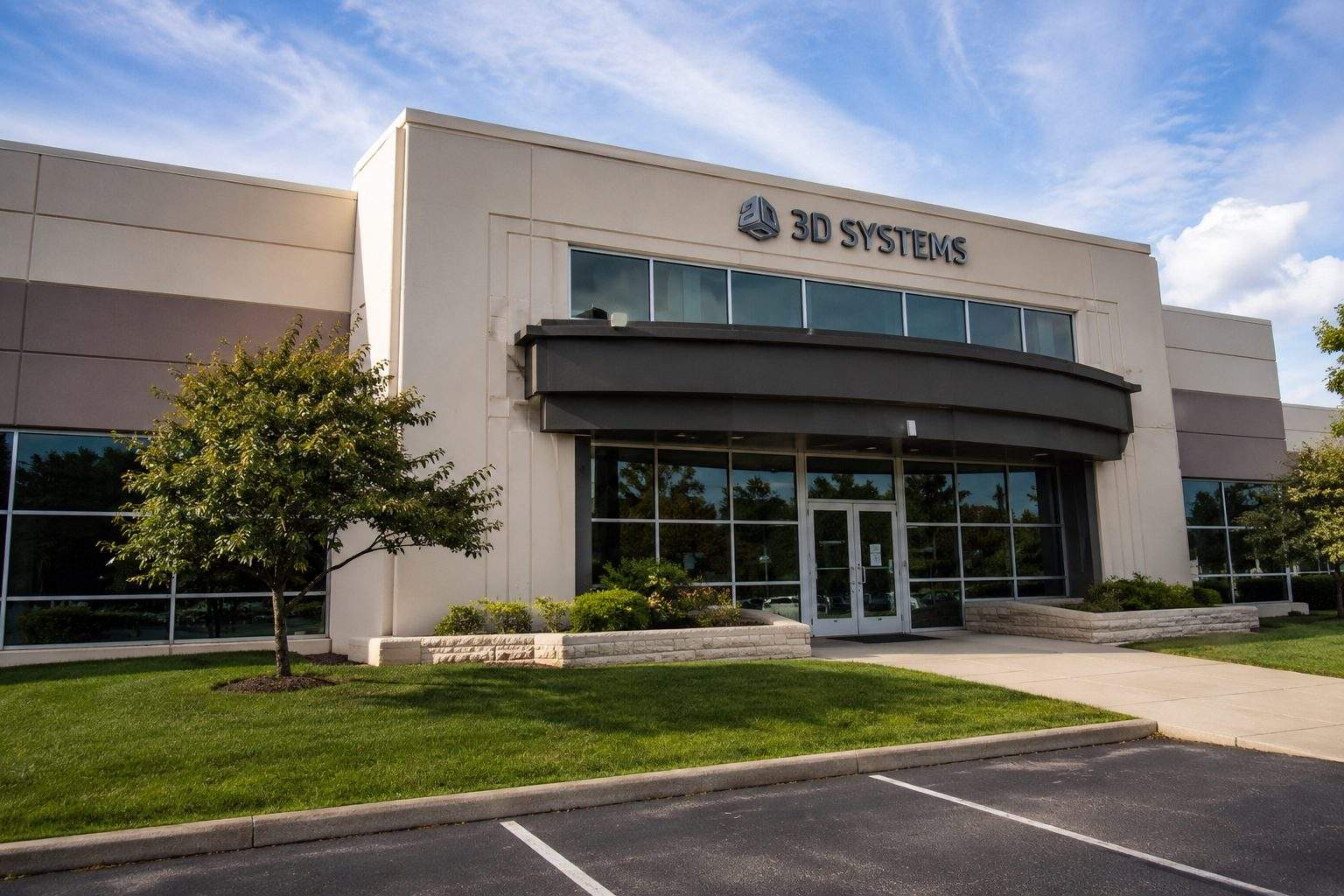
Shares of 3D Systems Corporation jumped Tuesday, climbing 28.3% to $3.22 after the company posted its first-quarter results. More than 18 million shares changed hands, a striking increase for the small-cap additive manufacturing player, which had been trading as if soft demand and slow turnaround were a foregone conclusion.
The reason? Pretty clear, if you look at the numbers. Revenue landed at $95.54 million, topping the $90.6 million consensus. Adjusted EPS showed a loss of $0.01—a seven-cent beat, according to the analyst estimate cited by StreetInsider. For a business still under scrutiny as it pushes through restructuring, that one-two punch quickly tipped the day’s risk-reward calculus.
It wasn’t just about beating the headline number—investors were reacting to a shift in the business mix. 3D Systems reported a 1% revenue increase from a year ago, but strip out software divestitures and that jumps to 11%. The company’s GAAP loss per share improved, narrowing to $0.03, while the non-GAAP loss per share came in at $0.01. Adjusted EBITDA swung to $2.1 million, reversing a loss from the previous year. CFO Phyllis Nordstrom called it a “return of core revenue growth.” 3D Systems
Healthcare has taken center stage. The 10-Q shows Healthcare Solutions revenue climbing 21.3% to $50.1 million—thanks to gains in dental materials, printer sales, and parts manufacturing. Industrial Solutions slid 14.7% to $45.4 million, as divestitures and softer jewelry demand weighed, though aerospace and defense helped cushion some of that weakness.
This is important: dental materials and medical parts bring steadier, recurring revenue compared to unpredictable printer sales. On the same day it posted results, the company announced a deal with ROE Dental Laboratory—hard evidence for investors. ROE is rolling out NextDent 300 systems to several locations, aiming to triple its denture production. “Exceeded our expectations,” said ROE CEO BJ Kowalski—a brief but telling remark from an actual customer, not just company execs. 3D Systems
The tone on management’s call diverged from previous down-cycle briefings. CEO Jeffrey Graves talked about seeing “green shoots,” noting the rebound was visible across dental, med tech, and aerospace and defense segments. Graves added that healthcare had turned more stable, with a lot of procedures now non-optional or directly impacting quality of life. The Motley Fool
The aerospace and defense segment is the other key area here. Graves maintained the outlook for over 20% growth in that market this year—roughly $35 million in 2026 revenue. He also noted an 80,000-square-foot facility expansion in Littleton, Colorado, focused on metal components. Not a blockbuster figure by itself, but when your market cap sits below $500 million, gains like this start to make a difference—assuming the margins are there.
The peer tape tells the story: this looks like a 3D Systems-specific repricing. Stratasys edged up under 1%. Proto Labs slipped about 1%. Materialise, meanwhile, popped nearly 3.5%. All operate in digital manufacturing and 3D-printing services—close comps to DDD—but their shares didn’t see the same action.
Macro factors didn’t have much to do with the rally. Prediction markets hardly budged on rate expectations—Kalshi and Polymarket, as tracked by Oddpool, had June’s Fed “maintains rate” odds pinned at 97% to 98%. Polymarket’s 2026 rate-cut contract showed a 62% probability for no cuts at all. Today’s action, then, looks less like a small-cap move on rates and more like an earnings reset. Oddpool
Bulls have a tidier story now. 3D Systems has unloaded non-core software assets, trimmed expenses, kept R&D running just enough to update its products, and is finally catching a simultaneous updraft in healthcare, dental, med tech, and aerospace demand. Non-GAAP gross margin, adjusted for divestitures, jumped by 600 basis points—six percentage points—which strengthens their case.
The bear thesis hasn’t disappeared. Losses continue, and cash and cash equivalents dropped to $85.1 million—down from $95.6 million at the end of last year. The company burned through $7.2 million in operating cash this quarter. Guidance doesn’t help either: management sees second-quarter revenue landing between $93 million and $95 million, with adjusted EBITDA still negative, forecasting a $4 million to $2 million loss. That means Q2 could be messier than Q1.
Governance and reporting issues are still hanging over the story. 3D Systems acknowledged its disclosure controls fell short as of March 31, citing earlier material weaknesses—remediation is still in progress. That’s not to say there’s been no operating improvement, but skeptics have a point: until the filings and controls are up to speed, they’re holding back on giving full credit.
The move in the chart followed investors catching a combination they hadn’t seen much lately: revenue topping forecasts, narrowing losses, a heavier tilt toward healthcare, and a management team that was noticeably less on the back foot. Now comes the question of whether dental systems, medical parts, and aerospace metals can translate one solid quarter into steady cash generation. Pull that off, and Tuesday’s pop starts to look like a step-change. If not, chalk it up to a typical low-dollar stock reacting to a fleeting beat.
Related articles: Earnings Reports





![US Stock Market Today 08/28/2026 [UPDATE: 02:04 EDT] [Marvell Stalls Near Overnight Low as Price Discovery Fades]](https://ts2.tech/wp-content/uploads/2026/08/US-market-dashboard-2026-08-28-0159-480x384.jpg "US Stock Market Today 08/28/2026 [UPDATE: 02:04 EDT] [Marvell Stalls Near Overnight Low as Price Discovery Fades]")