
New York, May 12, 2026, 15:02 EDT
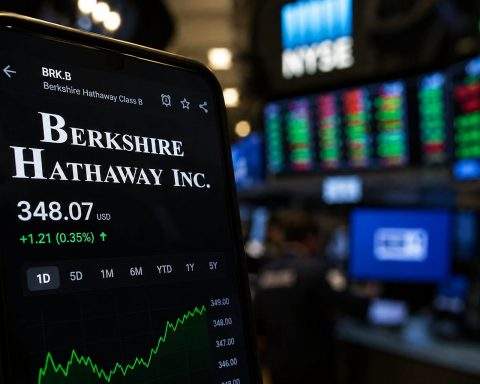
- Berkshire’s Class B shares hovered around $486.46, gaining about 1.4%. SPY, by comparison, dropped 0.5%. Chubb and Progressive advanced as well, suggesting buyers leaned into insurance and financials broadly—not just Berkshire.
- April’s CPI landed at a 0.6% monthly gain, with inflation running 3.8% ahead of last year—numbers that keep “higher for longer” firmly on the radar. The government’s key inflation measure is pointing there. Bureau of Labor Statistics
- Bulls are watching Greg Abel for moves on operating earnings, float, and flexibility with cash. The bear case? GEICO’s ongoing claims issues, the sluggish pace of capital deployment, plus those nagging utility and legal risks.
Berkshire Hathaway shares climbed Tuesday, as investors shifted their focus to cash—no longer a drag, but a source of income. In an inflationary environment that drove money out of pricey growth names and toward more durable balance sheets, cash suddenly looked like an asset worth holding.
Traders pointed to the CPI release as the catalyst for the chart move. Headline prices climbed 3.8% year-on-year, while energy leapt 17.9% and gasoline jumped 28.4%. For Berkshire, this isn’t just noise—the conglomerate holds one of corporate America’s biggest stacks of short-term Treasurys. These Treasury bills, a form of short-term U.S. government debt, reset their yields in step with market rates.
Berkshire’s insurance-and-other segment ended March 31 with $51.5 billion in cash and cash equivalents, plus $339.3 billion in short-term Treasury bills on the books. After settling Treasury purchases, the combined holdings for the unit came to $373.5 billion in cash, equivalents, and T-bills. Bottom line: as long as the Fed holds steady, Berkshire keeps collecting returns on its huge pile of liquid assets.
Prediction markets are echoing that view. A DeFi Rate feed, which tracks Kalshi, Polymarket, and Gemini, pegged the chance of no Fed move in June at 97.5%—with Kalshi showing 96.5% and Polymarket 97.6% for holding steady. For 2026, the same feed priced in a 57% probability of zero Fed cuts, and over on Polymarket’s year-end rate contract, 3.75% led the pack at 53%.
There was another reason for investors to take notice: Berkshire’s operating earnings climbed to $11.35 billion in the first quarter, up from $9.64 billion one year ago. These figures strip out the wild fluctuations in Berkshire’s investment portfolio—moves that, according to the company, can render net earnings “extremely misleading” if you look at just one quarter. Barchart.com
Insurance was the big mover, though the gains weren’t exactly tidy. Net underwriting earnings climbed to $1.72 billion, up from $1.34 billion. Over at BNSF, freight revenues and better pricing pushed net earnings to $1.38 billion from $1.21 billion.
GEICO proved troublesome this quarter. Pre-tax underwriting profit dropped to $1.42 billion, down from $2.17 billion, with both more claims and pricier claims driving the slide. On the other hand, Berkshire Hathaway Primary Group and Berkshire Hathaway Reinsurance Group picked up the slack, reporting stronger numbers thanks to a quarter free of major catastrophe losses.
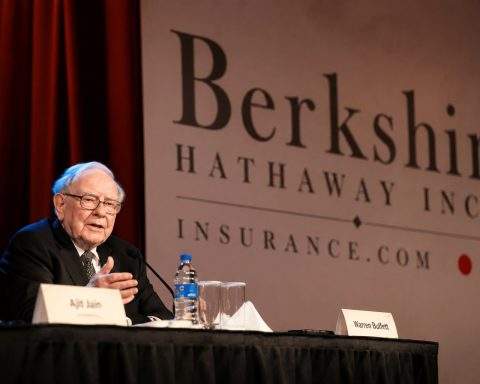
This year’s annual meeting packed extra punch, given there’s no regular Berkshire earnings call. Four months into his CEO role, Greg Abel put it bluntly to shareholders: “we hate bureaucracy,” adding Berkshire has no plan “to be beholden to anyone.” That resonated—today’s share price is still partly about succession. Investors are betting not only on assets, but on the moves made by the new person in charge. Reuters
The argument for the bulls: Abel is under no pressure to move fast. At quarter-end, Berkshire’s insurance float—the cash it keeps from premiums before paying claims—stood at roughly $176.9 billion. The company noted that, for the quarter, this float actually came with a negative average cost. Morningstar’s Greggory Warren described Berkshire as “moderately undervalued,” maintaining his $510 Class B fair value estimate. That’s just a slim margin over where the shares sit now.
The flip side? It’s the same story, just from another angle. If Berkshire’s massive cash reserve signals a lack of attractive opportunities, it also points to a tough environment for finding growth at prices that make sense. During the first quarter, Berkshire picked up $15.9 billion in equities yet offloaded $24.1 billion. Buybacks barely registered—just 431,462 Class B shares and a modest 33 Class A shares in March.
Beneath the apparent calm, real operating risks linger. PacifiCorp—owned by Berkshire Hathaway Energy—warned it may see more wildfire losses than it has already set aside. GEICO’s claims inflation points to another pressure point; even solid underwriting can get squeezed quickly. Here’s the bear case: while high inflation fattens the float, it also inflates claims, wages, and repair bills right through the system.
The peer tape seemed to back up the idea that Berkshire’s move took the sector into account. Shares of Chubb added roughly 0.7%, Progressive climbed 1.3%, and Union Pacific finished in the green as well—Berkshire is exposed to all three, both through its insurance holdings and BNSF. But it’s not all one-way: Morningstar pointed out BNSF still lags Union Pacific’s operating ratio by approximately 425 basis points, giving Union Pacific the edge there.
This is what’s driving the moves today. Berkshire climbed, fueled by investor appetite for its cash hoard, its insurance buffer, and confidence in Abel amid firmer inflation. But higher inflation also pressures consumers, raises claims outlays, and complicates deal arithmetic. Right now, patience is paying off for Berkshire; the question is whether that turns into stronger returns—or just a larger pile in Treasuries.
Related articles: NYSE:BRK.B