
Washington, May 13, 2026, 08:04 EDT
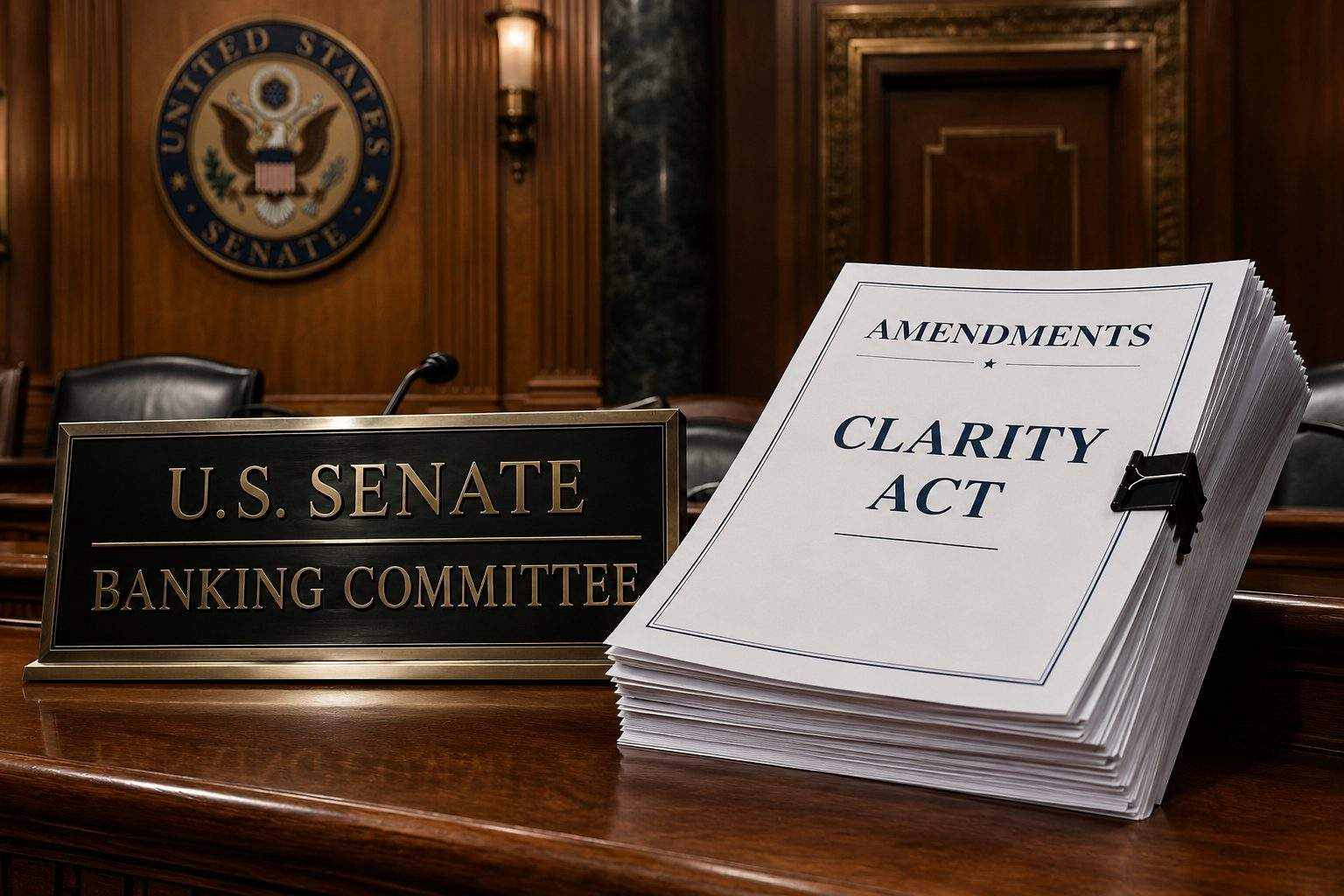
The Senate Banking Committee is set for a Thursday vote on the CLARITY Act, but a fresh ethics dispute is swirling over President Donald Trump’s connections to crypto, and late-breaking pushback from labor unions and banks could stiffen Democratic opposition. Lawmakers plan to take up H.R. 3633, the Digital Asset Market Clarity Act of 2025, in a closed-door executive session at 10:30 a.m. on May 14.
Timing is key here. Senate Banking Chairman Tim Scott, along with Senators Cynthia Lummis and Thom Tillis, rolled out an updated market-structure draft on Tuesday, positioning it as the foundation for the committee’s markup—the point where senators hash out amendments and decide whether the bill moves forward. Scott said the text was shaped by talks with Democrats and feedback from regulators, law enforcement, financial companies, innovators, and advocates for consumers.
This bill marks the Senate’s firmest step yet in 2024 on broad crypto regulation, aiming to spell out where the SEC’s authority ends and where the CFTC steps in—a distinction crypto advocates say is critical for clear rules. Reuters pointed out that passage in the full Senate hinges on backing from a minimum of seven Democrats.
Stablecoin rewards are drawing attention. Stablecoins—crypto tokens pegged to something like the U.S. dollar—would face some new limits under the latest draft. Rewards for simply holding stablecoins, if they look like bank deposit interest, would be banned. However, perks tied to actually using stablecoins for payments or other transactions would still be permitted. After that, it would be up to the SEC, CFTC and Treasury to hammer out joint rules for how this works in practice.
Banks aren’t happy with the current setup. The American Bankers Association is urging lawmakers to plug what it calls a loophole that allows digital asset service providers—exchanges included—to sidestep last year’s stablecoin law’s ban on interest or yield for payment stablecoins. According to the ABA, the compromise still leaves the door open for crypto firms to offer rewards that look a lot like interest.
Scott, Lummis, and Tillis described the draft as a result of negotiation. Scott pointed to “certainty, safeguards, and accountability” as the bill’s key deliverables, while Tillis labeled it a “bipartisan compromise” meant to clarify regulations. Lummis, for her part, argued that advancing the markup could push Washington toward positioning the U.S. as a global digital asset leader. Senate Committee on Banking
Democrats are zeroing in on ethics. Senator Elizabeth Warren, the committee’s ranking Democrat, argued the Republican draft omits any Trump ethics language and flagged concerns over unresolved conflicts linked to the president and his family’s crypto-related businesses. In her view, backing a bill that ignores those issues is out of the question for committee members.
That dispute may determine if the bill clears committee with backing from both parties or splits along party lines. According to Decrypt, Senator Angela Alsobrooks’ office signaled she’ll require “a substantive agreement on ethics” before giving her support. Corey Frayer, a consumer advocate and former Senate Banking staffer, pointed out that Senate procedure doesn’t preclude adding ethics language to the bill. Decrypt
Labor unions are stepping in too. According to TheStreet, which cited CNBC, the AFL-CIO, Service Employees International Union, American Federation of Teachers, National Education Association, and AFSCME have called on senators to reject the bill, arguing it puts workers’ retirement funds and public pensions at risk from crypto’s price swings. In one letter, they warned that if speculative crypto investments go south, working people and retirees could end up footing the bill.
The GOP’s fact sheet takes a different line. According to the document, the bill extends Bank Secrecy Act anti-money-laundering rules to digital asset brokers, dealers, and exchanges. It calls for monitoring suspicious activity and verifying customers, and says law enforcement could get powers to halt suspect transactions under certain circumstances. Anti-fraud authority, the fact sheet notes, would stay intact.
The draft takes aim at decentralized finance—DeFi—meaning software-driven markets where middlemen don’t exist. According to Reuters, if a platform can exclude users or has backdoor permissions or extra powers, regulators won’t consider it decentralized. Fail that check and you’re looking at the same oversight and reporting requirements banks face.
Coinbase, along with rival crypto exchanges, finds itself right in the thick of the competitive battle. Banks warn that stablecoin rewards may drain deposits away from the regulated sector. Crypto companies counter that sweeping restrictions would stifle competition. According to Reuters, Coinbase pushed back against earlier drafts over stablecoin rewards.
The margin for error is slim. Should Democrats balk over ethics, labor issues, or anti-money-laundering provisions, the bill might clear committee but hit turbulence on the Senate floor—where it can’t pass without Democratic backing. A contentious markup wouldn’t shut the door, but it would complicate the road ahead, keeping the crypto sector waiting for the long-sought federal guidelines Congress has yet to deliver.
Related articles: Stock Market